

Ubuntu has long been one of the most trusted Linux distributions for desktops, servers, and cloud environments. Every two years, Canonical releases a Long-Term Support (LTS) version that focuses on stability, performance, and long-term reliability. The upcoming Ubuntu 26.04 LTS is already generating a lot of interest among developers, system administrators, and Linux enthusiasts.
In this article, we’ll explore the expected release date of Ubuntu 26.04 LTS, its codename, and the most important new features and improvements you can expect from this long-term release.
What Is Ubuntu?
Ubuntu is a free, open-source Linux operating system developed and maintained by Canonical. It is built on Debian and designed to be easy to use, secure, and reliable for everyone, from beginners to enterprise users.
Ubuntu is widely used across:
- Personal desktops and laptops: Ubuntu offers a stable, user-friendly desktop experience suitable for everyday computing.
- Web servers and cloud infrastructure: It is a popular choice for hosting websites, applications, and cloud services.
- Development environments: Developers rely on Ubuntu for its strong tooling, package availability, and flexibility.
- Enterprise and production systems: Businesses use Ubuntu for long-term reliability and security in critical workloads.
One of Ubuntu’s biggest strengths is its Long-Term Support (LTS) releases, which provide stability and security updates for several years. Ubuntu 26.04 LTS continues this tradition while introducing modern improvements under the hood.
What Is Ubuntu 26.04 LTS?
Ubuntu 26.04 LTS is the next Long-Term Support version of Ubuntu, following Ubuntu 24.04 LTS. Like other LTS releases, it is designed for users who prefer a stable operating system with fewer disruptive changes and long-term updates.
An LTS release is especially popular for:
- Production servers: LTS versions provide long-term stability with fewer breaking changes.
- Enterprise environments: Organizations benefit from predictable updates and extended security support.
- Developers working on long-term projects: LTS releases ensure a consistent platform throughout the project lifecycle.
- Users who don’t want frequent OS upgrades: Ideal for those who prefer stability over constant updates.
Ubuntu 26.04 LTS will receive five years of official security and maintenance updates, with optional extended support available through Ubuntu Pro.
Ubuntu 26.04 LTS Release Timeline
The Ubuntu development process follows a well-defined schedule to ensure stability, quality, and long-term reliability. Each milestone plays an important role in preparing Ubuntu 26.04 LTS for its final release.
Ubuntu 26.04 LTS Development Schedule
| Date | Release Stage | Description |
| February 19, 2026 | Feature Freeze | All major features are locked. From this point forward, the focus shifts to polishing and fixing existing functionality |
| March 12, 2026 | User Interface Freeze | The desktop layout, themes, icons, and visual elements are finalized to maintain UI consistency |
| March 19, 2026 | Kernel Feature Freeze | No new kernel features are introduced after this date, reducing the risk of system-level issues |
| March 26, 2026 | Beta Release | A public beta version is released, allowing users and developers to test Ubuntu 26.04 LTS before final release |
| April 9, 2026 | Kernel Freeze | Kernel changes are restricted to critical bug fixes and security patches only |
| April 16, 2026 | Release Candidate | The near-final build is published for last-stage testing and validation |
| April 23, 2026 | Final Release | Ubuntu 26.04 LTS is officially released for general availability |
Understanding the Ubuntu 26.04 LTS Release Stages
Ubuntu’s release timeline is designed to balance innovation with reliability. Here’s how each stage contributes to a stable LTS release:
- Feature Lock ensures that the system stops evolving in big ways and instead focuses on stability.
- UI Freeze helps maintain a consistent look and feel across the desktop experience.
- Kernel Feature Lock and Freeze reduce the risk of low-level system issues close to release.
- Beta Release allows the community to test real-world use cases and report bugs.
- Release Candidate is essentially the final version, pending any critical fixes.
- Stable Release marks the official availability of Ubuntu 26.04 LTS for all users.
This structured approach is one of the key reasons Ubuntu LTS versions are trusted for production systems, servers, and long-term deployments.
Please note that the release timeline may change as development continues, though the final release date is expected to remain unchanged.
Ubuntu 26.04 LTS Codename
Ubuntu versions use a fun and memorable naming scheme made of an adjective and an animal, both starting with the same letter. Ubuntu 26.04 LTS is expected to carry the codename Resolute Raccoon, based on Canonical’s established naming patterns and early development references.
The word Resolute reflects stability and determination, which aligns well with the goals of an LTS release, while Raccoon continues Ubuntu’s tradition of animal-themed names.
Key Features in Ubuntu 26.04 LTS
Ubuntu 26.04 LTS is expected to focus more on refinement and modernization rather than radical changes. Below are the most notable improvements users can look forward to.
GNOME 50 Desktop Environment
Ubuntu 26.04 LTS is expected to ship with GNOME 50 as its default desktop environment, based on the projected GNOME release schedule and Ubuntu’s typical integration timeline. This information reflects current expectations and may change before the final release.
This brings:
- Cleaner and more polished user interface: Delivers a refined look with better layout consistency.
- Improved performance and animations: Enhances overall desktop smoothness and responsiveness.
- Better Wayland support: Improves display handling and modern graphics compatibility.
- Enhanced accessibility features: Makes Ubuntu easier to use for people with diverse needs.
GNOME updates usually focus on usability and consistency, making everyday tasks smoother for both new and experienced users.
Newer Linux Kernel for Better Hardware Support
One of the biggest advantages of upgrading to a new Ubuntu LTS is improved hardware compatibility. Ubuntu 26.04 LTS is expected to include a newer Linux kernel at release time, which should provide improved hardware compatibility and performance for modern systems.
- Better support for new CPUs and GPUs ensures compatibility with the latest hardware releases.
- Improved performance on modern laptops and desktops, optimizing system speed on newer machines.
- Enhanced power management and battery efficiency help extend battery life, especially on laptops.
- Improved driver support for networking and storage devices results in more stable and reliable connections.
This makes Ubuntu 26.04 a strong choice for users running newer hardware.
New Default Video Player
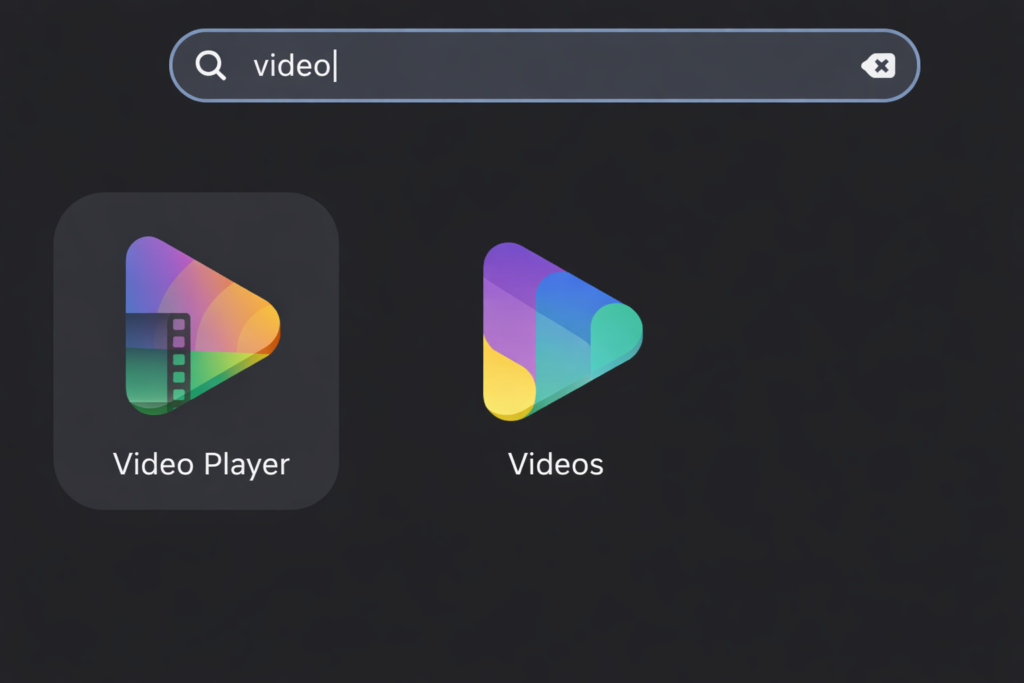
One of the expected desktop changes in Ubuntu 26.04 LTS is the replacement of Totem with GNOME Showtime as the default video player, based on current Ubuntu desktop development discussions. Showtime introduces a sleek and modern design that aligns with GNOME’s libadwaita guidelines.
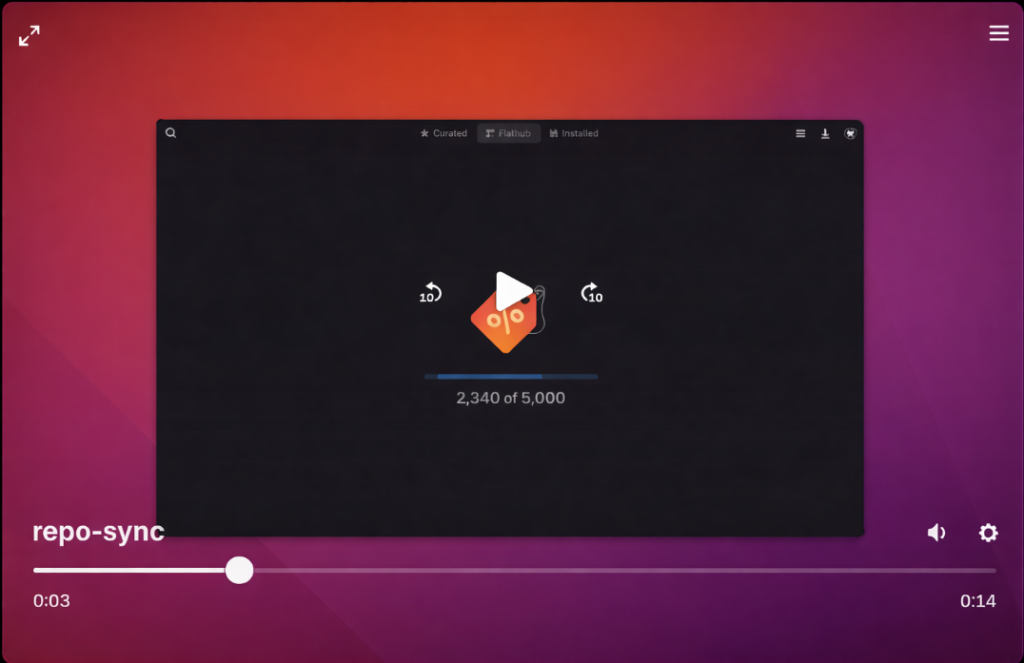
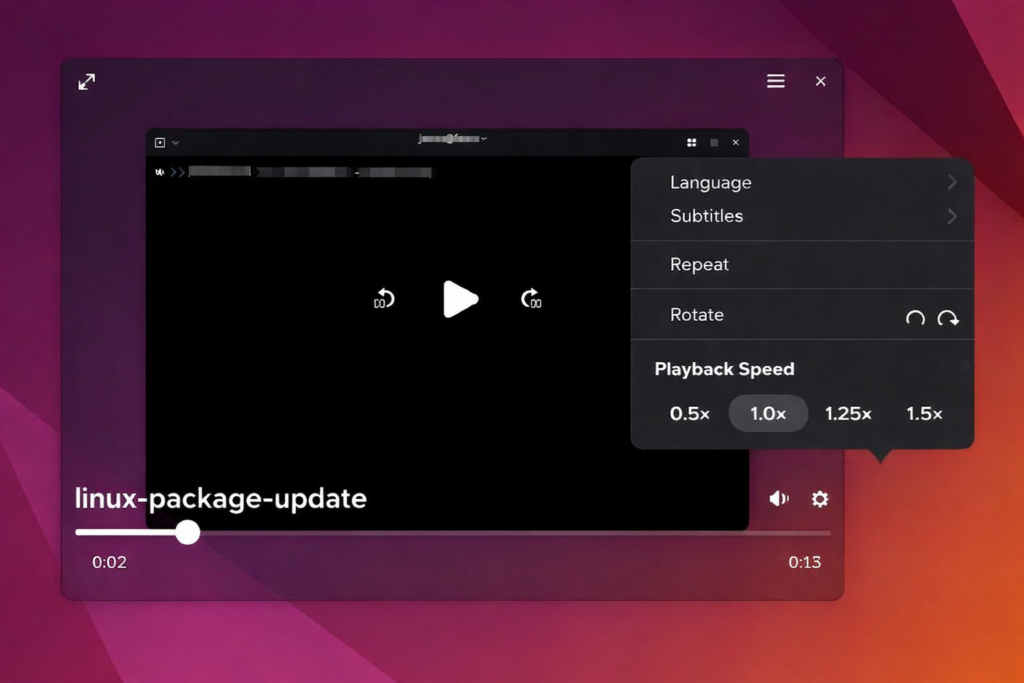
Although the interface is minimalist, essential playback controls remain accessible through a settings icon or a right-click menu. Within the system, Showtime is labeled simply as Video Player, reflecting Ubuntu’s move toward simpler and more intuitive naming.
x86-64-v3 (amd64v3) Optimized Packages
One of the anticipated technical improvements in Ubuntu 26.04 LTS is the broader adoption of x86-64-v3 (amd64v3) optimized packages, which are designed to better utilize modern CPU instruction sets.
What this means:
- Packages are optimized for modern CPUs
- Better performance on newer Intel and AMD processors
- Improved instruction set usage
For users running newer hardware, this results in:
- Faster application performance: Applications launch and run more efficiently.
- Better efficiency: Reduces resource usage on supported systems.
- Improved system responsiveness: Results in a smoother overall user experience.
Older systems will still be supported, but modern machines will benefit significantly from these optimizations.
Default System Monitor
Ubuntu 26.04 LTS is expected to replace the traditional GNOME System Monitor with a more modern system monitoring tool called Resources.
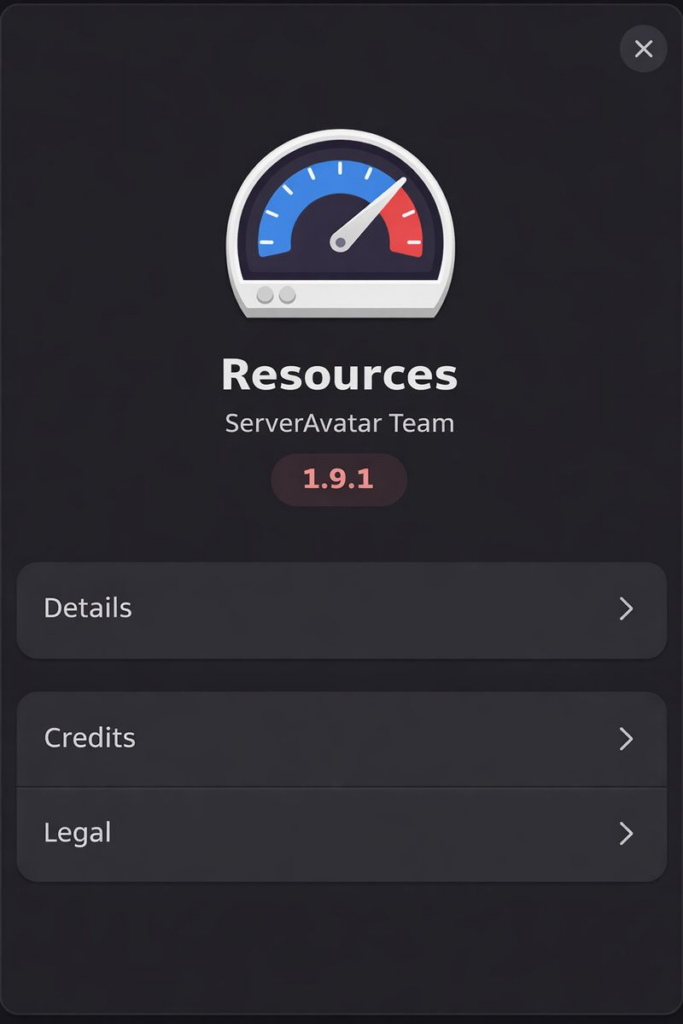
Resources is part of the GNOME Circle project, meaning it is community-developed while still meeting GNOME’s quality and design standards. Even though the existing GNOME System Monitor is capable, this change emphasizes a cleaner and more modern approach to tracking CPU, memory, disk, and network usage.
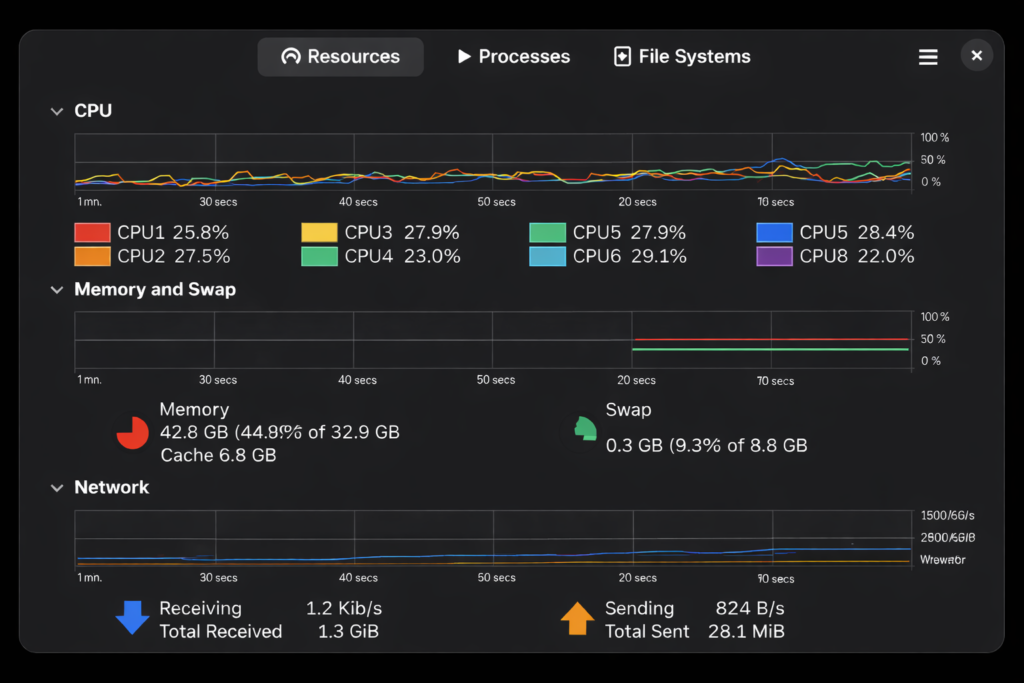
This change makes system monitoring easier and more intuitive without sacrificing functionality.
More Secure and Modern System Components
Ubuntu has been gradually modernizing its core system utilities, and Ubuntu 26.04 LTS is expected to continue this trend. You can expect:
- Greater use of memory-safe system components
- Security-focused improvements in core tools
- Stronger sandboxing and isolation features
These changes aim to reduce vulnerabilities while keeping the system fast and reliable.
Updated Default Applications
Ubuntu 26.04 LTS will include newer versions of essential software right out of the box, such as:
- Updated file manager and system tools
- Improved system monitoring utilities
- Newer versions of developer tools and compilers
- Latest long-term versions of programming languages
This ensures users get a modern experience without sacrificing stability.
Better Performance for Servers and Cloud Workloads
For server users, Ubuntu 26.04 LTS is expected to focus on long-term stability and incremental performance improvements for cloud and enterprise workloads.
- Better performance for cloud and DevOps workloads
- Enhanced networking and storage optimizations
- Long-term kernel stability for production environments
This makes it ideal for hosting applications, managing infrastructure, and running cloud services.
Two Ubuntu Flavors Dropped from LTS
Ubuntu 26.04 LTS also brings a notable change to official flavors. Two Ubuntu flavors have been dropped from LTS support. Ubuntu MATE and Ubuntu Unity have decided to skip long-term support for this release cycle.
Most other Ubuntu flavors are continuing with LTS plans, including Xubuntu, Lubuntu, Ubuntu Budgie, Ubuntu Cinnamon, Ubuntu Studio, Edubuntu, Ubuntu Kylin, and Kubuntu. While Kubuntu has not made a formal announcement yet, its daily builds suggest it is likely to follow the LTS path, though this has not been officially confirmed.
The main reason for skipping LTS is limited developer availability.
- Ubuntu Unity’s lead developer had to focus on university studies, reducing the team’s ability to commit to long-term maintenance.
- Ubuntu MATE is facing similar challenges, with a smaller contributor base despite being an official Ubuntu flavor since 2015.
Ubuntu MATE and Ubuntu Unity are expected to continue releasing regular, non-LTS versions. Users will still receive updates, but without the extended support window that typically comes with an LTS release.
AMD ROCm Native Packages Support
Ubuntu 26.04 LTS improves support for AMD ROCm (Radeon Open Compute) by offering native ROCm packages.
Canonical is working closely with AMD to simplify the installation and maintenance process for ROCm, which is widely used for AI, machine learning, and high-performance computing workloads. Users will be able to install ROCm easily using the standard package manager and receive updates through regular system updates.
This makes Ubuntu an even stronger choice for developers working with AMD GPUs in data science and AI environments.
Why Should You Upgrade to Ubuntu 26.04 LTS?
Ubuntu 26.04 LTS will be a great choice if you:
- Want long-term stability with minimal upgrades
- Run production servers or business applications
- Prefer a modern desktop with long-term support
- Plan to deploy Ubuntu on new hardware
If you are already using Ubuntu 24.04 LTS, upgrading may not be urgent, but Ubuntu 26.04 LTS will offer better hardware support and future-proof improvements.
Download Ubuntu 26.04 LTS (For Testing)
If you want to test Ubuntu 26.04 LTS before the final release, you can download development builds from the official Ubuntu website or by using the attached link: https://cdimage.ubuntu.com/ubuntu/releases/26.04/snapshot1/?ref=itsfoss.com
Available options typically include:
- Daily builds: Provide early access to ongoing development changes.
- Beta releases: Offer a more stable preview for testing.
- Release candidates: Represent the near-final version before public release.
Important note: Pre-release versions are intended for testing only. They are not recommended for production systems as they may contain bugs.
Testing early helps users:
- Explore new features
- Check hardware compatibility
- Prepare for future upgrades

Other Notable Improvements in Ubuntu 26.04 LTS
Beyond the major features, Ubuntu 26.04 LTS is expected to include several smaller but meaningful enhancements as development continues:
- Improved boot speed and system responsiveness
- Better container and virtualization support
- Updated networking and storage components
- Stronger security defaults
- Continued improvements to Snap and APT package management
Together, these changes make Ubuntu 26.04 LTS more polished, secure, and future-ready.
Why Ubuntu 26.04 LTS Matters
Ubuntu 26.04 LTS is not about flashy changes; it’s about long-term reliability and modern performance. With updated system tools, optimized CPU packages, better GPU support, and a refined desktop experience, it offers a strong foundation for years to come.
Whether you’re a developer, system administrator, or everyday Linux user, Ubuntu 26.04 LTS is shaping up to be a dependable upgrade worth considering.
Conclusion
Ubuntu 26.04 LTS reinforces Canonical’s focus on stability, security, and long-term performance by refining the Ubuntu experience rather than introducing disruptive changes. With GNOME 50, a newer Linux kernel, improved Wayland and graphics support, modernized system tools, optimized CPU packages, and stronger server and GPU capabilities, this release delivers meaningful improvements for both desktop and enterprise users. Whether you manage production servers, work on long-term development projects, or simply want a reliable Linux system that won’t require frequent upgrades, Ubuntu 26.04 LTS offers a future-ready platform built to remain dependable for years to come.
FAQs
1. When will Ubuntu 26.04 LTS be released?
Ubuntu 26.04 LTS is expected to be released in April 2026, following Ubuntu’s regular release cycle. However, this timeline is not officially confirmed yet and may change as development progresses.
2. Which desktop environment does Ubuntu 26.04 LTS use?
Ubuntu 26.04 LTS is expected to ship with GNOME 50 as the default desktop environment, bringing UI refinements, better performance, and improved accessibility.
3. Will Ubuntu 26.04 LTS support older hardware?
Yes, older hardware will still be supported, but systems with newer CPUs will benefit more from performance optimizations like x86-64-v3 packages.
4. Is Ubuntu 26.04 LTS good for servers and cloud environments?
Yes, Ubuntu 26.04 LTS is well suited for servers and cloud workloads due to improved container support, networking optimizations, long-term kernel stability, and enhanced security features.
5. Can I test Ubuntu 26.04 LTS before the final release?
Yes, you can test Ubuntu 26.04 LTS using daily builds, beta releases, or release candidates. However, these pre-release versions are meant for testing only and are not recommended for production use.
6. Should I upgrade from Ubuntu 24.04 LTS to Ubuntu 26.04 LTS?
If you are satisfied with Ubuntu 24.04 LTS, an immediate upgrade may not be necessary. However, Ubuntu 26.04 LTS offers better hardware support and future-focused improvements, making it a worthwhile upgrade for new systems and long-term planning.