

Web hosting has always been the backbone of the internet, and the future of web hosting is shaping how every website, application, and online service operates. From storing data and processing requests to delivering content to users around the world, hosting plays a critical role in digital experiences. For years, web hosting evolved slowly, driven by faster hardware, better networks, and more reliable infrastructure. Today, however, the industry is undergoing a much deeper transformation.
Artificial Intelligence (AI) is reshaping how web hosting works at its core. Web Hosting platforms are becoming smarter, more adaptive, and increasingly autonomous. Instead of relying entirely on manual configuration and human monitoring, modern hosting environments are learning from data, predicting problems, and optimizing themselves in real time.
Why AI Is Becoming Essential in Web Hosting
The modern web is far more complex than it was even a decade ago. Websites are no longer static pages. They are dynamic applications with databases, APIs, third-party integrations, real-time user interactions, and unpredictable traffic patterns.
Traditional hosting methods struggle to keep up with this complexity because they are mostly reactive. A problem happens first, and then someone fixes it.
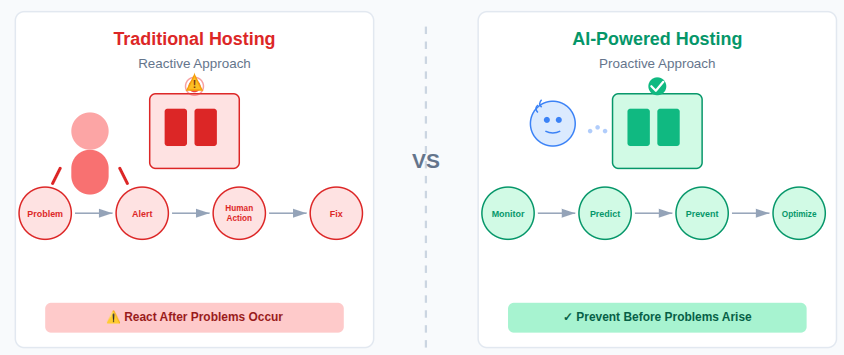
AI changes this approach entirely by enabling hosting systems to:
- Continuously analyze server and application data
- Learn from historical usage patterns
- Predict future behavior
- Take automated actions without human intervention
In simple terms, AI allows hosting environments to think ahead instead of reacting late.
Edge Computing and AI
One of the biggest shifts in modern web hosting is the move away from fully centralized data centers. As websites and applications demand faster response times, AI-powered edge computing is becoming increasingly important.
Edge computing allows data to be processed closer to the end user rather than routing every request to a central server. When combined with AI, hosting platforms can intelligently decide where workloads should run based on location, latency, and network conditions.
AI systems analyze real-time traffic distribution and automatically route requests to the nearest or most efficient edge node. This results in faster page loads, smoother streaming, and improved performance for global audiences.
As more applications rely on real-time data, such as IoT platforms, online gaming, and live collaboration tools, AI-driven edge hosting will become a standard part of future infrastructure.
Predictive Performance Management
One of the most impactful uses of AI in web hosting is predictive performance management. Rather than waiting for a server to slow down or crash, AI systems monitor thousands of performance signals simultaneously.
These signals include CPU usage, memory consumption, disk activity, network traffic, and application response times. By analyzing trends over time, AI can identify early warning signs of performance degradation.
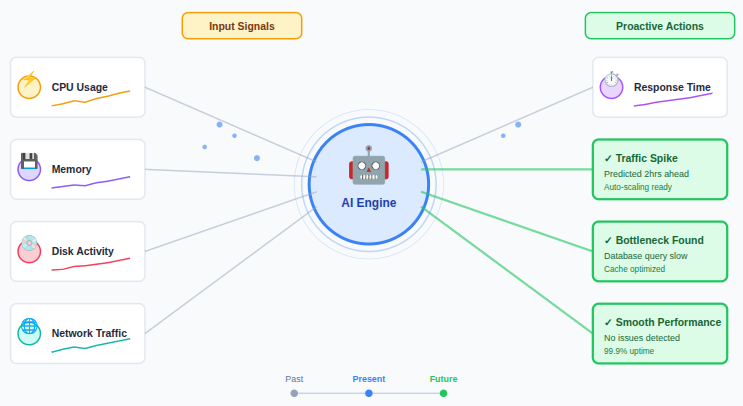
Why this matters:
- Traffic spikes can be anticipated before they occur
- Performance bottlenecks are addressed proactively
- Users experience fewer slowdowns and outages
For high-traffic websites, online stores, and SaaS applications, predictive performance management can be the difference between smooth growth and constant firefighting.
AI-Driven Auto Scaling
Scaling infrastructure has traditionally required careful planning and manual configuration. Many website owners either over-provision resources to stay safe or under-provision and risk downtime.
AI-driven auto scaling eliminates this guesswork.
Instead of using fixed rules, AI analyzes real usage patterns, historical traffic data, and external factors such as time of day or seasonal trends. This allows hosting systems to scale resources dynamically and intelligently.
Benefits include:
- Faster response during traffic surges
- Lower infrastructure costs
- No manual intervention required
- Better performance consistency
As websites become more unpredictable in traffic behavior, intelligent scaling will become a baseline expectation rather than a premium feature.
Smarter Security Through AI
Security threats have grown more sophisticated over time. Simple firewall rules and signature-based detection systems are no longer enough to stop modern attacks.
AI brings a behavioral approach to security.
Instead of relying only on known attack patterns, AI systems learn what “normal” behavior looks like for a server, application, or user. When something deviates from that baseline, the system flags or blocks it instantly.
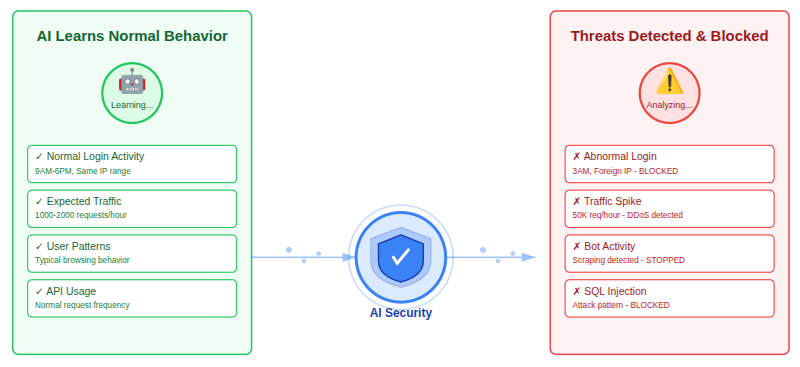
AI improves hosting security by:
- Detecting abnormal login activity
- Identifying suspicious traffic patterns
- Blocking attacks in real time
- Reducing false positives
Because AI systems continuously learn, they become more effective over time, adapting to new threats as they emerge.
Decentralized Hosting Models and AI Coordination
Another emerging trend is the exploration of decentralized hosting models. Instead of relying entirely on centralized cloud providers, decentralized systems distribute hosting resources across multiple locations and networks.
AI is crucial in making decentralization practical. Intelligent systems can:
- Coordinate workloads across distributed nodes
- Monitor performance and availability in real time
- Redirect traffic away from failing or congested nodes
- Maintain redundancy without manual oversight
While decentralized hosting is still evolving, AI-driven coordination makes it far more viable and resilient than earlier attempts at distributed infrastructure.
Self-Healing Hosting Infrastructure
Downtime has always been one of the biggest fears in web hosting. Even short outages can lead to lost revenue, damaged reputation, and frustrated users.
AI introduces the concept of self-healing infrastructure.
In a self-healing environment, the hosting system can automatically detect failures and take corrective action without human involvement.
Examples include:
- Restarting crashed services
- Reallocating workloads to healthy servers
- Fixing configuration inconsistencies
- Automatically isolating failing components
The result is dramatically reduced downtime and a more resilient hosting environment.
AI and Sustainable Web Hosting
Sustainability is becoming a major concern in the hosting industry as data centers consume increasing amounts of energy. AI is playing a growing role in reducing the environmental impact of hosting operations.
AI-driven energy optimization systems can:
- Adjust server workloads to reduce power consumption
- Optimize cooling systems based on real-time temperature data
- Shift workloads to more energy-efficient regions
- Reduce idle resource usage automatically
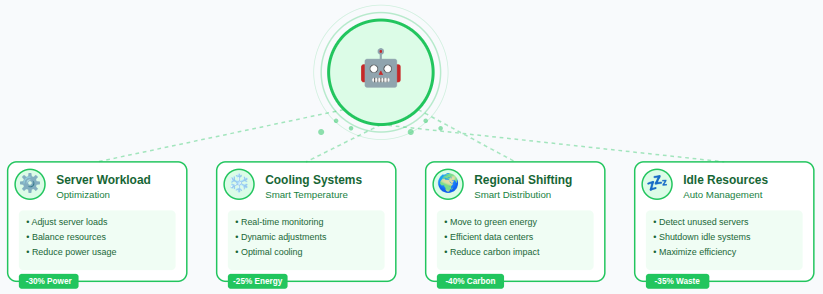
By improving efficiency at every layer, AI helps hosting providers lower their carbon footprint while maintaining performance and reliability. In the future, sustainability will be a competitive advantage, not just a nice-to-have feature.
AI-Based Website Performance Optimization
Website speed is no longer optional. It affects directly to conversion rates, user experience, and search engine rankings.
AI helps hosting platforms optimize performance in a much more precise way than traditional methods. Instead of applying generic caching or optimization rules, AI analyzes how users actually interact with a website.
Based on this data, AI can:
- Adjust caching strategies dynamically
- Optimize database queries
- Improve asset delivery
- Predict which pages or resources will be accessed next
This leads to faster load times and more stable performance, even during periods of heavy traffic.
Managing Containers and Serverless Workloads with AI
Modern web hosting is moving beyond traditional virtual machines. Containers and serverless architectures are changing how applications are deployed and scaled, and AI plays a key role in managing this complexity.
AI-powered orchestration tools can:
- Automatically balance container workloads
- Detect inefficient resource usage
- Predict scaling needs before bottlenecks appear
- Optimize application placement across infrastructure
In serverless environments, AI helps manage execution timing, memory usage, and cold-start optimization. This allows developers to focus purely on writing code while the hosting environment adapts dynamically in the background.
As container-based and serverless hosting grows, AI will be essential for keeping systems efficient, cost-effective, and reliable.
AI in DevOps and Infrastructure Management
DevOps teams are under constant pressure to deploy faster while maintaining stability. AI is becoming an important assistant in this process.

AI-powered DevOps tools can:
- Detect configuration risks before deployment
- Predict the impact of infrastructure changes
- Identify patterns that lead to failures
- Automate routine operational tasks
This reduces human error and allows teams to focus more on innovation rather than maintenance.
As infrastructure grows more complex, AI will play a key role in keeping systems manageable and reliable.
Intelligent Backups and Disaster Recovery
Backups are essential, but traditional backup strategies are often static and inefficient. AI brings intelligence to backup and recovery processes.
Instead of running backups at fixed intervals, AI can:
- Detect high-risk changes
- Trigger additional backups automatically
- Prioritize critical data
- Recommend the most reliable recovery points
In the event of data loss or system failure, intelligent recovery reduces downtime and minimizes data loss.
Regulatory Compliance and AI Monitoring
As data privacy regulations become stricter worldwide, hosting environments must comply with complex legal requirements. AI can assist by continuously monitoring systems for compliance risks.
AI-based compliance monitoring can:
- Detect unauthorized data access
- Identify misconfigured storage or permissions
- Alert administrators to potential violations
- Assist with audit preparation
This proactive approach reduces legal risk and ensures hosting environments remain compliant as regulations evolve.
AI-Powered Customer Support in Hosting
Support is an area where AI is already making a visible impact. Hosting providers are increasingly using AI-powered systems to improve customer experience.
AI-assisted support tools can:
- Provide instant answers to common questions
- Offer step-by-step troubleshooting guidance
- Understand context from previous interactions
- Operate 24/7 without delays
This doesn’t eliminate human support but enhances it, allowing technical experts to focus on complex issues while AI handles repetitive tasks.
AI-Driven Hosting Analytics and Decision Making
Another important development is the rise of AI-powered analytics dashboards. Instead of overwhelming users with raw metrics, AI interprets data and provides meaningful insights.
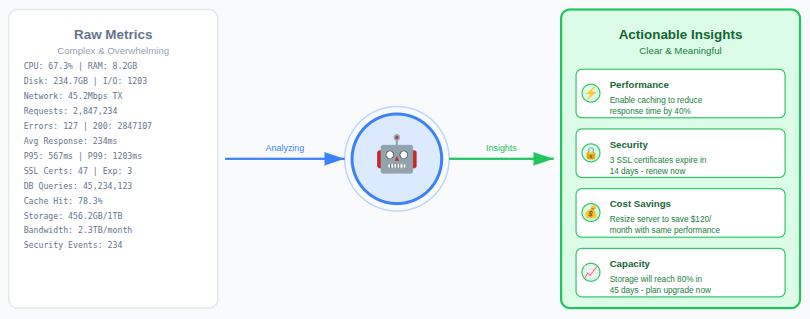
These insights may include:
- Performance improvement suggestions
- Security risk assessments
- Cost optimization recommendations
- Capacity planning forecasts
By turning complex data into actionable intelligence, AI makes hosting more accessible, even for users without deep technical expertise.
Human + AI Collaboration in Hosting Operations
Despite rapid automation, the future of web hosting is not about removing humans from the equation. Instead, it is about collaboration between AI systems and human expertise.
AI excels at handling repetitive tasks, analyzing massive datasets, and reacting instantly to changes. Humans, on the other hand, are still essential for strategic decisions, creative problem-solving, and ethical oversight.
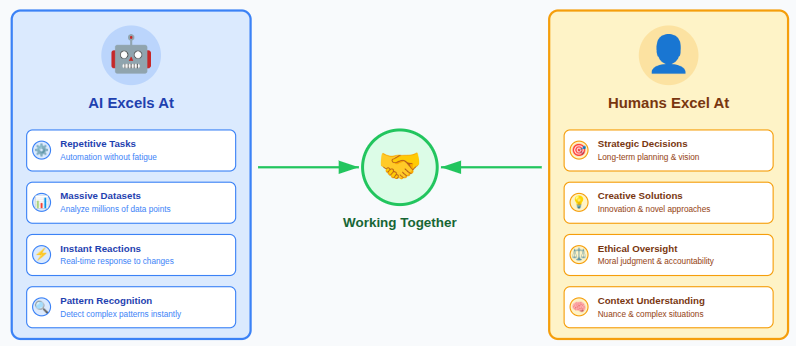
The most successful hosting environments will use AI to augment human capabilities rather than replace them. This hybrid approach leads to more reliable systems, better decision-making, and greater trust.
Personalized Hosting Experiences
Not all websites have the same needs. A personal blog, an e-commerce store, and a large SaaS platform all require different hosting strategies.
AI enables personalized hosting by analyzing:
- Traffic behavior
- Resource usage
- Website type
- Industry benchmarks
Based on this analysis, hosting environments can offer tailored recommendations, optimizations, and configurations that fit each website’s actual requirements.
Cost Efficiency Through Intelligent Resource Management
One of the biggest advantages of AI-driven hosting is cost efficiency. By allocating resources only when and where they are needed, AI reduces waste.
This results in:
- Lower infrastructure costs
- Fewer emergency fixes
- Reduced downtime-related losses
- Better long-term scalability
For businesses of all sizes, intelligent hosting helps balance performance and cost more effectively.

What the Future of Web Hosting Looks Like
As AI adoption increases, expectations around web hosting will continue to rise. The future of hosting will be defined by:
- Predictive, not reactive, systems
- Minimal downtime through self-healing infrastructure
- Stronger, smarter security
- Automated optimization at every level
- Personalized, data-driven hosting environments
Hosting platforms that fail to adopt AI will struggle to keep up with these expectations.
Preparing for an AI-First Hosting Future
The future of web hosting will favor platforms that are designed with AI at their core rather than treating it as an add-on feature. AI-first hosting environments will be more adaptive, efficient, and resilient.
Website owners and developers should begin preparing by:
- Choosing flexible, automation-friendly hosting solutions
- Embracing modern architectures like containers and APIs
- Understanding how data drives performance and security
- Staying informed about emerging AI capabilities
Those who adapt early will be better positioned to scale, innovate, and compete in an increasingly intelligent web ecosystem.
Conclusion
AI is transforming web hosting from a reactive, manual process into an intelligent, proactive, and self-optimizing system. By enabling predictive performance management, automated scaling, smarter security, and personalized hosting experiences, AI ensures websites and applications run faster, more efficiently, and more reliably. The future of web hosting belongs to platforms that embrace AI at their core, allowing businesses to reduce costs, enhance user experiences, and stay competitive in an increasingly complex digital landscape.
FAQs
1. How does AI improve website performance?
AI analyzes traffic patterns, user behavior, and server metrics to optimize caching, resource allocation, and database queries. This leads to faster load times, reduced downtime, and smoother user experiences.
2. Can AI in hosting prevent security threats?
Yes. AI detects unusual behavior, suspicious traffic, and potential attacks in real time. It can automatically block threats and adapt to new attack patterns, reducing risks while lowering false positives.
3. How does AI help with cost efficiency?
AI optimizes resource usage by scaling servers and applications based on actual demand. This prevents over-provisioning, reduces energy consumption, and lowers infrastructure costs while maintaining performance.
4. Will AI-driven hosting benefit small websites or just large enterprises?
AI-driven hosting benefits websites of all sizes. Small websites gain cost efficiency and optimized performance, while large enterprises benefit from scalability, predictive management, and advanced security.
5. Is AI replacing human roles in hosting?
Not entirely, AI handles repetitive tasks, monitoring, and predictive analysis, while humans focus on strategy, innovation, and decision-making. Most effective approach is hybrid one where AI augments human capabilities both are.
Stop Wasting Time on Servers. Start Building Instead.
You didn’t start your project to babysit servers. Let ServerAvatar handle deployment, monitoring, and backups — so you can focus on growth.
Deploy WordPress, Laravel, N8N, and more in minutes. No DevOps required. No command line. No stress.
Trusted by 10,000+ developers and growing.