
Choosing the right programming language can feel a bit like picking the perfect tool from a toolbox. The same idea applies when deciding between PHP vs JavaScript. Both are powerful, widely used, and capable of building amazing things, but they serve different purposes.
If you’re planning to build a website, web app, or even a startup idea, you might be wondering: Which one is better for your project? The answer isn’t as straightforward as you might hope, but don’t worry, by the end of this article, you’ll have a clear direction.
What is PHP?
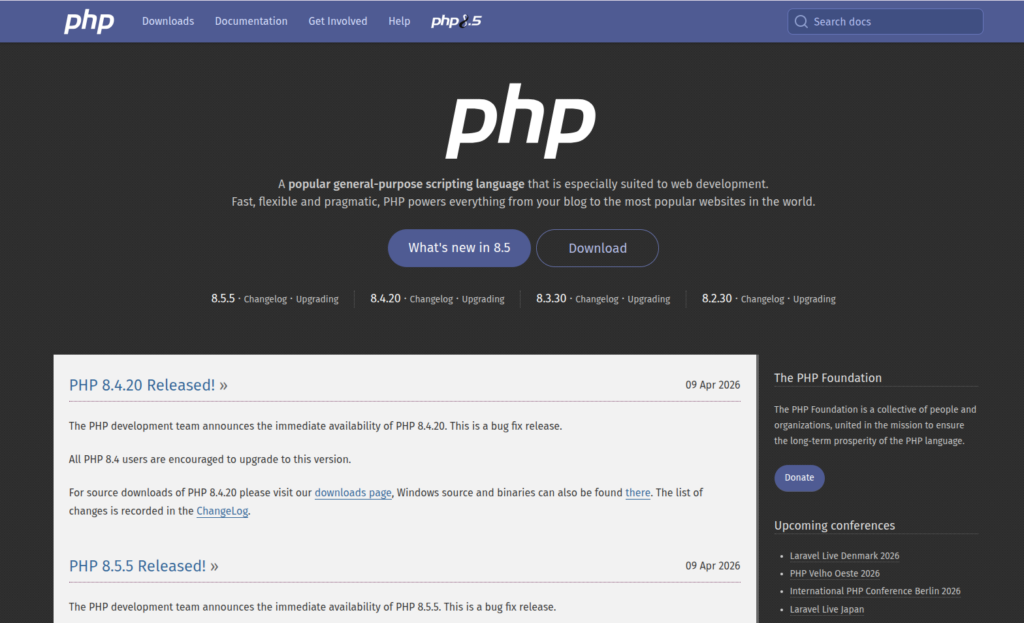
PHP (Hypertext Preprocessor) is a server-side scripting language designed to build dynamic and data-driven websites. It works behind the scenes on the server, handling tasks like processing forms, managing databases, and generating content before it is sent to the user’s browser. PHP is widely used for developing content-heavy websites such as blogs, e-commerce platforms, and business portals.
Key Features
- Open-source and free to use
- Designed specifically for web development
- Easily integrates with databases like MySQL
- Compatible with most web servers (Apache, Nginx)
- Supports multiple frameworks like Laravel and CodeIgniter
- Cross-platform support (Windows, Linux, macOS)
- Large ecosystem of CMS platforms like WordPress
Advantages
- Easy to learn for beginners
- Fast development for simple and medium-sized projects
- Strong community support and extensive documentation
- Cost-effective due to open-source nature
- Reliable for server-side scripting and database operations
- Widely supported by hosting providers
Disadvantages
- Less suitable for building modern interactive user interfaces
- Can become messy if not structured properly
- Performance may lag in large-scale, real-time applications
- Inconsistent syntax in some areas
- Requires additional technologies for frontend interactivity
Best For: Best for building server-side websites, CMS platforms, and database-driven applications quickly and efficiently.
Why Should Use PHP?
PHP is a practical choice when you want to develop websites without unnecessary complexity. It allows you to quickly turn ideas into working applications, especially if your project relies heavily on backend logic and database interaction. Its wide hosting support and large ecosystem also make deployment and maintenance easier.
What is JavaScript?
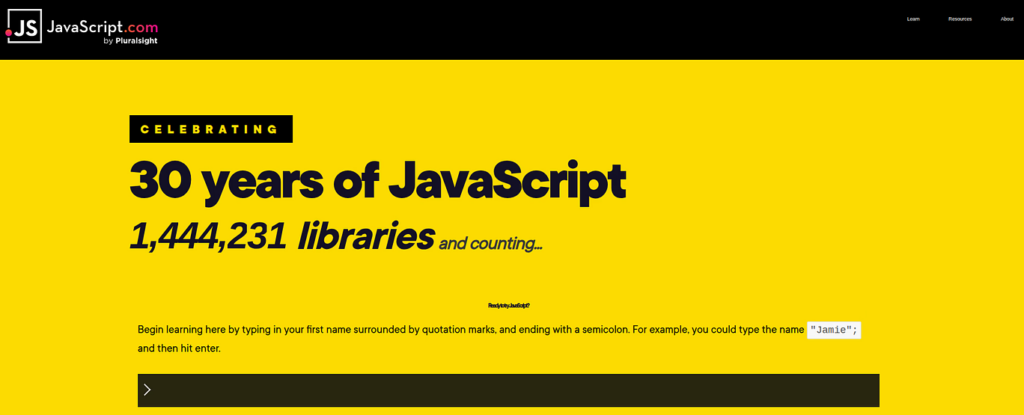
JavaScript is a versatile programming language primarily used to create interactive and dynamic elements on websites. It runs directly in the browser, allowing real-time updates, animations, and user interactions without reloading the page. With the introduction of Node.js, JavaScript can now also be used for backend development, making it a full-stack solution.
Key Features
- Runs directly in the web browser
- Enables dynamic and interactive user interfaces
- Supports asynchronous programming (callbacks, promises, async/await)
- We can use it for frontend and backend as Node.js both
- Works seamlessly with HTML and CSS
- Rich ecosystem with frameworks like React, Angular, and Vue
- Event-driven programming model
Advantages
- Essential for modern web development
- Allows real-time updates and smooth user experience
- Can be used across the entire stack (frontend + backend)
- Huge community and frequent updates
- Compatible with all modern browsers
- Ideal for building single-page applications (SPAs)
Disadvantages
- Browser compatibility issues may arise in some cases
- Can be complex for beginners due to asynchronous behavior
- Security risks when handling sensitive data on the client side
- Performance depends on the user’s device and browser
- Rapid ecosystem changes can make it hard to keep up
Best For: Best for creating interactive web interfaces, real-time applications, and full-stack modern web apps.
Why Should You Use JavaScript?
JavaScript is the backbone of modern web experiences, helping you build fast, responsive, and interactive applications. If your project needs real-time updates or a seamless user interface, JavaScript provides the flexibility to handle both frontend and backend development in one ecosystem.
Similarities Between PHP and JavaScript
While PHP and JavaScript are often compared as opposites, backend vs frontend, they actually share several important similarities. Understanding these common points can help you see how both languages complement each other and why they are often used together in real-world projects.
Key Similarities
- Designed for Web Development: Both PHP and JavaScript are widely used to build and power websites and web applications.
- Open-Source and Free: Both languages are free to use, making them accessible for developers, startups, and businesses of all sizes.
- Cross-Platform Compatibility: PHP and JavaScript can run on multiple operating systems like Windows, Linux, and macOS, without major issues.
- Strong Community Support: Each language has a large global community, offering tutorials, frameworks, and solutions for almost any problem.
- Support for Frameworks and Libraries: Both have rich ecosystems, PHP with frameworks like Laravel, and JavaScript with React, Angular, and Vue.
- Database Interaction: PHP directly interacts with databases, while JavaScript (via Node.js) can also handle database operations effectively.
- Continuous Evolution: Both languages are regularly updated with new features, improvements, and security enhancements.
PHP vs JavaScript: Quick Comparison
Before diving deeper into detailed explanations, here’s a quick side-by-side comparison to help you understand the core differences at a glance. This table simplifies key aspects so you can quickly decide which language fits your project needs.
| Feature | PHP | JavaScript |
| Type | Server-side scripting language | Client-side (and server-side with Node.js) |
| Execution | Runs on the server before page loads | Runs in the browser after page loads |
| Primary Use | Backend development | rontend + Backend (full-stack) |
| Performance | Strong for database and server tasks | Excellent for real-time and UI interactions |
| Ease of Learning | Beginner-friendly | Slightly complex but versatile |
| Use Cases | Websites, blogs, e-commerce | Web apps, SPAs, real-time apps |
| Scalability | Good for traditional apps | Better for modern, scalable apps |
| Community Support | Mature and stable | Large and rapidly evolving |
| Integration | Works well with traditional stacks | Strong with modern tools and APIs |
| Development Speed | Faster for simple backend projects | Efficient for full-stack development |
| Best For | Backend-heavy applications | Interactive and dynamic applications |
Key Differences Between PHP and JavaScript
Understanding how PHP and JavaScript differ is essential when choosing the right technology for your project. Both languages serve different purposes in web development, and each has its own strengths depending on what you are trying to build. Below are the major differences explained in a simple and practical way.
Core Differences
- PHP: A server-side language used to process data on the server before sending it to the browser.
- JavaScript: A client-side language that runs in the browser, and can also work on the server using Node.js.
Execution
- PHP: Executes on the server before the webpage is displayed.
- JavaScript: Executes in the browser after the page loads to handle user interactions.
Purpose
- PHP: Focuses on backend logic like database operations and server processing.
- JavaScript: Focuses on frontend behavior such as animations, events, and real-time updates.
Performance Comparison
Performance can directly impact user experience, so it’s important to understand where each language performs best. PHP and JavaScript are optimized for different types of tasks, which makes them strong in their respective areas.
- PHP: Performs efficiently for backend operations like database queries, form handling, and content generation.
- JavaScript: Excels in real-time interactions, dynamic content updates, and smooth UI rendering. JavaScript can also deliver strong backend performance, especially for real-time applications like chat systems.
Verdict: PHP is better for traditional server-side processing, while JavaScript is the winner for real-time and interactive applications.
Why it matters: Faster performance means better user experience and improved SEO rankings.
Ease of Learning
The ease of learning a language can influence how quickly you can start building your project. PHP is generally more beginner-friendly, while JavaScript requires a bit more effort but offers greater flexibility.
- PHP: Easier to understand and ideal for beginners starting with backend development.
- JavaScript: Slightly more complex due to concepts like asynchronous programming, but more powerful overall.
Verdict: PHP is easier to start with, but JavaScript offers more long-term flexibility once mastered.
Why it matters: The easier a language is to learn, the faster you can start building and reduce development delays, especially if you’re a beginner or working with a small team.
Frontend vs Backend Capabilities
This is one of the biggest differences between the two languages and often influences the final decision.
- PHP: Primarily used for backend development with limited frontend capabilities
- JavaScript: Strong in frontend development and can also handle backend using Node.js
Verdict: JavaScript is more versatile as a full-stack solution, while PHP remains focused on backend tasks.
Why it matters: Knowing where a language performs best helps you choose the right tech stack and avoid unnecessary complexity in your project architecture.
Community and Support
A strong developer community makes learning, troubleshooting, and scaling much easier.
- PHP: Has a long-established and stable community with extensive documentation
- JavaScript: Has a rapidly growing and highly active ecosystem with frequent updates
Verdict: Both have strong support, but JavaScript evolves faster with modern trends.
Why it matters: A strong community ensures you can quickly find solutions, learn faster, and get help when you run into issues during development.
Security Considerations
Security depends more on how the code is written rather than the language itself, but each has its own considerations.
- PHP: Offers improved security features with modern frameworks
- JavaScript: Requires careful handling of client-side data and browser-based vulnerabilities
Verdict: Both can be secure if best practices are followed, but developers must be cautious with implementation.
Why it matters: Better security practices protect your application from vulnerabilities, keeping user data safe and maintaining trust in your platform.
Scalability and Flexibility
As your project grows, scalability becomes a key factor in choosing the right technology.
- PHP: Works well for traditional and structured applications
- JavaScript: Better suited for scalable, real-time, and high-performance applications
Verdict: JavaScript is more flexible for scaling modern applications, while PHP is reliable for standard projects.
Why it matters: Choosing a scalable technology ensures your application can grow smoothly without needing major changes as your user base increases.
Cost and Development Time
Budget and timelines often play a crucial role in decision-making.
- PHP: Faster to develop and generally more cost-effective for smaller projects
- JavaScript: May take more time initially but saves effort in full-stack development
Verdict: PHP is ideal for quick and budget-friendly projects, while JavaScript is better for long-term scalability.
Why it matters: The right choice can save both time and money, helping you launch faster while staying within your budget.
Compatibility with Modern Tools and Technologies
In today’s development landscape, how well a language works with other tools and technologies can significantly impact your workflow. Both PHP and JavaScript integrate with various systems, but their ecosystems differ in flexibility and modern usage.
- PHP: Integrates smoothly with traditional web technologies, databases, and CMS platforms, making it reliable for standard web development.
- JavaScript: Offers seamless integration with modern frameworks, APIs, cloud services, and frontend libraries, creating a highly connected development environment.
Verdict: PHP is dependable for traditional setups, while JavaScript stands out for modern, technology-rich ecosystems.
Why it matters: Better integration means faster development, easier scaling, and the ability to use modern tools without limitations.
Maintenance and Future Sustainability
Building a project is just the beginning, keeping it updated and running smoothly over time is equally important. Long-term maintenance depends on how well a language adapts to changes and supports ongoing development.
- PHP: Stable and consistent, with long-term support through frameworks and widespread hosting compatibility.
- JavaScript: Continuously evolving with frequent updates, offering modern solutions but sometimes requiring regular adjustments.
Verdict: PHP provides stability for long-term maintenance, while JavaScript offers adaptability for projects that evolve quickly.
Why it matters: Choosing the right technology ensures your project remains maintainable, secure, and relevant in the long run.
Skill Requirements and Developer Experience
The level of expertise required can influence development speed, hiring decisions, and overall project success. Both languages differ in how easy they are to learn and master.
- PHP: Easier to pick up, especially for beginners focusing on backend development.
- JavaScript: Requires deeper understanding due to advanced concepts, but offers greater versatility across the stack.
Verdict: PHP is ideal for quick onboarding and simpler projects, while JavaScript is better suited for developers aiming for full-stack capabilities.
Why it matters: The right choice can reduce learning time, improve productivity, and help you build a more efficient development team.
Use Cases of PHP
PHP is widely used for building stable and content-driven platforms where backend functionality plays a major role.
- Best For: CMS platforms, blogs, and database-driven websites
- Common uses include WordPress sites, business websites, and e-commerce platforms
Verdict: Choose PHP when your project is backend-focused and requires quick, reliable development.
Examples:
- WordPress websites
- Online stores
- Business websites
PHP is perfect when you need something stable and straightforward.
Use Cases of JavaScript
JavaScript is essential for creating modern, interactive, and dynamic applications that require real-time user engagement.
- Best For: Interactive web apps, real-time systems, and single-page applications
- Common uses include social media platforms, dashboards, and modern web apps
Verdict: Choose JavaScript when your project requires interactivity, speed, and a modern user experience.
Examples:
- Social media platforms
- Live dashboards
- Web apps like Gmail
JavaScript is your go-to for modern, dynamic experiences.
When to Choose PHP
Choose PHP if:
- You are building a blog, CMS, or content-based website
- You want faster development with lower cost
- You are working with platforms like WordPress
PHP is the right choice for simple, backend-heavy, and cost-effective projects.

When to Choose JavaScript
Choose JavaScript if:
- You need a highly interactive user interface
- You are building modern web or SaaS applications
- You want a single language for both frontend and backend
JavaScript is the best choice for dynamic, scalable, and feature-rich applications.
Manage Your PHP and JavaScript Projects Effortlessly with ServerAvatar
Building your application with PHP or JavaScript is just one part of the journey, managing your server shouldn’t slow you down. ServerAvatar is designed to simplify everything so developers and businesses can focus more on building and less on handling complex infrastructure.
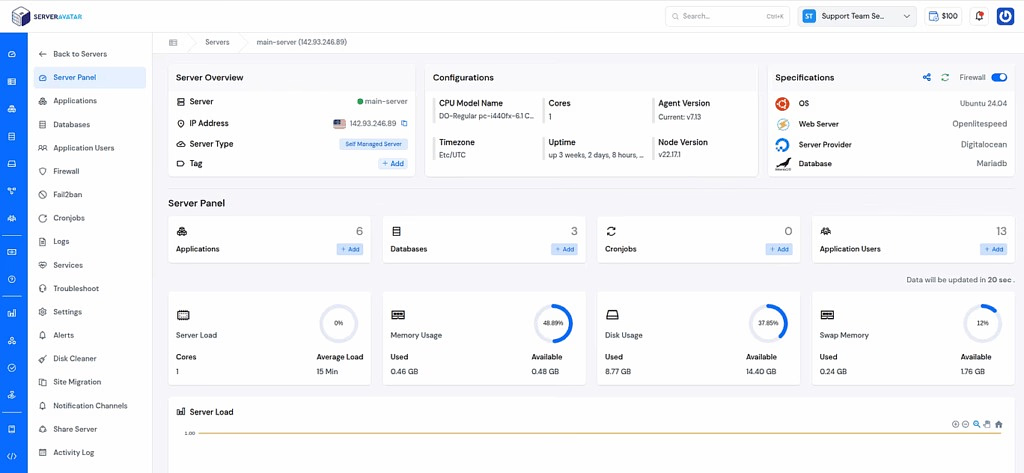
ServerAvatar is a platform to simplify the hosting and management of servers and applications. It simplifies the process of deploying and managing PHP and Node.js based web applications on servers.
Whether you’re deploying a PHP-based website like WordPress or running a JavaScript-powered application, ServerAvatar provides an intuitive platform to manage everything in one place. From setting up servers to deploying applications and monitoring performance, it removes the technical barriers that often come with server management.
With its clean dashboard and automation features, ServerAvatar makes it easy to launch and maintain projects without needing deep system administration knowledge. This means faster deployments, fewer errors, and a smoother overall workflow, no matter which technology you choose.
Key Features of ServerAvatar
- Instant Application Deployment: Quickly deploy PHP or JavaScript applications without manual configuration.
- Managed and Self-Managed Server Infrastructure: Use fully managed servers directly provided by ServerAvatar, and connect your own custom self-managed servers from any cloud provider.
- User-Friendly Dashboard: Control everything from a simple and intuitive interface.
- Built-in Security Tools: Includes Firewall, Fail2ban, SSL management, AI Bot Blocker, 8G Firewall, and many more security features to keep your server protected.
- Automated Backups: Create Instant backup and Schedule backups to ensure your data is always safe and recoverable.
- Performance Monitoring: Track server health, resource usage, and application performance in real time.
- File Manager & Database Access: Easily manage files and databases without relying on external tools.
- Log Monitoring: View and analyze server and application logs to troubleshoot issues quickly.
- Team Collaboration: Add team members and manage access with role-based permissions.
Conclusion
When it comes to choosing between PHP and JavaScript, there is no universal winner, it all depends on what you want to build. PHP is a great choice for stable, backend-driven applications, while JavaScript shines in creating modern, interactive, and real-time experiences. In many cases, using both together can give you the best of both worlds. No matter which path you choose, having the right server management platform like ServerAvatar can make your development process smoother, faster, and far more efficient.
FAQs
1. Is PHP still relevant in modern web development?
PHP is still widely used and powers many websites, especially CMS platforms like WordPress.
2. Can JavaScript handle backend development?
With Node.js, JavaScript can be used for backend development as well as frontend.
3. Which is better for beginners: PHP or JavaScript?
PHP is generally easier for beginners, while JavaScript offers more flexibility once you gain experience.
4. Can PHP and JavaScript be used together in one project?
Many applications use PHP for backend processing and JavaScript for frontend interactivity.
5. How does ServerAvatar help in managing web applications?
ServerAvatar simplifies server setup, deployment, and monitoring, allowing you to manage your applications without dealing with complex server configurations.