
Here’s what no one tells you when you first start running servers or building production software: the toughest problems rarely come with documentation. You run into a networking rule that nobody warns you about, your database starts behaving strangely at 2 AM, or a deployment script that worked perfectly for six months suddenly breaks down, and the official documentation simply… doesn’t have a solution for it. That’s where Facebook Groups for SysAdmins and Developers can help.
That’s when you need people who have been there. Not a search engine. Not a Stack Overflow thread from 2014. Actual humans who remember the time they made the same mistake you just made, and know exactly how to fix it without making you feel stupid for asking.
Facebook groups are one of the best places to find those humans. They’re informal, fast, and packed with practitioners, not spectators. The trick is knowing which ones are worth your time, and which ones are just echo chambers full of self-promotion and recycled content.
This isn’t another generic roundup. I have spent time in these communities. Some I have lurked in for months before posting. Some I have gotten real answers from. A few I have actively avoided. What follows is the breakdown of the groups that actually deliver value if you are a system administrator or developer trying to level up, written from actual experience, not a listicle rewritten from a competitor’s listicle.
TL;DR
- Facebook groups can still be useful in 2026 when you find communities with genuine technical discussions.
- The right group depends on your area of interest, from Linux and DevOps to software development and cloud technologies.
- Active moderation and knowledgeable members generally matter more than raw member counts.
- Smaller, specialized communities can sometimes provide more useful conversations than huge general-purpose groups.
- Before posting a question, search the group’s previous discussions. Someone may have already solved the same problem.
Why SysAdmins and Developers Still Need Facebook Groups in 2026
With thriving communities on Reddit, Discord, Slack, GitHub Discussions, and Stack Overflow, it’s easy to assume Facebook Groups have become outdated. However, for system administrators, DevOps engineers, cloud architects, and software developers, many Facebook Groups continue to provide value that other platforms don’t always offer.
Rather than competing with modern communities, Facebook Groups complement them by bringing together experienced professionals, long-form discussions, and practical advice based on real production environments.
Why They Still Matter
1. Experienced Professionals Lead the Conversations
One of the biggest advantages of established Facebook Groups is the quality of their members. Unlike many public forums that attract a large number of beginners, these communities often consist of professionals responsible for managing production infrastructure and business-critical applications. You’ll regularly find discussions involving:
- Senior System Administrators
- DevOps Engineers
- Cloud Architects
- Infrastructure Engineers
- IT Consultants
- MSP (Managed Service Provider) owners
- Cybersecurity specialists
- Software developers building production applications
This creates an environment where technical discussions are based on practical experience rather than theory.
2. Higher Quality Answers for Real Production Problems
When you’re troubleshooting a server outage or deployment issue, generic documentation isn’t always enough. Active Facebook Groups frequently provide responses from professionals who have already encountered similar challenges in production. Instead of receiving only documentation links, members often share:
- Step-by-step troubleshooting methods
- PowerShell and Bash scripts
- Infrastructure recommendations
- Performance optimization techniques
- Deployment best practices
- Security improvements
- Lessons learned from previous incidents
The result is a much higher signal-to-noise ratio than many open communities.
3. Practical Knowledge Beyond Official Documentation
Vendor documentation explains how products are designed to work. Community discussions explain what happens when things don’t go as planned. Members commonly discuss real-world issues involving:
- Windows Server administration
- Linux server management
- Active Directory replication
- Microsoft 365 migrations
- VMware and Hyper-V virtualization
- Kubernetes and Docker deployments
- AWS, Azure, and Google Cloud
- Backup and disaster recovery
- Server monitoring and automation
These conversations often include practical workarounds, implementation tips, and deployment experiences that official documentation may not cover.
4. Better Visibility in Google Search
Another reason Facebook Groups remain valuable is their strong search presence. Searching Google for a specific error message or configuration problem frequently leads to Facebook discussions where experienced professionals have already documented the issue and shared possible solutions. These discussions often include:
- Complete error messages
- Log excerpts
- Configuration examples
- Multiple troubleshooting approaches
- Community feedback on successful fixes
- Updates from the original poster after resolving the issue
This makes Facebook Groups a useful knowledge base for solving uncommon or difficult technical problems.
5. Communities That Have Proven Their Value
Not every Facebook Group is worth joining, but the communities that remain active in 2026 have generally earned their reputation over many years. Most low-quality groups filled with spam and inactive members have gradually disappeared, leaving behind communities that continue to deliver meaningful technical discussions. Well-managed groups typically offer:
- Active moderation
- Minimal spam and promotional content
- Helpful and knowledgeable contributors
- Consistent technical discussions
- Strong community engagement
- Experienced IT professionals willing to help
For working system administrators and developers, these communities continue to be reliable places for learning, troubleshooting, networking, and staying current with evolving technologies.
Facebook Groups may no longer be the newest destination for technical discussions, but they remain one of the few platforms where experienced practitioners openly share production knowledge, review architectural decisions, and help peers solve complex infrastructure challenges.
How I Evaluated These Groups
Before diving in, here’s the criteria I used, so you know this isn’t just a random list pulled from Google:
- Active moderation: No spam, no self-promotional spam threads, no low-effort content flooding the feed
- Real engagement: Questions get answers, not just reactions
- On-topic focus: Communities that stay relevant to sysadmins and developers, not everything-and-the-kitchen-sink groups
- Practitioner presence: The membership should skew toward people who actually do the work, not managers, not onlookers
- Accessibility: Groups a working professional can join and get value from without wading through 10 years of off-topic posts
These standards ruled out some popular-sounding groups that are technically “large” but practically dead or unmoderated. Size means nothing if nobody’s actually talking.
Why Group Size Wasn’t a Ranking Factor
A Facebook Group with hundreds of thousands of members isn’t automatically better than one with only a few thousand.
Many large communities become inactive over time or are overwhelmed by spam, repetitive questions, and promotional content.
Throughout this list, community quality mattered far more than membership numbers. The groups included here continue to stand out because they encourage meaningful discussions, maintain active moderation, and provide practical insights from professionals working with real-world infrastructure every day.
The Best Facebook Groups for SysAdmins and Developers
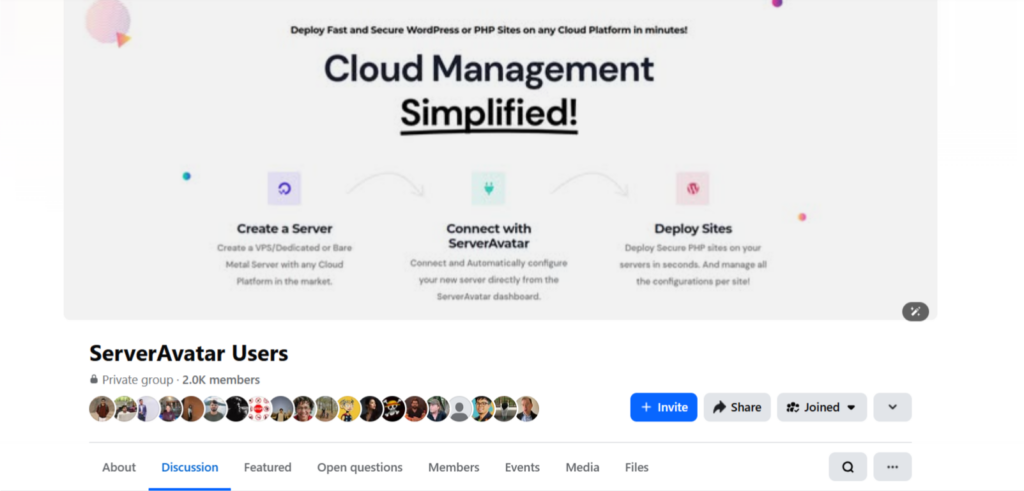
ServerAvatar Community
For ServerAvatar users and professionals interested in server management, a ServerAvatar focused community can be useful for discussing server administration, hosting, deployment, and related infrastructure topics.
| Detail | Information |
|---|---|
| Members | 2.0K members |
| Group Type | Private |
A community centered around the platform gives users a place to exchange practical experiences and discuss challenges they encounter while managing servers and applications.
Why this group stands out
A platform-specific community can be particularly helpful when you’re looking for practical advice from people working with similar infrastructure.
It’s also useful for learning how other developers and system administrators approach common hosting and server-management challenges.
Popular discussion topics include:
- Server setup and configuration
- Application deployment workflows
- Linux administration
- Web hosting environments
- PHP version and configuration management
- Apache, Nginx, and OLS
- Server security practices
- DevOps workflows and automation
- Backup strategies
- Server monitoring
- Website hosting challenges
Best suited for:
- Server administrators
- Developers managing their own infrastructure
- DevOps professionals
- Hosting providers
- WordPress professionals
- ServerAvatar users
Where it shines
- Managing multiple servers from one place
- Handling day-to-day infrastructure tasks
- Finding practical solutions to server issues
- Supporting developers managing their own servers
- Improving website and application reliability
- Learning from hosting and infrastructure
- Discussing real-world server management challenges
- Managing production hosting environments
- Exploring efficient server administration workflows
- Getting practical insights beyond basic documentation
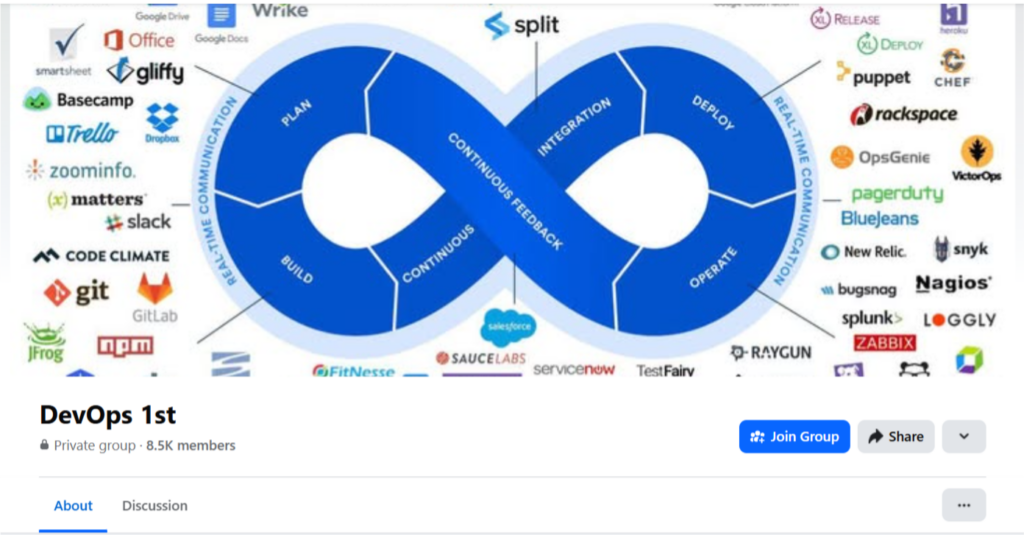
Unix DevOps
Unix DevOps is focused on Unix and Unix-like operating systems and related technologies.
| Detail | Information |
|---|---|
| Members | 8.5K members |
| Group Type | Private |
The community covers a range of platforms and systems, including Linux and several Unix variants. That makes it particularly interesting for administrators who work with Unix-based infrastructure or want to learn from people with experience managing these environments.
Areas of interest include:
- Linux
- BSD
- AIX
- HP-UX
- Solaris
- IRIX
- Tru64
- Darwin
- Minix
The group is particularly relevant to professionals interested in traditional Unix administration as well as Linux-based infrastructure.
Because communities focused on older Unix platforms can be harder to find, this type of group can provide an interesting place to exchange knowledge and discuss administration challenges.
Best suited for:
- Unix administrators
- Linux SysAdmins
- Infrastructure engineers
- DevOps professionals
- Professionals working with legacy Unix environments
Where it shines:
- Unix administration
- Linux
- BSD
- System troubleshooting
- Cross-platform Unix knowledge
Sysadmin | Cloud | DevOps
If your work involves Linux, Windows, cloud infrastructure, databases, virtualization, or DevOps, this community is directly relevant to your field.
| Detail | Information |
|---|---|
| Members | 107.0K members |
| Group Type | Public |
The group covers a broad range of infrastructure technologies, making it useful for system administrators and engineers who regularly work across different parts of an IT environment.
Topics commonly associated with this type of community include:
- Linux administration
- Windows administration
- Cloud computing
- Databases
- VMware
- Virtualization
- DevOps
- Infrastructure management
- Technical tutorials
- Industry news
Because the group covers several infrastructure disciplines, it can be useful when you’re dealing with problems that cross technology boundaries.
For example, a deployment issue might involve Linux configuration, cloud infrastructure, networking, and application behavior at the same time.
Best suited for:
- System administrators
- DevOps engineers
- Cloud engineers
- Infrastructure professionals
- Database administrators
- IT professionals
Where it shines:
- Cloud infrastructure
- Linux and Windows administration
- Virtualization
- DevOps
- Infrastructure troubleshooting
Full Stack Developers / DevOps / Software Designers and Architects
This community brings together professionals working across software development, DevOps, design, and software architecture.
| Detail | Information |
|---|---|
| Members | 27.3K members |
| Group Type | Private |
Its broad scope makes it useful for developers who aren’t limited to one layer of the technology stack. You may encounter discussions around:
- Full-stack development
- DevOps
- Software architecture
- Application development
- Troubleshooting
- Development resources
- Industry news
- Career opportunities
- Learning resources
One of the biggest advantages of a community covering both development and DevOps is that members can see problems from different perspectives.
A developer might view an issue from the application perspective, while a DevOps engineer may concentrate on deployment, infrastructure, or system reliability.
Why this group can be useful
If you’re working across application development and infrastructure, discussions that combine these areas can help you understand how architectural and deployment decisions affect one another.
Best suited for:
- Full-stack developers
- DevOps engineers
- Software architects
- Software designers
- Developers interested in infrastructure
Black (WPT) Web Developers, Programmers, Engineers & Techs
This community brings together web developers, programmers, engineers, and technology professionals.
| Detail | Information |
|---|---|
| Members | 5.2K members |
| Group Type | Private |
The group has a broader professional focus than a community dedicated to one programming language or platform, making it relevant to people working across different areas of software and technology.
Topics and discussions can include:
- Software development
- Programming
- Web development
- Technology trends
- Professional experiences
- Industry discussions
- Technical questions
- Collaboration and networking
One of the useful aspects of a community like this is the opportunity to interact with professionals from different technical backgrounds.
The group is particularly relevant if you’re looking for discussions that connect software development with broader technology and professional topics.
Best suited for:
- Web developers
- Programmers
- Software engineers
- Technology professionals
- Developers looking to network with other professionals
Software Development Mastery
Software Development Mastery is aimed at developers who want to improve their software development skills and solve practical programming problems.

| Detail | Information |
|---|---|
| Members | 58.8K members |
| Group Type | Private |
The community has a strong software-development focus, making it more relevant to developers than groups centered primarily around server administration or infrastructure.
Topics you may find include:
- Software development
- Programming problems
- Development practices
- Technical questions
- Learning resources
- Career development
- Improving programming skills
One of the benefits of a focused software-development community is that discussions can stay centered around the actual process of becoming a better developer.
Instead of jumping between unrelated IT topics, developers can focus on programming challenges, development concepts, and practical ways to improve their skills.
Best suited for:
- Software developers
- Programmers
- Developers building their skills
- People transitioning into software development
- Developers looking for peer discussions
Where it shines:
- Software development
- Programming problems
- Developer learning
- Practical development discussions
JavaFX Software Developers & Engineers
JavaFX Software Developers & Engineers is a specialized community for developers working with JavaFX and desktop Java applications.
| Detail | Information |
|---|---|
| Members | 3.4K members |
| Group Type | Public |
Unlike broader programming communities, this group focuses on a specific technology, which can make it particularly valuable when you’re dealing with a JavaFX-specific problem.
Topics may include:
- JavaFX development
- Java applications
- Thick-client applications
- Java programming
- Technical troubleshooting
- Development questions
Specialized groups like this can be useful because members are more likely to understand the specific technology you’re working with.
If you’re facing a problem that isn’t easily solved through general Java discussions, a community dedicated to JavaFX may provide more relevant perspectives.
Best suited for:
- Java developers
- JavaFX developers
- Desktop application developers
- Software engineers working with Java
Where it shines:
- JavaFX
- Desktop Java development
- Java programming
- Technology-specific troubleshooting
DevOps | Knowledge Sharing & Jobs
If you’re interested in both DevOps knowledge and career opportunities, this community offers a combination of technical and professional content.
| Detail | Information |
|---|---|
| Members | 4.0K members |
| Group Type | Public |
The group is particularly relevant to people who want to keep up with DevOps-related opportunities while also finding learning resources.
You may find discussions involving:
- DevOps jobs
- Hiring opportunities
- Training
- Workshops
- Boot camps
- Technical resources
- Industry information
- Professional development
A major benefit of this type of community is that it combines learning with career development.
For someone actively looking for a DevOps position, keeping an eye on job-related discussions can provide insight into the technologies employers are looking for.
Best suited for:
- DevOps engineers
- System administrators
- Cloud engineers
- Developers moving into DevOps
- IT professionals looking for DevOps opportunities
Where it shines:
- DevOps jobs
- Training opportunities
- Professional networking
- Industry resources
Docker Vietnam

| Detail | Information |
|---|---|
| Members | 46.5K members |
| Group Type | Public |
Docker Vietnam is a community centered around Docker and related technologies, with a particular focus on Vietnamese developers and technology professionals.
For Vietnamese-speaking developers, the regional focus can make the group especially useful for finding technical discussions, local opportunities, and community connections.
Topics may include:
- Docker
- Containers
- Development workflows
- DevOps
- Technical troubleshooting
- Industry news
- Jobs and hiring
- Courses and learning resources
The regional nature of the community is one of its biggest strengths.
Instead of only discussing technology in a global context, members can also exchange information relevant to developers working in Vietnam.
Best suited for:
- Vietnamese developers
- Docker users
- DevOps professionals
- Developers working with containers
- Technology professionals in Vietnam
If you don’t speak Vietnamese, this may not be the most useful group for you because much of the community interaction is likely to depend on the language used by its members.
Google Cloud Platform & Kubernetes
Cloud computing and container orchestration often go hand in hand, and this community brings those two areas together.
| Detail | Information |
|---|---|
| Members | 44.2K members |
| Group Type | Public |
The group focuses on Google Cloud Platform and Kubernetes while also allowing discussions around related technologies that interact with cloud and container infrastructure.
Topics can include:
- Google Cloud Platform
- Kubernetes
- Cloud infrastructure
- Containers
- AWS and related cloud technologies
- DevOps
- Technical articles
- Industry news
- Troubleshooting
- Learning resources
For developers and system administrators moving toward cloud-native infrastructure, this combination is particularly relevant.
Kubernetes can introduce challenges involving networking, storage, deployments, scaling, monitoring, and security. A community focused on both Kubernetes and cloud infrastructure can provide useful perspectives across those areas.
Where it shines:
- Kubernetes
- Google Cloud
- Cloud infrastructure
- Container orchestration
- Cloud-native technologies
- DevOps
Best suited for:
- Kubernetes engineers
- Cloud engineers
- DevOps professionals
- System administrators
- Developers working with cloud-native applications
I am a Software Engineer
This group is focused specifically on software developers and engineers working with different programming languages and technologies.

| Detail | Information |
|---|---|
| Members | 7.0K members |
| Group Type | Public |
Because software development covers so many languages and frameworks, a broader developer community can be useful when you encounter a problem that isn’t tied to one particular technology.
Topics can include:
- C and C++
- C#
- Java
- Android development
- PHP
- JavaScript
- MySQL
- HTML
- CSS
- Bootstrap
- jQuery
- General programming
The broad technology coverage makes this group suitable for developers who work with multiple languages or want to learn about technologies outside their current stack.
Why developers may find it useful
A problem that looks like a language-specific issue can sometimes involve databases, web technologies, frameworks, or deployment.
Being part of a broader developer community gives you access to people with different technical backgrounds.
Best suited for:
- Software engineers
- Web developers
- Programmers
- Backend developers
- Full-stack developers
- Developers learning new technologies
Computer Science/Software Engineering Conferences
Not every useful developer community needs to revolve around troubleshooting.

| Detail | Information |
|---|---|
| Members | 50.5K members |
| Group Type | Public |
This group focuses on computer science and software engineering conferences, making it particularly useful for developers, researchers, students, and professionals who want to discover technical events and research opportunities.
You may find information about:
- Computer science conferences
- Software engineering conferences
- Research events
- Academic opportunities
- Technology topics
- Papers and presentations
- International conferences
The variety of conference topics is one of the main advantages of this type of community.
Events may cover areas ranging from artificial intelligence and robotics to software engineering, security, and emerging technologies.
Why you should consider joining
Keeping track of conferences can help developers and technical professionals stay aware of new research and developments outside their day-to-day work.
It can also be useful for people pursuing advanced education, publishing research, or looking for opportunities to connect with other professionals and researchers.
Best suited for:
- Software engineers
- Computer science students
- Researchers
- Developers interested in emerging technologies
- Professionals looking for conferences and technical events
How to Get the Most Value From Facebook Groups
Joining the right communities is only the first step. How you participate determines how much value you get from them.
Search Before You Post
Before creating a new question, search the group.
Technical communities accumulate years of discussions, and there’s a good chance someone has already experienced a similar problem. Searching first can also help you understand how the community prefers questions to be presented.
Include Useful Technical Details
Instead of posting:
“My server isn’t working. Can anyone help?”
Give people enough information to understand the problem. Include details such as:
- Operating system
- Software versions
- Relevant error messages
- Logs
- Configuration details
- What you already tried
- When the problem started
The better your question, the easier it is for someone to provide a useful answer.
Don’t Treat Community Advice as Absolute
Even experienced professionals can make mistakes.
Before applying a command or configuration change to production, understand what it does and verify that it makes sense for your environment. This is particularly important when someone recommends:
- Firewall changes
- Permission changes
- Database modifications
- Kernel settings
- Security configurations
- Production deployment commands
Use community discussions as a source of experience, not as a replacement for testing and proper change management.
Give Back to the Community
If someone helps you solve a problem, consider returning the favor.
Share what worked, explain the solution, or help another member with a problem you’ve already encountered. That’s how technical communities stay useful.

Facebook Groups vs Other Developer Communities
Facebook isn’t the only place where SysAdmins and developers can find technical communities. Depending on the problem, you may also want to use:
- Reddit for community discussions and experiences
- Stack Overflow for programming questions
- GitHub Discussions for project-specific conversations
- Discord for real-time technical communities
- Slack communities for professional networking
- Official vendor forums for product-specific issues
- Documentation and knowledge bases for authoritative technical information
The best approach isn’t necessarily choosing one platform.
Use different communities for different purposes. For instance, official documentation can explain how a feature is supposed to work, while a Facebook discussion can show how someone handled an unusual problem in production.
Key Takeaways
- Facebook Groups can still be valuable communities for SysAdmins, developers, DevOps engineers, and cloud professionals.
- The quality of a community matters more than its total member count.
- Focused groups can offer more useful discussions than broader technology communities.
- Facebook Groups can help with troubleshooting, knowledge sharing, networking, career opportunities, and discovering technical resources.
- Always search existing discussions before posting a new technical question.
- Community advice should be tested and verified before applying changes to a production environment.
Conclusion
The best Facebook Groups for SysAdmins and Developers aren’t necessarily the biggest ones. What matters is whether the community contains people who actively work with the technologies you’re interested in and are willing to share their experience.
From Linux and Unix administration to DevOps, cloud computing, software development, Docker, Kubernetes, Java, and web development, the groups above cover a broad range of technical interests. The key is to choose communities that match your work and learning goals.
Join a few relevant groups, spend some time observing the discussions, search existing conversations before asking questions, and contribute when you have something useful to share. Because when you’re staring at a production problem at 2 AM, having access to someone who’s already made, and survived, the same mistake can be worth far more than another page of documentation.
FAQs
Are Facebook Groups still useful for SysAdmins and developers?
Yes, active Facebook Groups can provide practical advice, troubleshooting experience, technical discussions, networking opportunities, and career-related resources for SysAdmins and developers.
How do I choose the best Facebook Group for my needs?
Look for groups with active discussions, knowledgeable contributors, effective moderation, and a clear technical focus. Choose communities that match your area of work, such as Linux, DevOps, cloud computing, software development, or Kubernetes.
Should I consider the number of members when choosing a Facebook Group?
Not necessarily, a large membership doesn’t guarantee useful discussions. An active, specialized community with fewer members can provide more relevant conversations and better technical engagement.
What should I include when asking a technical question in a Facebook Group?
Include relevant details such as your operating system, software versions, error messages, logs, configuration details, troubleshooting steps you’ve already tried, and when the problem started. This gives other members enough context to provide useful answers.
Can I rely completely on solutions shared in Facebook Groups?
No, community advice can be useful, but it should be verified before being applied, especially in production environments. Test commands and configuration changes carefully before making changes to servers or applications.
Are Facebook Groups the only communities SysAdmins and developers should use?
No, depending on your needs, you can also use Reddit, Stack Overflow, GitHub Discussions, Discord, Slack communities, official vendor forums, and technical documentation. Using multiple sources can give you different perspectives and more reliable information.
About the Author
Meghna Meghwani is a technical writer focused on Linux, Ubuntu, VPS hosting, server management, WordPress, PHP, Node.js, cloud hosting, and DevOps. She creates beginner-friendly tutorials, practical hosting guides, troubleshooting articles, and server security content designed to help developers and businesses manage applications and servers more efficiently.