
Starting a new business in 2026 is exciting, but it can also feel a little overwhelming, especially when it comes to picking the right technology stack. If you’re planning to build a web application, one of the key choices you’ll face is Laravel vs Symfony for startups. Think of it like choosing the perfect foundation for your startup; both are strong and reliable, but each is designed with a different style, pace, and purpose in mind.
Laravel is often favored for its simplicity and rapid development capabilities, making it ideal for startups that want to move fast and launch quickly. Symfony, on the other hand, offers greater flexibility and is well-suited for complex, enterprise-level applications that require long-term scalability and customization.
In this guide, we will break everything down in simple terms so you can confidently decide which one is the best fit for your startup.
What is Laravel?
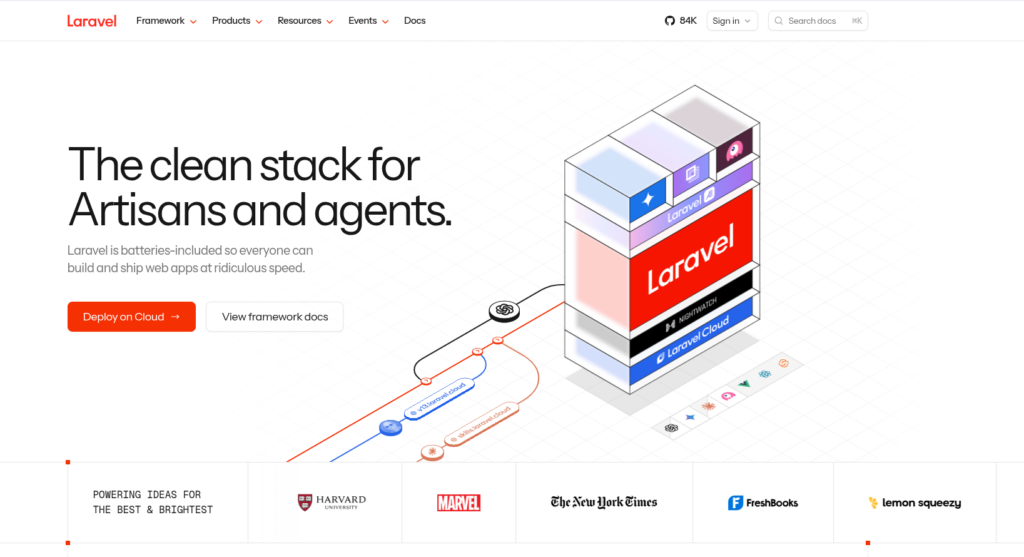
Laravel is a modern PHP framework designed to make web development simple and enjoyable. In simple words, Laravel is like a ready-made toolkit; you can start building right away without worrying about the basics.
Key Features
- Built-in authentication and routing system
- Elegant and easy-to-read syntax
- Blade templating engine for UI
- Eloquent ORM for database handling
- Strong ecosystem with ready-to-use tools
Pros
- Quick setup and faster development
- Beginner-friendly and easy to learn
- Large community and rich resources
- Ideal for rapid prototyping
- Cost-effective for startups
Cons
- Less flexible compared to Symfony
- Can become heavy for very large applications
- An opinionated structure may limit customization
Best For: It is best for startups and MVPs that need fast development and easy scalability
What is Symfony?
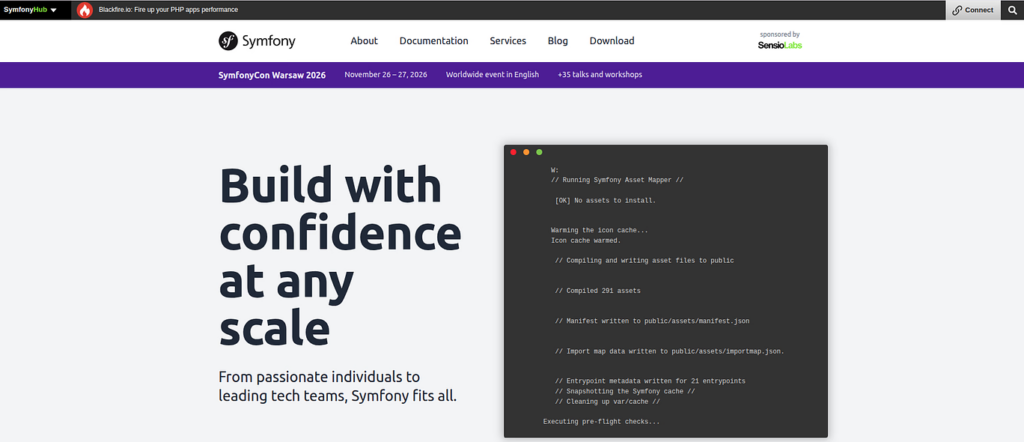
Symfony is another powerful PHP framework, but it focuses more on flexibility and structure. If Laravel is a ready-made toolkit, Symfony is more like a custom workshop, you build things your own way.
Key Features
- Modular component-based architecture
- Highly flexible configuration system
- Reusable PHP components
- Advanced debugging and testing tools
- Strong support for enterprise-level applications
Pros
- Extremely flexible and customizable
- Better suited for complex applications
- High performance for large-scale systems
- Strong long-term maintainability
- Reliable for enterprise use
Cons
- Steeper learning curve
- Slower development process
- Requires experienced developers
- Higher development cost
Best For: It is best for complex, enterprise-level applications requiring full control and customization
Why Startups Need the Right Framework
Picking the right framework is a critical decision for any startup. The wrong choice can slow down your progress, increase development costs, and make your product harder to manage. Startups need a solution that helps them move fast while staying efficient and scalable.
- Fast development: Helps you launch your product quickly and stay ahead of competitors.
- Low cost: Reduces development expenses, which is crucial for limited startup budgets.
- Scalability: Ensures your application can grow smoothly as your user base increases.
- Easy maintenance: Makes it simpler to fix issues and update features over time.
The right framework acts like a strong foundation, letting you build and grow without unnecessary obstacles.
Laravel vs Symfony: Quick Comparison
| Feature | Laravel | Symfony |
| Ease of Use | Very Easy | Moderate |
| Development Speed | Fast | Slower |
| Flexibility | Moderate | High |
| Performance | Good | Excellent |
| Cost | Low | Higher |
| Best For | Startups & MVPs | Enterprise Apps |
Laravel vs Symfony: Detailed Comparison Between PHP Frameworks
Choosing between Laravel and Symfony isn’t always straightforward, especially when both frameworks offer powerful capabilities. For startups and businesses, the decision often comes down to factors like development speed, cost, flexibility, and long-term goals. Making the right choice early can save both time and resources down the road.
To simplify this process, it’s helpful to look at the key differences side by side. The comparison below highlights the most important aspects of both frameworks, giving you a clearer picture of which one aligns better with your project needs.
This quick comparison will act as a practical guide, helping you make a confident and informed decision without overcomplicating things.
Ease of Learning and Use
When it comes to ease of use, Laravel clearly stands out, especially for beginners or small teams. It is designed to be simple, readable, and easy to understand, even if you’re just starting your coding journey.
Laravel
- Simple syntax: Uses clean and readable code that is easy to understand and write.
- Clear documentation: Provides well-structured guides that help developers learn quickly.
- Beginner-friendly: Makes it easy for new developers to start building applications.
Symfony
- Steeper learning curve: Requires more time and effort to fully understand.
- Requires deeper technical knowledge: Better suited for developers with prior experience.
If your team is small or just getting started, Laravel is usually the more comfortable option.
Development Speed
For startups, speed can make a huge difference between success and missed opportunities. A faster framework allows you to build, test, and launch your product without delays.
Laravel
- Pre-built features: Comes with ready-made tools that reduce development time.
- Faster setup: Allows you to get started quickly without complex configuration.
- Less coding required: Minimizes effort by handling many tasks automatically.
Symfony
- Requires more configuration: Needs additional setup before development begins.
- Takes longer to build from scratch: Involves more manual work during development.
If reaching the market quickly is your goal, Laravel is the better choice.
Performance and Scalability
As your startup grows, performance and scalability become more important. You need a framework that can handle increasing traffic and complexity without slowing down.
Laravel
- Good performance: Delivers reliable speed for most applications.
- Scalable with proper setup: Can grow as your application expands.
- Slightly heavier due to built-in features: Includes extra tools that may add some overhead.
Symfony
- Highly optimized: Designed for efficient performance in demanding applications.
- Better for large-scale applications: Handles heavy workloads with ease.
- Handles complex systems efficiently: Works well for advanced and layered architectures.
Symfony has a slight advantage for very large systems, but Laravel performs well for most startup needs.
Flexibility and Customization
Flexibility matters when your application has unique or complex requirements. This is where Symfony stands out.
Laravel
- Opinionated structure: Follows a predefined way of building applications.
- Less flexible but easier to use: Trades customization for simplicity and speed.
Symfony
- Fully customizable: Allows you to design your application exactly the way you want.
- Use only what you need: Lets you include specific components instead of the full framework.
- Modular architecture: Supports building applications in smaller, manageable parts.
If you want complete control, Symfony is ideal. If you prefer simplicity, Laravel is a better fit.
Community and Support
Having access to a strong community can save time and reduce frustration during development. It helps you find solutions quickly when you get stuck.
Laravel
- Huge and active community: Offers strong support from developers worldwide.
- Tons of tutorials and resources: Makes learning and troubleshooting easier.
- Frequent updates: Keeps the framework modern and secure.
Symfony
- Strong but more developer-focused community: Provides support mainly for experienced users.
- Better for experienced users: Offers advanced resources for complex problems.
Laravel is generally more beginner-friendly when it comes to community support.
Security Features
Security is essential for protecting your application and user data. Both frameworks take this seriously and offer strong built-in protections.
Laravel
- CSRF protection: Prevents unauthorized actions from malicious sources.
- Authentication systems: Provides ready-to-use user login and access control features.
- Encryption: Secures sensitive data within your application.
Symfony
- Advanced security components: Offers powerful tools for handling complex security needs.
- More customizable security options: Allows fine control over security settings.
Both frameworks are secure, but Symfony gives more flexibility for advanced security requirements.
Cost and Resource Efficiency
Startups usually have limited budgets, so choosing a cost-effective framework is important.
Laravel
- Faster development with lower cost: Saves money by reducing development time.
- Requires fewer developers: Can be managed by smaller teams.
Symfony
- More development time: Increases overall project cost.
- Needs experienced developers: Requires skilled professionals, which can be expensive.
Laravel is generally more budget-friendly for early-stage startups.
Real-World Use Cases
Different frameworks are better suited for different types of applications.
Laravel is commonly used for
- SaaS applications: Ideal for building subscription-based platforms quickly.
- E-commerce platforms: Supports fast development of online stores.
- MVPs and startups: Perfect for testing ideas with minimal investment.
Symfony is used for
- Enterprise applications: Handles large business systems efficiently.
- Complex systems: Suitable for applications with advanced logic.
- Large-scale platforms: Works well for high-traffic, high-demand projects.
Which One is Better for MVPs?
When building an MVP, the goal is to launch quickly and test your idea without spending too much time or money.
- Faster development: Helps you bring your idea to market quickly.
- Lower cost: Keeps your initial investment minimal.
- Easy to iterate: Allows quick changes based on user feedback.
Laravel is the clear winner for MVPs because it supports speed and simplicity.
Which One is Better for Long-Term Growth?
For long-term success, you need a framework that can handle growth and complexity.
- Symfony offers better structure and flexibility: Makes it easier to manage large applications.
- It’s easier to maintain complex systems: Helps keep code organized as the project grows.
Laravel can also scale effectively with the right planning, so the final choice depends on your product’s future needs.
Laravel vs Symfony: Which Framework Do High-Traffic Websites Prefer?
When you look at modern, high-traffic websites, Symfony is often the preferred choice for handling complex and demanding applications. Its structure and flexibility make it well-suited for platforms that need to manage large volumes of users and data efficiently.
That said, Laravel is far from limited. It remains a strong and reliable option, especially for small to mid-sized projects where speed and simplicity matter more than deep customization. The right choice ultimately depends on your project’s needs, not just its size.
To make a smarter decision, it’s important to evaluate both frameworks based on a few key factors.

Key Factors to Consider When Choosing Between Laravel and Symfony
Selecting the right PHP framework isn’t just about popularity—it’s about aligning the framework with your business needs. Here are some important aspects to think about before making your choice:
1. Project Requirements
Understanding your business model and application needs is the first step. Factors like your target audience, type of service, and core functionality help define what your project truly requires. A clear understanding of these requirements guides your development process and helps you pick the framework that fits best.
2. Project Size
The scale of your project plays a major role in deciding the framework. Smaller applications usually benefit from Laravel’s simplicity and speed, while larger and more complex systems often perform better with Symfony’s structured approach. Choosing based on size ensures better performance and easier management as your project grows.
3. Business Goals
Your short-term and long-term goals also influence the decision. If your focus is on launching quickly and testing ideas, Laravel is a great choice. On the other hand, if you’re planning to build a long-term, feature-rich platform, Symfony offers more flexibility for future expansion. Aligning the framework with your goals helps avoid limitations later.
4. Developer’s Skillset
The experience level of your development team matters a lot. Laravel is easier to learn and works well for beginners or small teams. Symfony, however, requires a deeper understanding of advanced programming concepts and is better suited for experienced developers. Picking a framework that matches your team’s skills can save both time and effort.
5. Timeframe
How quickly do you need to launch your product? If speed is a priority, Laravel allows faster development and quicker deployment. Symfony, while powerful, generally takes more time due to its detailed setup and customization options. Your timeline can significantly influence which framework is the better fit.
How ServerAvatar simplifies getting started with PHP applications
Choosing the right framework, like Laravel or Symfony, is only one part of building a successful web application. Once your application is ready, you also need a reliable way to deploy, manage, and scale it without getting stuck in complex server configurations. This is where a smart server management platform becomes essential.
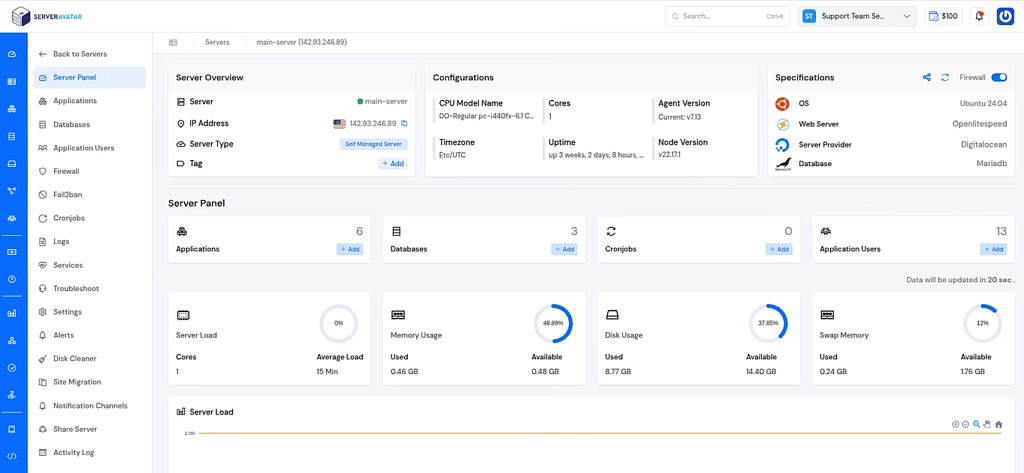
ServerAvatar is a platform to simplify the hosting and management of servers and applications. It simplifies the process of deploying and managing PHP and Node.js based web applications on servers.
Whether you’re launching a fast MVP with Laravel or building a scalable system with Symfony, ServerAvatar provides a smooth and efficient environment to run your applications.
Key Features of ServerAvatar
- Easy PHP application deployment: Launch your PHP apps without complex setup and manual commands
- Managed and Self-Managed Server Infrastructure: Use fully managed servers directly provided by ServerAvatar, and connect your own custom self-managed servers from any cloud provider.
- Automated Backups: Keep your data safe with scheduled backups and quick restore options, ensuring your application is always protected.
- Advanced Monitoring & Logs: Track server performance, monitor application activity, and debug issues with built-in log monitoring tools.
- Free SSL & Security Management: Secure your applications with free SSL certificates and built-in security features to protect your data and users.
- File Manager & Database Access: Manage files and databases directly from the dashboard without needing external tools or command-line access.
- Team Collaboration: Invite team members and manage access controls, making it easier to work together on projects.
Why ServerAvatar is Ideal for Startups
Startups often need to move quickly while keeping costs and complexity low. ServerAvatar removes the technical barriers of server management, allowing teams to focus on development and innovation instead of infrastructure.
- Saves time by automating server setup and deployment
- Reduces costs by eliminating the need for dedicated DevOps resources
- Improves productivity with an easy-to-use interface
- Scales easily as your application grows
Conclusion
Choosing between Laravel and Symfony ultimately comes down to your startup’s priorities, technical needs, and long-term vision. Laravel is an excellent choice if you want to move fast, build efficiently, and launch your product with minimal complexity. Symfony, on the other hand, is better suited for projects that demand deep customization, structured architecture, and long-term scalability. Both frameworks are powerful in their own way, and the right decision depends on how you plan to build and grow your application. Alongside this, using a platform like ServerAvatar can further simplify deployment and server management, allowing you to focus more on development and less on infrastructure. By aligning your framework choice with the right tools, you can set a strong foundation for your startup’s success.
FAQs
1. Is Laravel good for large-scale applications?
Laravel can handle large-scale applications when properly optimized, although Symfony may offer more flexibility for highly complex systems.
2. Why do startups prefer Laravel over Symfony?
Startups often choose Laravel because it enables faster development, reduces costs, and helps launch products quickly.
3. Can I switch from Laravel to Symfony later?
Switching frameworks is possible but can be time-consuming and costly. It’s best to choose the right framework based on your future goals from the start.
4. Do both Laravel and Symfony support secure web applications?
Both frameworks offer strong built-in security features to protect applications and user data.
5. How does ServerAvatar help with Laravel and Symfony applications?
ServerAvatar simplifies server and application deployment and management, making it easier to run both Laravel and Symfony applications without dealing with complex server setups.