
The internet is like a massive library with billions of books being updated every second. But have you ever wondered who organizes all this information so quickly? That job belongs to web crawlers, the unsung heroes silently scanning, indexing, and updating the web behind the scenes.
In 2025, dozens of powerful crawlers from search engines, SEO tools, and analytics platforms are shaping how websites get discovered. Understanding these crawlers helps you improve SEO, secure your site, and optimize performance.
This guide breaks it all down in simple language, no jargon, no fluff.
What Are Web Crawlers?
Web crawlers, also known as spiders or bots, are tools that browse the internet automatically to collect information from websites. They help search engines understand pages, rank them, and show relevant results to users.
Think of them like tiny digital librarians running around shelves, gathering data, and organizing everything efficiently.
How Web Crawlers Work
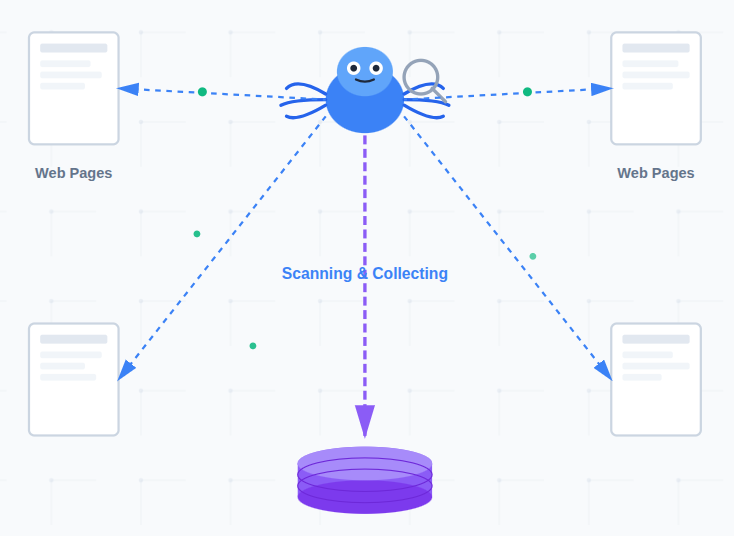
Here’s how most crawlers operate:
- Discover URLs through sitemaps, links, or previous crawls
- Visit pages and scan content
- Download data (text, images, metadata, links)
- Send information to their databases
- Index the content so users can find it
Why Web Crawlers Matter in 2025
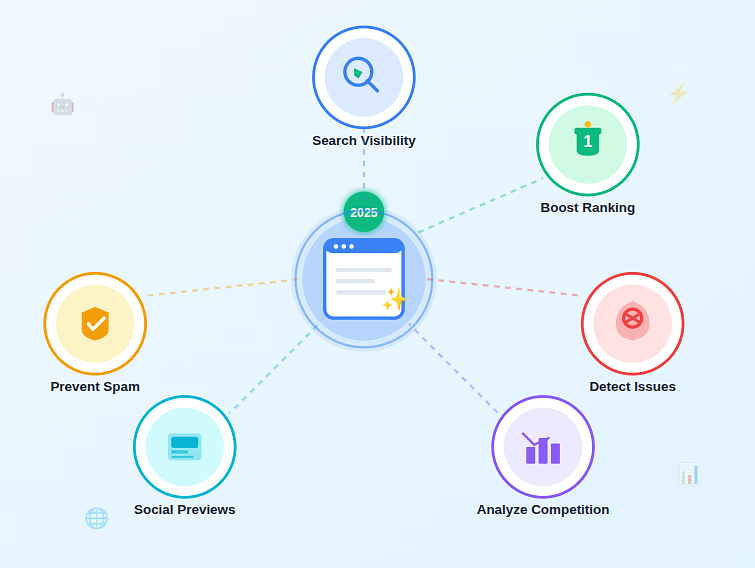
In 2025, websites are growing faster than ever, AI content, dynamic pages, and multimedia-rich sites are everywhere. Crawlers help:
- Improve search engine visibility
- Boost page ranking
- Detect site issues
- Analyze competition
- Fetch previews for social media
Knowing which crawlers visit your site also helps prevent spam traffic and bot overload.
Top 20+ Web Crawlers You Should Know in 2025
1. Googlebot
Googlebot is Google’s primary crawler that scans and indexes web pages for global search results.
Key Highlights
- Advanced JavaScript rendering
- Mobile-first crawling
- Fast and frequent indexing
Pros:
- Best for SEO
- Fast discovery of new pages
- Accurate rendering
Cons:
- High crawl demand on servers
- Strict on technical issues
Known For:
The world’s most powerful and widely used search engine crawler.
2. Bingbot
Bingbot is Microsoft’s main web crawler powering Bing and AI-driven search experiences.
Key Highlights:
- Strong JavaScript support
- Integrates with Bing + AI search
- Efficient resource fetching
Pros:
- Reliable crawl patterns
- Good for US/Europe audiences
Cons:
- Slower index updates than Google
- Limited global market share
Known For:
Microsoft’s primary crawler powering Bing and partner engines.
3. Yandex Bot
Yandex Bot is the core crawler of Yandex, focused on indexing Russian and Eastern European content.
Key Highlights:
- Regional content focus
- Complex link evaluation
- Supports IndexNow
Pros:
- Great for Russian-speaking markets
- Strong local ranking accuracy
Cons:
- Sensitive to technical errors
- Slow for non-Russian sites
Known For:
The dominant crawler for Russia and Eastern Europe.
4. Baiduspider
Baidu’s official crawler used to index Chinese-language websites for China’s largest search engine.
Key Highlights:
- Optimized for Chinese sites
- Strict content rules
- Prioritizes speed
Pros:
- Best for reaching China
- Fast crawling of local content
Cons:
- Limited English content support
- Requires server presence near China
Known For:
China’s most widely used search engine bot.
5. AhrefsBot
AhrefsBot is a powerful crawler that collects backlink and SEO data for Ahrefs’ massive search index.
Key Highlights:
- Deep backlink crawling
- SEO metric collection
- Massive URL discovery
Pros:
- Excellent for link data
- Large, reliable index
Cons:
- Heavy server load
- Not a search engine crawler
Known For:
Industry-leading backlink analysis crawler.
6. SEMrushBot
SEMrush’s auditing crawler that gathers site health, keywords, and SEO insights.

Key Highlights:
- Keyword and ranking data
- On-page SEO auditing
- Site health scanning
Pros:
- Helpful for technical audits
- Accurate SERP insights
Cons:
- Excessive crawling at times
- Slower discovery than Ahrefs
Known For:
Crawling for competitive SEO and site audits.
7. Screaming Frog SEO Spider
Screaming Frog SEO Spider is a desktop-based crawler used for technical site audits and error detection.

Key Highlights:
- Local desktop crawler
- Finds errors, broken links
- Exports structured reports
Pros:
- Highly customizable
- Great for audits
Cons:
- Requires local machine
- Limited large-site capacity
Known For:
The most popular SEO audit tool for technical professionals.
8. Facebook Crawler
Facebook Crawler reads metadata to generate link previews on Facebook and Instagram.
Key Highlights:
- Fetches metadata
- Loads Open Graph tags
- Generates share previews
Pros:
- Ensures clean social previews
- Supports media-rich pages
Cons:
- Doesn’t index for search
- Requires OG optimization
Known For:
Creating link previews for Facebook & Instagram shares.
9. Twitterbot
A lightweight crawler that fetches titles, descriptions, and images for Twitter/X link previews.
Key Highlights:
- Reads metadata + images
- Fetches HTML title/description
- Renders social cards
Pros:
- Accurate social previews
- Lightweight crawling
Cons:
- Limited content extraction
- No SEO benefits
Known For:
Generating link previews on X (Twitter).
10. LinkedInbot
LinkedIn’s preview generator that extracts metadata for shared links on the platform.
Key Highlights:
- Fetches Open Graph data
- Reads page titles, summaries
- Pulls thumbnails
Pros:
- Great for professional branding
- Reliable preview generation
Cons:
- Doesn’t index for SEO
- May not render dynamic pages
Known For:
Creating link previews on LinkedIn posts.
11. OpenAI’s GPTBot
OpenAI’s crawler that collects publicly available information to train AI models.
Key Highlights:
- Extracts public content
- Helps train AI models
- Large-scale web crawling
Pros:
- Broad web coverage
- Transparent opt-out options
Cons:
- Some sites block it
- Not related to SEO
Known For:
Gathering content for AI training datasets.
12. DuckDuckBot
DuckDuckGo’s privacy-focused crawler that powers its independent search index.
Key Highlights:
- Privacy-safe crawling
- Minimal resource usage
- Independent indexing
Pros:
- Light and safe
- No tracking
Cons:
- Smaller index than Google
- Less accurate ranking
Known For:
Supporting the privacy-focused DuckDuckGo search engine.

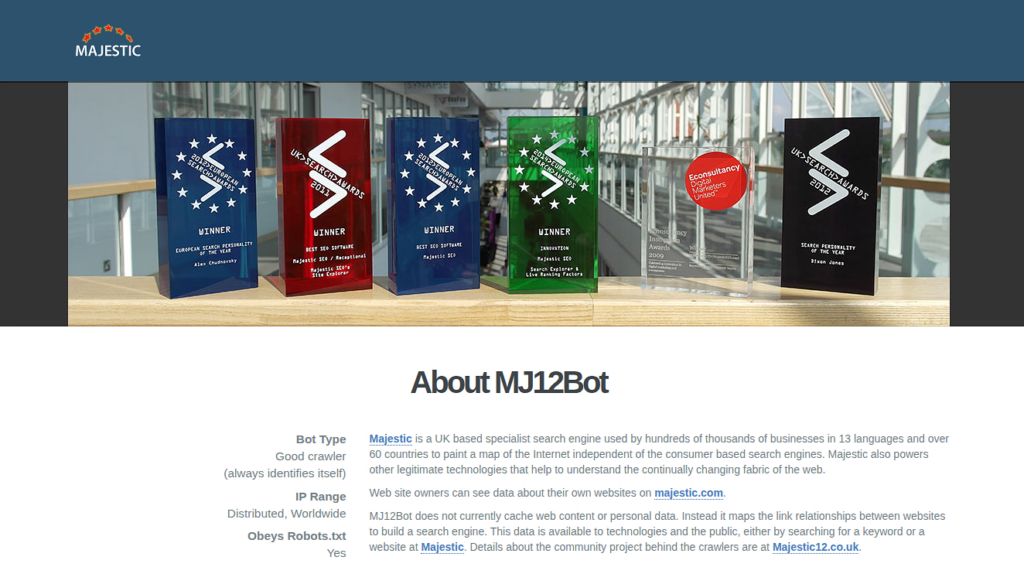
13. MajesticMJ12 Bot
Majestic’s large-scale crawler dedicated to discovering and evaluating backlinks.
Key Highlights:
- Massive link index
- Anchor text analysis
- Updated historic index
Pros:
- Huge backlink database
- Great for link audits
Cons:
- Heavy crawler load
- Not a full SEO tool
Known For:
One of the largest link-focused crawlers in the world.
14. Moz’s RogerBot
Moz’s crawler that gathers link and domain data to calculate SEO metrics like DA and PA.
Key Highlights:
- DA/PA calculations
- Backlink crawling
- On-site audits
Pros:
- Trusted SEO metrics
- Strong backlink verification
Cons:
- Smaller index than Ahrefs
- Slower crawl cycles
Known For:
Powering Moz’s Domain Authority ranking system.
15. Sogou Spider
Sogou’s web crawler that indexes Chinese web content for its regional search engine.
Key Highlights:
- Chinese-language crawling
- Large regional coverage
- News & content scanning
Pros:
- Good reach in China
- Fast crawling for local content
Cons:
- Limited international value
- Not widely used outside China
Known For:
Crawling for China’s Sogou search engine.
16. Applebot
Apple’s search crawler used to support Siri, Spotlight, and Apple Search results.
Key Highlights:
- Siri & Spotlight search
- High-quality crawling
- JavaScript rendering
Pros:
- Growing fast in 2025
- Strong mobile indexing
Cons:
- Limited documentation
- Smaller index than Google
Known For:
Powering Apple’s search and Siri suggestions.
17. CCBot / CommonCrawl
CCBot is an open-data crawler that builds one of the largest publicly accessible web datasets.
Key Highlights:
- Open web dataset
- Large-scale public crawling
- Used by researchers & AI companies
Pros:
- Free and publicly accessible
- Massive global coverage
Cons:
- Not SEO-focused
- Low crawl frequency
Known For:
Providing one of the largest open-source web datasets.
18. Pinterestbot
Pinterest’s crawler that fetches images and metadata for pins and visual recommendations.
Key Highlights:
- Image scraping
- Metadata extraction
- Content preview generation
Pros:
- Excellent for visual SEO
- Strong social visibility
Cons:
- Doesn’t index text deeply
- Not search-engine based
Known For:
Fetching images and descriptions for Pinterest pins.
19. PetalBot
Huawei’s search crawler that indexes global websites for its Petal Search ecosystem.
Key Highlights:
- Huawei search indexing
- AI-driven ranking
- Mobile-optimized crawling
Pros:
- Fast in Asia
- Strong mobile results
Cons:
- Smaller global index
- Limited English accuracy
Known For:
Crawling for Huawei’s Petal Search ecosystem.
20. WhatsApp Crawler
A link-preview crawler that extracts key metadata for WhatsApp message previews.
Key Highlights:
- Fetches preview metadata
- Reads title, description, image
- Lightweight requests
Pros:
- Quick previews in chats
- Minimal server load
Cons:
- No SEO value
- Doesn’t crawl deeply
Known For:
Generating link previews in WhatsApp chats.
21. Amazonbot
Amazon’s official crawler used for Alexa-related services, product search, and AI-driven indexing across its ecosystem.
Key Highlights:
- Crawls webpages for product data
- Powers Amazon Search & Alexa results
- Supports structured data parsing
Pros:
- Useful for eCommerce visibility
- Reads schema markup effectively
- Reliable and lightweight
Cons:
- Limited documentation
- Not a general-purpose search crawler
Known For:
Crawling content for Amazon Search, Alexa answers, and product-related indexing.
Comparison of All Crawlers
| Crawler Name | Type | Main Function |
| Googlebot | Search Engine Crawler | Indexes websites for Google Search |
| Bingbot | Search Engine Crawler | Crawls sites for Bing & MSN Search |
| Yandex Bot | Search Engine Crawler | Indexes Russian/Eastern European content |
| Baiduspider | Search Engine Crawler | Crawls Chinese websites for Baidu Search |
| AhrefsBot | SEO Tool Crawler | Collects backlink & SEO data |
| SEMrushBot | SEO Tool Crawler | Gathers keyword & audit data |
| Screaming Frog SEO Spider | SEO Audit Tool | Technical site crawling from desktop |
| Facebook Crawler | Social Media Bot | Generates link previews for Facebook & Instagram |
| Twitterbot | Social Media Bot | Creates link previews on Twitter/X |
| LinkedInbot | Social Media Bot | Fetches metadata for LinkedIn posts |
| OpenAI GPTBot | AI/Data Crawler | Collects data for AI training |
| DuckDuckBot | Search Engine Crawler | Crawls sites for DuckDuckGo search results |
| MajesticMJ12 Bot | SEO Tool Crawler | Backlink indexing and link graph analysis |
| Moz’s RogerBot | SEO Tool Crawler | Measures DA/PA and backlink profiles |
| Sogou Spider | Search Engine Crawler | Indexes Chinese-language content |
| Applebot | Search Engine Crawler | Powers Apple Search & Siri results |
| CCBot / CommonCrawl | Research/Data Bot | Builds public web datasets |
| Pinterestbot | Social Media Crawler | Fetches images for Pinterest pins |
| PetalBot | Search Engine Crawler | Indexes content for Huawei Petal Search |
| WhatsApp Crawler | Messaging Bot | Fetches previews for WhatsApp links |
| Amazonbot | Search & product data crawler | Indexes web content to enhance Amazon Search |
How to Optimize Your Website for Crawlers
To ensure all legitimate bots can access your website efficiently, follow these tips:
1. Create and submit a sitemap
This is like giving bots a roadmap to your site.
2. Improve website speed
Slow sites get crawled slower.
3. Use a clean site structure
Organized URLs = easier crawling.
4. Fix broken links
Bots waste crawl budget on dead ends.
5. Add structured data
Helps search engines understand content.
6. Avoid duplicate content
Bots may skip indexing repeat content.
7. Keep robots.txt clean
Make sure you’re not accidentally blocking important crawlers.
Conclusion
Web crawlers play a crucial role in how the internet works. Whether it’s Google indexing your pages, Ahrefs analyzing your backlinks, or social bots generating link previews, each crawler has a purpose.
Understanding how these bots behave helps you optimize SEO, protect your site, and deliver better performance. As we move deeper into 2025, staying crawl-friendly isn’t just a ranking factor, it’s a key part of running a healthy, discoverable website.
FAQs
1. Why are web crawlers important for SEO?
They determine how search engines read, rank, and understand your website.
2. Can crawlers slow down my website?
Heavy crawlers can temporarily increase server load. Tools like AhrefsBot or MJ12Bot can be resource-intensive if your server is small or unoptimized.
3. How do I see which crawlers visit my site?
You can check server logs or use analytics tools like Google Search Console, Ahrefs, or Cloudflare.
4. Should I optimize my site differently for different crawlers?
Not really. If your website is fast, clean, mobile-friendly, and technically optimized, all search and preview crawlers will perform well.
5. How often do crawlers visit my website?
It depends on your site’s popularity, update frequency, domain authority, and technical health. Googlebot may visit multiple times a day; others crawl weekly or monthly
Stop Wasting Time on Servers. Start Building Instead.
You didn’t start your project to babysit servers. Let ServerAvatar handle deployment, monitoring, and backups — so you can focus on growth.
Deploy WordPress, Laravel, N8N, and more in minutes. No DevOps required. No command line. No stress.
Trusted by 10,000+ developers and growing.