
Choosing the right framework for building a website or web application can feel like standing at a crossroads with too many signboards. Should you turn left or right? Pick speed or structure? Simplicity or flexibility? That’s exactly where many people land when comparing Django vs Node.js.
Both are popular, powerful, and trusted by big companies and solo developers alike. But they work in very different ways and are built with different goals in mind. Think of Django as a well-planned city with clear rules and smooth traffic, while Node.js is more like an open highway where you can drive fast, choose your own lanes, and take creative turns.
So, which one is better for you? Let’s break it down in simple, human language and figure it out together.
What Is Django?
Django is web framework built using Python for high-level development. It focuses on helping developers build secure, reliable, and scalable web applications quickly.
Django is designed to reduce repetitive work by offering built-in solutions for common backend tasks. Instead of assembling everything from scratch, developers can rely on Django’s ready-made tools and focus on building features.
Key Features of Django
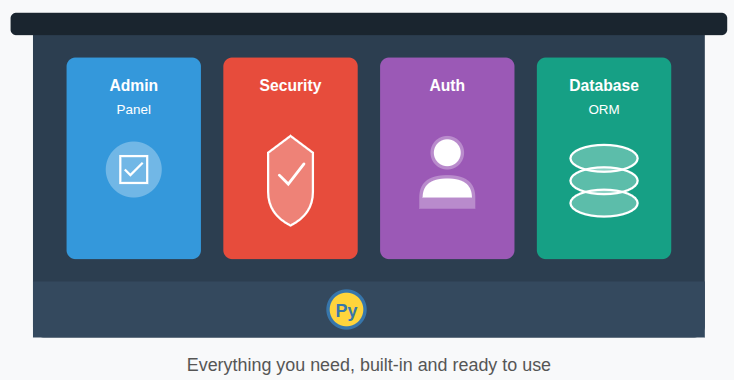
- Built-in admin panel: Lets you manage content and users without extra coding.
- Strong security by default: Protects against common threats automatically.
- Authentication, database handling, and routing included: Covers core backend needs out of the box.
- Clear project structure: Keeps code organized and easy to maintain.
Advantages of Using Django
Django is ideal for developers who want speed, safety, and structure in their projects. It minimizes setup time and helps teams deliver stable applications faster.
- Built-in security features: Reduces risk without manual configuration.
- Faster development time: Many features are ready to use.
- Clean and organized structure: Makes long-term maintenance easier.
- Excellent for data-driven apps: Handles databases efficiently.
- Beginner-friendly: Easy to learn and understand.
Limitations of Django
While Django is powerful, it follows strict patterns that may not suit every project. Developers who prefer full control may find it limiting in certain scenarios.
- Less flexibility compared to Node.js: Follows fixed design patterns.
- Not ideal for real-time applications: Requires extra tools for live features.
- Can feel restrictive for experienced developers: Less freedom to experiment.
What Makes Django Stand Out From the Crowd?
Django stands out because it believes in doing more for you, right out of the box. Instead of asking developers to install dozens of extra tools, Django comes prepared with everything needed to build a complete web application.
It handles common tasks like user authentication, database management, security protection, and admin dashboards without extra effort. This makes Django feel like a well-organized toolkit where every tool has its own place. Developers who prefer structure, clarity, and fewer decisions often feel at home with Django.
What Is Node.js?
Node.js is a runtime environment that allows you to run JavaScript on the server side. Instead of being a full framework, it gives you the freedom to build things your own way.
Node.js focuses on performance and scalability. It allows developers to build lightweight, fast applications with complete control over architecture.
Key Features of Node.js
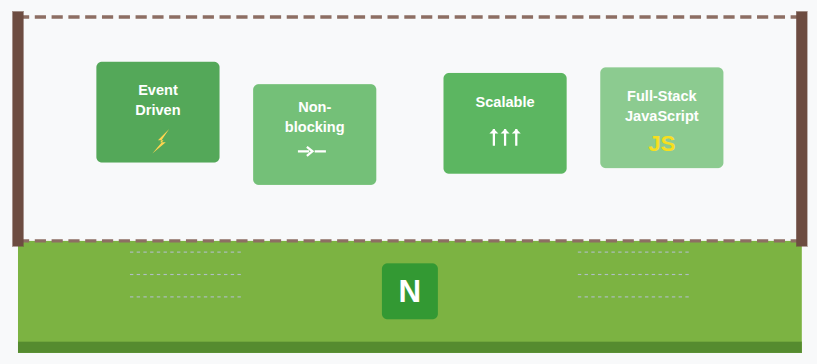
- Non-blocking, event-driven architecture: Handles tasks without waiting.
- Manages many requests simultaneously: Ideal for busy applications.
- Same language for frontend and backend: Simplifies development.
- Highly modular: Easy to add or replace components.
Benefits of Choosing Node.js
Node.js is best suited for applications where speed, scalability, and flexibility are top priorities. It performs exceptionally well under heavy traffic.
- Extremely fast and scalable: Built for performance.
- Perfect for real-time applications: Handles live data smoothly.
- Single language across the stack: Reduces context switching.
- Large ecosystem of libraries: Offers endless customization.
- Highly flexible architecture: Developers control everything.
Drawbacks of Node.js
Despite its power, Node.js demands careful planning. Beginners may find it challenging due to the many choices involved.
- Steeper learning curve: Requires understanding async programming.
- Security depends on developer choices: Needs manual setup.
- Too many libraries can cause confusion: Hard to choose the right ones.
- Requires careful project structure: Poor planning can cause issues.
Why Do Developers Gravitate Toward Node.js?
Developers choose Node.js mainly for its speed and flexibility. It allows JavaScript to run on server, means same language can used for both frontend and backend. That alone simplifies development for many teams.
Node.js is especially loved for real-time applications like chat apps, live notifications, and streaming platforms. Its non-blocking nature means it can handle many users at the same time without slowing down. For developers who enjoy freedom and performance-focused systems, Node.js is a natural choice.
Comparison: Django vs Node.js
| Aspect | Django | Node.js |
| Language | Python | JavaScript |
| Learning | Easy | Moderate |
| Speed | Moderate | Very Fast |
| Flexibility | Limited | High |
| Security | Built-in | Manual |
| Best For | Structured apps | Real-time apps |
Django and Node.js Side-by-Side Coding Comparison
Sometimes, the best way to understand the difference is to see actual code. Below is a simple “Hello” endpoint example for both.
Django Hello Endpoint Example
from django.http import HttpResponse

def hello(request):
return HttpResponse("Hello from Django!")This example shows how to create a basic endpoint that returns a simple text response when someone visits a page.
- from django.http import HttpResponse
Imports Django’s built-in response class used to send text back to the browser. - def hello(request)
Defines a function that acts as a view and receives the user’s request. - request parameter
Holds information about the incoming request, such as headers and user data. - return HttpResponse(“Hello from Django!”)
Sends a plain text message back to the user’s browser
Django handles most backend tasks automatically, keeping the code short and readable. The function clearly shows what happens, receive a request and return a response.
Why this matters
Django’s approach makes backend logic easy to read and maintain, even for beginners or non-developers.
Node.js Hello Endpoint Example
const express = require("express");
const app = express();

app.get("/", (req, res) => {
  res.send("Hello from Node.js!");
});

app.listen(3000);This Node.js example demonstrates how to create a simple web server that responds with text using Express.
- const express = require(“express”);
Imports the Express framework used to handle server requests. - const app = express();
Creates a new Express application instance. - app.get(“/”, (req, res) => { … })
Defines a route that listens for GET requests on the home page. - req object
Contains information about the incoming request from the user. - res.send(“Hello from Node.js!”)
Sends a text response back to the browser. - app.listen(3000);
Starts the server and listens for requests on port 3000.
Node.js requires explicit configuration but allows flexible server behavior.
Why this matters
Node.js gives developers fine-grained control over how requests and responses are handled, making it ideal for custom and real-time applications.
Programming Language Differences
The core difference between Django and Node.js starts with the language they use. Each language brings a distinct development experience.
Django Uses Python
Python is widely loved for its simplicity and readability.
- Easy to read: Looks close to plain English.
- Beginner-friendly: Simple syntax reduces confusion.
- Clear and expressive: Easy to understand even for non-developers.
If you value clarity and simplicity, Python feels like a friendly conversation.
Node.js Uses JavaScript
JavaScript powers most of the modern web.
- Everywhere on the web: Used on almost every website.
- Fast and flexible: Supports dynamic features.
- Slightly harder to master: Requires practice.
If you enjoy dynamic, fast-paced development, JavaScript fits well.
Key takeaway
Django feels calm and structured, while Node.js feels energetic and flexible.
Learning Curve and Ease of Use
How quickly someone learns a framework depends on how much guidance it provides.
Django Learning Curve
- Easy for beginners: Clear rules and structure.
- Excellent documentation: Step-by-step guidance.
- Everything included from the start: Minimal setup needed.
Node.js Learning Curve
- Steeper learning curve: Requires deeper technical understanding.
- Async behavior can be confusing: Needs practice.
- More decisions to make: Freedom adds complexity.
Winner for beginners: Django
Performance and Speed
Performance matters when apps grow and users increase.
Django Performance
- Synchronous by default: Processes tasks one at a time.
- Slower for real-time apps: Not built for live updates.
- Excellent for data-heavy applications: Handles databases well.
Node.js Performance
- Non-blocking and asynchronous: No waiting for tasks.
- Extremely fast for real-time apps: Ideal for live features.
- Handles many users smoothly: Scales efficiently.
If speed were a race, Node.js would sprint while Django jogs steadily.
Scalability and Handling Traffic
Scalability decides how well an app grows with users.
Django Scalability
- Scales well with proper setup: Needs tuning.
- Used by large platforms: Proven reliability.
- Requires extra tools for high traffic: Not automatic.
Node.js Scalability
- Designed for scalability: Built with growth in mind.
- Ideal for microservices: Easy to split services.
- Handles thousands of connections: Excellent concurrency.
Best for high traffic: Node.js
Development Speed
Speed of development can define project success.
Why Django Is Faster to Develop
- Built-in features save time: Less coding needed.
- Minimal setup: Quick project start.
- Clear structure: Easy teamwork.
Why Node.js Can Be Slower Initially
- Manual library selection: Takes time.
- More configuration required: Setup overhead.
- Flexibility costs time early on: Pays off later.
If time is money, Django often saves more of both.
Flexibility and Customization
Each framework handles freedom differently.
Django’s Approach
- Opinionated structure: Follows best practices.
- Encourages consistency: Cleaner projects.
- Less freedom, more safety: Fewer mistakes.
Node.js Approach
- Highly flexible: No strict rules.
- Developer controls everything: Full customization.
- Easy to experiment: Ideal for innovation.
Creative freedom: Node.js
Guided structure: Django
Security Features
Security is critical for modern applications.
Django Security
- Protection against common attacks: Built-in.
- Safe by default: Less manual effort.
- Trusted for sensitive apps: Banking and admin systems.
Node.js Security
- Depends on chosen libraries: No defaults.
- Requires careful configuration: Developer responsibility.
- Flexible but risky: Needs experience.
If security were a lock, Django comes pre-installed, while Node.js lets you choose your own.
Community and Ecosystem
Strong communities help developers grow.
Django Community
- Mature and stable: Long-term reliability.
- High-quality documentation: Easy learning.
- Focus on best practices: Clean development.
Node.js Community
- Huge and fast-growing: Constant innovation.
- Massive library ecosystem: Many options.
- Rapid updates: Cutting-edge tools.
More packages: Node.js
More stability: Django
Architecture and Framework Explained
Django follows a “batteries-included” philosophy. It believes that common problems should already have built-in solutions. This leads to a predictable and clean architecture that encourages best practices.
Node.js, on the other hand, follows a minimalist philosophy. It gives you a foundation and lets you build everything else your way. This freedom allows innovation but also demands more responsibility from the developer.
In short:
- Django says: “Here’s the right way to do it.”
- Node.js says: “Build it however you want.”
Which Framework Offers Better Learning and Community Support?
Both Django and Node.js have strong communities, but they support learners differently.
Django’s community is known for its detailed documentation, clear tutorials, and stable ecosystem. Beginners often find it easier to learn because there is a clear path to follow.
Node.js has a massive global community and countless libraries. However, because there are many ways to do the same thing, beginners may feel confused at first. Still, once learned, the ecosystem is incredibly powerful.
Beginner-friendly support: Django
Large and fast-growing ecosystem: Node.js
Use Cases and Real-World Applications
Each framework excels in different scenarios.
Django Is Best For
- Content-heavy websites: Blogs and media platforms.
- Admin dashboards: Built-in tools.
- Data-driven apps: Database-focused systems.
Node.js Is Best For
- Real-time chat apps: Instant communication.
- Streaming platforms: Live content delivery.
- APIs and microservices: Scalable services.
- Online games: High concurrency.
Django vs Node.js for Beginners
For newcomers, Django feels like driving an automatic car, smooth and predictable. Node.js is more like manual driving, powerful but demanding.
Recommendation: Start with Django, then explore Node.js later.
Django vs Node.js for Startups
Startups need speed and scalability.
- Fast development: Django helps launch quickly.
- Easy scaling: Node.js supports rapid growth.
- Reliable performance: Both are proven.
Early stage: Django
Growth stage: Node.js
Django vs Node.js for Large Projects
Large projects demand structure and performance.
- Maintainability: Django excels.
- Performance optimization: Node.js leads.
- Team collaboration: Django’s structure helps.
Django shines in organized teams.
Node.js shines in performance-focused systems.
Which Backend Technology Should You Choose?
Your choice should align with your goals, team skills, and long-term vision.
- Choose Django for stability, security, and fast development.
- Choose Node.js for real-time features, performance, and flexibility.

When Should You Choose Django or Node.js?
Choose Django when:
- You’re building content-heavy platforms
- Security is critical
- You want faster setup and cleaner structure
Choose Node.js when:
- You need real-time communication
- Your app expects heavy traffic
- You prefer JavaScript everywhere
How ServerAvatar Simplifies Node.js Setup on Your Server
Setting up Node.js on a server can sometimes involve multiple steps, version checks, and manual configurations. This is where ServerAvatar makes the process much easier.
What is ServerAvatar?
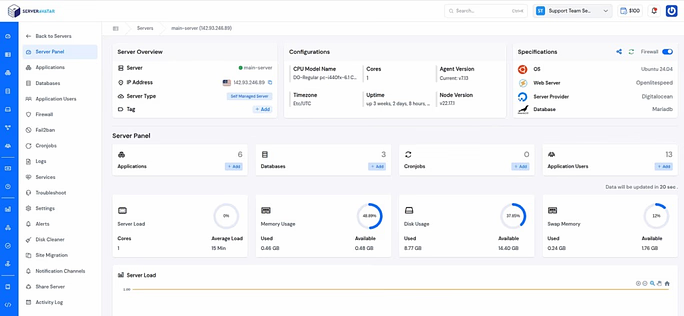
ServerAvatar is a platform to simplify the hosting and management of servers and applications. It simplifies the process of deploying and managing PHP and Node.js based web applications on servers.
When you create a server in ServerAvatar, you’ll see the option of Node stack option to deploy your node applications, such as Uptime Kuma, n8n, NodeRed, NodeBB, etc., without dealing with complex command-line steps. Node.js is already installed by default within the Node stack. Additionally, you can install Yarn by enabling the toggle button.
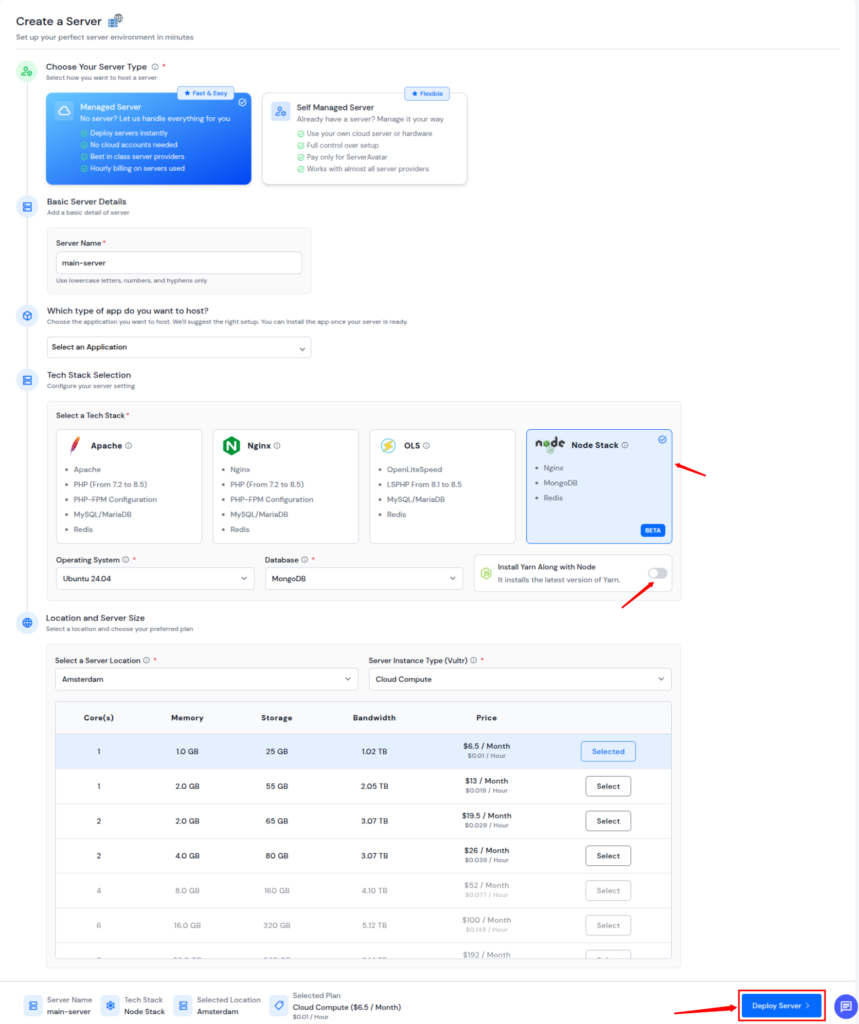
This approach helps developers save time, reduce setup errors, and focus more on building and running applications instead of managing server configurations.
Final Thoughts: Making the Right Choice, and Getting Started Faster
Choosing between Django and Node.js isn’t about picking a winner. It’s about understanding what fits your project, your team, and your long-term goals. If you value structure, built-in security, and faster development with fewer decisions, Django is a solid choice. If performance, real-time features, and flexibility matter more, Node.js gives you the freedom to build exactly what you want. Both technologies are mature, powerful, and trusted in real-world applications.
No matter which backend you choose, server setup and configuration shouldn’t slow you down. That’s where ServerAvatar fits naturally into the workflow. With features like one-click Node.js installation and built-in Node Stack support during server connection, ServerAvatar removes the complexity of manual server setup. Instead of spending hours configuring environments, you can focus on what really matters, building, deploying, and scaling your application with confidence.
FAQs
1. Is Node.js faster than Django?
Node.js is typically faster for real-time and high-concurrency applications due to its non-blocking, event-driven architecture. Django performs very well for data-heavy and content-driven applications, but is not optimized by default for real-time workloads.
2. Which framework is more secure by default?
Django is considered more secure out of the box. It includes built-in protection against common attacks such as SQL injection and cross-site scripting. In Node.js, security depends more on how developers configure libraries and middleware.
3. Is Node.js suitable for large-scale applications?
Node.js is widely used for large-scale, high-traffic systems, especially APIs, microservices, and real-time platforms. Its ability to handle thousands of simultaneous connections makes it a strong choice for scalable architectures.
4. Can I use the same language for frontend and backend with Django?
No, Django uses Python on the backend, while frontend development typically uses JavaScript. With Node.js, JavaScript is used on both frontend and backend, which many developers find convenient.
5. How does ServerAvatar help with Node.js deployment?
ServerAvatar simplifies Node.js deployment by offering one-click Node.js installation directly from the dashboard. This removes manual setup steps and allows developers to focus on building and running applications instead of configuring servers.
6. Is there a clear winner between Django and Node.js?
No, There is no universal winner. Django and Node.js solve different problems well. The best choice depends on your project requirements, team experience, performance needs, and long-term goals.