

Website security is no longer optional. As more users interact with websites by submitting forms, creating accounts, and sharing sensitive information, protecting that data has become critical. One of the most important security elements for any website is an SSL certificate.
An SSL certificate helps secure communication between a website and its visitors. Without it, data can be exposed, user trust can decline, and search engine visibility can suffer.
In this guide, I will break down why an SSL certificate matters for your website security without any technical headaches.
What Is an SSL Certificate?
An SSL certificate is a digital security file that encrypts information exchanged between a website and its users. The URL of the SSL Certificate installed website starts with HTTPS rather than HTTP. SSL ensures that data such as login credentials, form submissions, and personal details remain private and protected from unauthorized access.
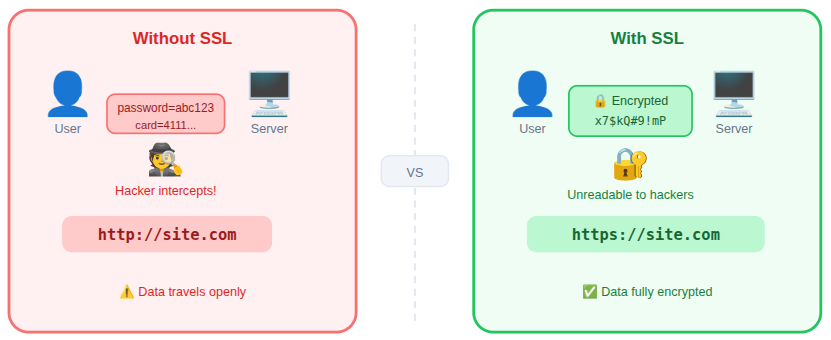
In simple terms, SSL tells visitors: This website is safe. You can trust it.Without SSL, data sent between a user and your website travels openly, making it easy for hackers to intercept.
How SSL Certificates Work
SSL certificates secure communication by encrypting data exchanged between a website and its visitors. This encryption ensures that information remains private and cannot be read by unauthorized parties. The process happens automatically in the background whenever a secure site is accessed.
When someone visits your website:
- Browser checks your SSL certificate: The browser verifies that the website is authentic and trusted.
- A secure connection is created: A protected communication channel is established between the browser and server.
- All shared data is encrypted: Information is converted into unreadable form during transfer.
Think of it like speaking in a secret language only you and your friend understand.
Why Website Security Matters
Website security protects user information and maintains the reliability of a website. As online threats continue to grow, even basic security gaps can lead to serious consequences. A secure website helps prevent misuse of data and protects long-term credibility.
Website security matters because:
- Users share sensitive data: Visitors provide personal and private information that must be protected.
- Hackers look for easy targets: Websites with weak security are more likely to be attacked.
- One breach can ruin your reputation: A single security incident can damage trust permanently.
SSL is one of the easiest and most effective security steps you can take.
Role of SSL in Data Encryption
SSL plays a critical role in encrypting data during transmission. Encryption ensures that even if data is intercepted, it cannot be understood or altered. This protection applies to all forms of sensitive communication on a website.
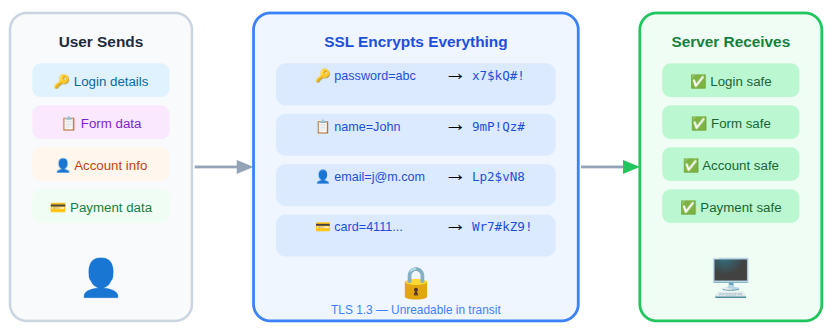
This applies to:
- Login details: Usernames and passwords are kept private.
- Contact form data: Information submitted through forms remains secure.
- Account information: Personal account details are protected from exposure.
- Payment-related details: Financial data is encrypted during transfer.
Encryption is one of the core reasons SSL certificates are essential. Without SSL, it’s like leaving your front door wide open.
Protecting User Data with SSL
Protecting user data is essential for maintaining trust and compliance. SSL certificates help keep sensitive information confidential and prevent unauthorized access. Websites without proper protection risk losing user confidence.
SSL certificates help:
- Build instant trust: Visitors feel safer sharing information.
- Reduce bounce rates: Users are less likely to leave due to security concerns.
- Increase conversions: Secure websites encourage users to take action.
That small padlock icon does a lot of heavy lifting for your credibility. Websites that fail to protect user data risk losing trust and facing compliance or reputation issues.
How SSL Builds Website Trust
SSL certificates visibly signal that a website is secure. This assurance helps users feel confident while browsing, signing up, or submitting information. Trust plays a major role in overall website engagement.
When a website uses SSL:
- Browsers display a secure indicator: Visitors can instantly recognize a protected site.
- Visitors feel safer interacting: Security signals reduce hesitation.
- Engagement and confidence increase: Users are more willing to stay and interact.
SSL plays a direct role in improving how users perceive a website.
SSL Certificate Benefits for SEO
Search engines favor websites that provide a secure experience. SSL certificates support SEO by improving both technical security and user behavior signals. Secure websites are more likely to rank competitively.
SSL contributes to SEO by:
- Acting as a ranking signal: Secure sites receive preference in search results.
- Improving user experience: Visitors feel safer navigating the site.
- Reducing bounce rates: Users are less likely to exit immediately.
Websites using HTTPS are more likely to perform better in search results compared to non-secure sites.
How Browsers Treat Non-SSL Websites
Modern browsers actively warn users when a website lacks SSL protection. These warnings can negatively affect traffic and credibility. SSL helps maintain a professional and trustworthy appearance.
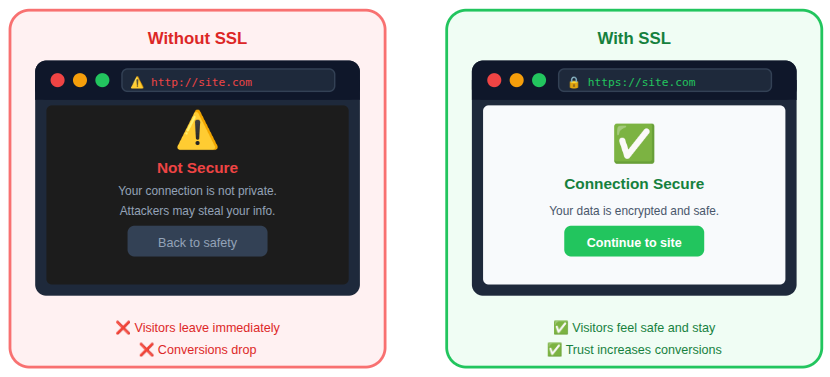
Browser warnings can:
- Discourage visitors: Users may avoid entering the site.
- Increase exit rates: Visitors may leave without exploring content.
- Reduce conversions: Fewer users complete actions due to fear of risk.
Using an SSL certificate helps avoid these warnings and maintains a professional appearance.
Importance of SSL for Forms and Logins
Any website that collects user input must ensure secure data transmission. SSL protects information entered into forms and login fields from exposure during transfer.
This includes:
- Contact forms: Messages and details remain private.
- Registration pages: User sign-up data stays protected.
- Login screens: Credentials are encrypted during submission.
SSL ensures that submitted data is protected during transmission.
Preventing Cyber Attacks with SSL
SSL reduces the risk of data being intercepted or modified during transmission. While not a complete security solution, it strengthens protection against common attack methods.
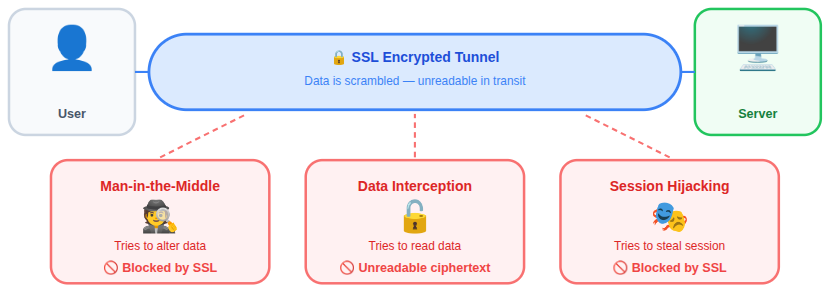
SSL helps prevent:
- Man-in-the-middle attacks: Data cannot be altered during transfer.
- Data interception: Encrypted data is unreadable to attackers.
- Session hijacking: Active connections remain protected.
It creates a secure tunnel that attackers can’t easily break into.
SSL Certificates for Small and Medium Websites
SSL certificates are important for websites of all sizes. Security threats target weaknesses, not website scale. Even smaller websites must protect user data and maintain trust.
SSL is important because:
- Browsers apply the same rules to all sites: Security warnings affect every website equally.
- User trust applies universally: Visitors expect safety everywhere.
- Threats do not target only large platforms: Any vulnerable site can be attacked.
Hackers don’t care about size. They care about vulnerabilities. Even blogs and personal websites need SSL to protect visitors and maintain credibility.
Types of SSL Certificates
SSL certificates come in different types to match different needs. Each type provides encryption, with varying levels of verification and trust indicators.
- Domain Validation (DV): Confirms domain ownership with basic security.
- Organization Validation (OV): Verifies business identity along with encryption.
- Extended Validation (EV): Provides the highest level of trust verification.
All of them encrypt data, but higher levels add more trust signals.
SSL and Website Performance
SSL does not slow down websites. Modern browsers and technologies are optimized for secure connections, allowing performance and security to work together efficiently.
In fact:
- HTTPS enables modern features: Advanced web technologies require secure connections.
- Secure sites often load faster: Optimized delivery improves speed.
- Browsers optimize HTTPS traffic: Secure connections are prioritized.
Security and performance can coexist effectively.
Common Myths About SSL
Misunderstandings about SSL often prevent proper adoption. Knowing the facts helps website owners make better security decisions.
- SSL is expensive: Many reliable free options are available.
- Only eCommerce sites need SSL: Any site handling data benefits from SSL.
- SSL guarantees full security: It provides a strong base, not total protection.
Understanding SSL correctly helps you use it effectively.
How to Know If a Website Has SSL
Checking SSL status is simple and quick. Browsers clearly display security indicators for protected websites.
You can check by:
- Looking for HTTPS in the URL: Secure websites use HTTPS.
- Checking the padlock icon: A visible sign of encryption.
- Viewing certificate details: Clicking the padlock shows security information.
If it’s missing, the site isn’t secure.
SSL Certificate with ServerAvatar
Getting and managing SSL certificates can often feel complex, especially for users who are not deeply familiar with server-level configurations. ServerAvatar simplifies this process by offering built-in free and custom SSL certificate management directly from its control panel, allowing website owners to secure their applications without manual server intervention.
What is ServerAvatar?
ServerAvatar is a platform to simplify the hosting and management of servers and applications. It simplifies the process of deploying and managing PHP and Node.js based web applications on servers.
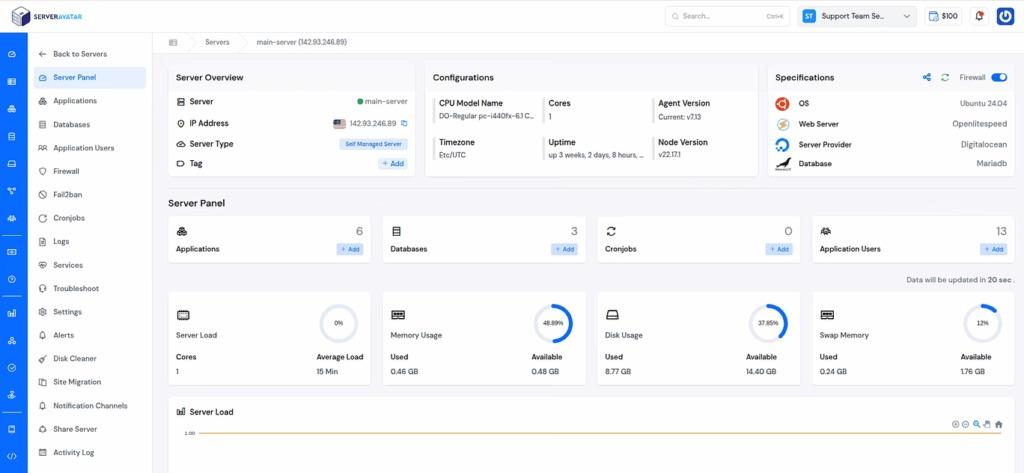
With ServerAvatar, users can easily install, manage, and renew SSL certificates efficiently while maintaining complete control over their website security setup.
Automatic Installation of SSL Certificates in ServerAvatar
ServerAvatar provides an automatic SSL certificate installation feature that allows users to secure their websites with no effort. This option is ideal for users who want a fast and reliable way to enable HTTPS without handling technical configurations.
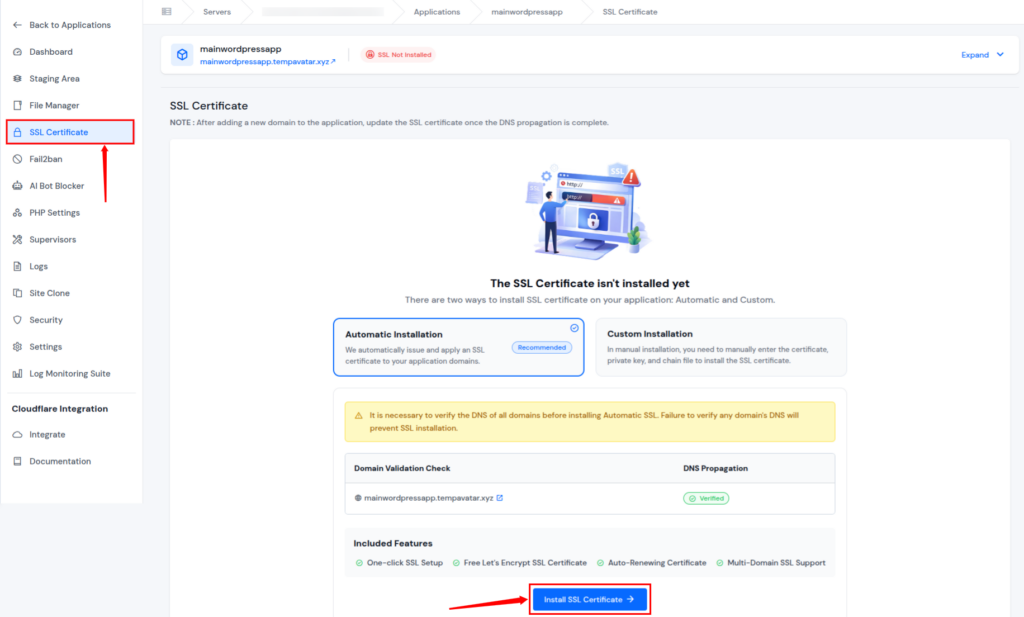
Once enabled, ServerAvatar automatically:
- One Click SSL Certificate setup
- Free SSL Certificate with auto-renewal
- Issue the SSL certificate for the selected domain
- Configures the server for secure HTTPS connections
- Ensures proper certificate deployment for the application
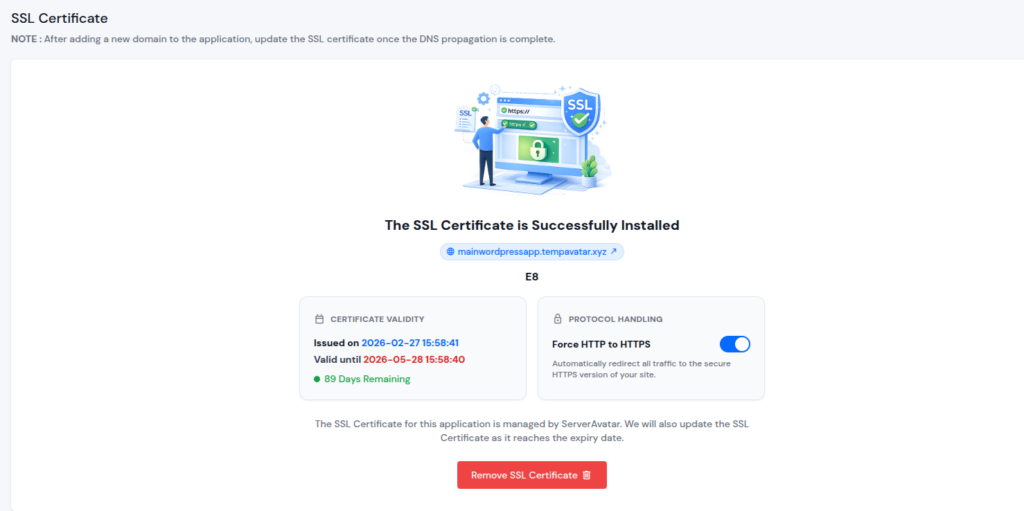
This automated approach helps reduce configuration errors and ensures that SSL protection is applied correctly across the website.
Custom SSL Certificate Installation with ServerAvatar
For users who require greater flexibility, ServerAvatar also supports custom SSL certificate installation. This option is suitable for advanced users who prefer to use SSL certificates obtained from external providers or need custom security configurations.
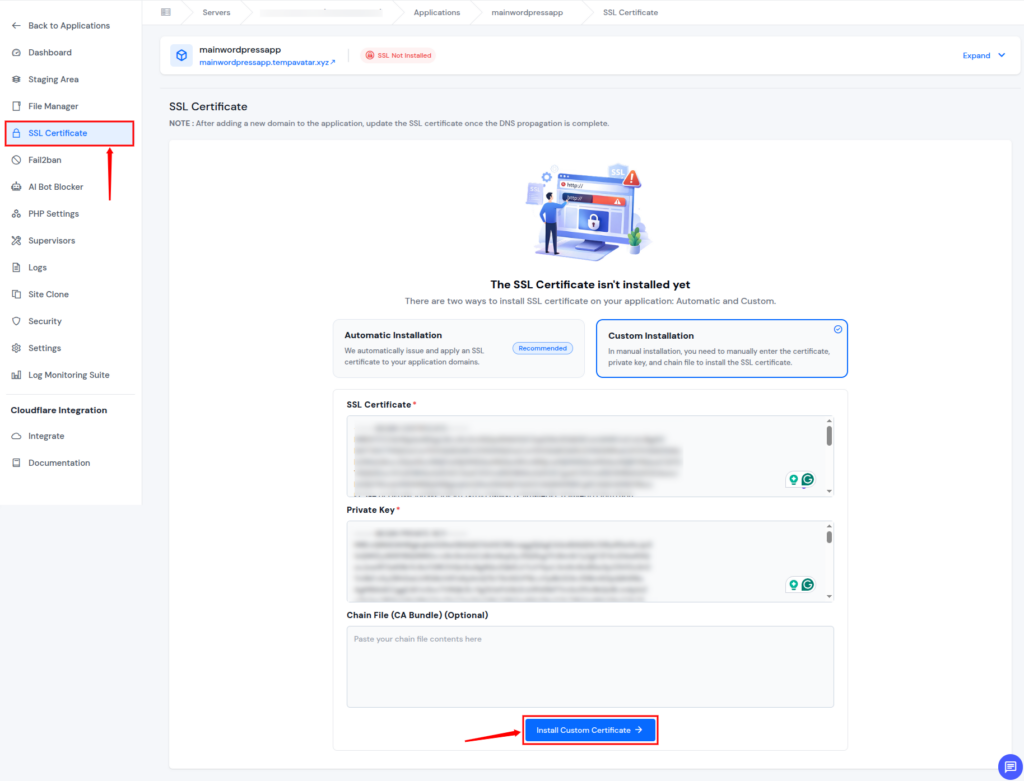
Using the custom installation method, users can:
- Upload their own SSL certificate files
- Configure certificates for specific applications or domains
- Maintain compatibility with third-party certificate authorities
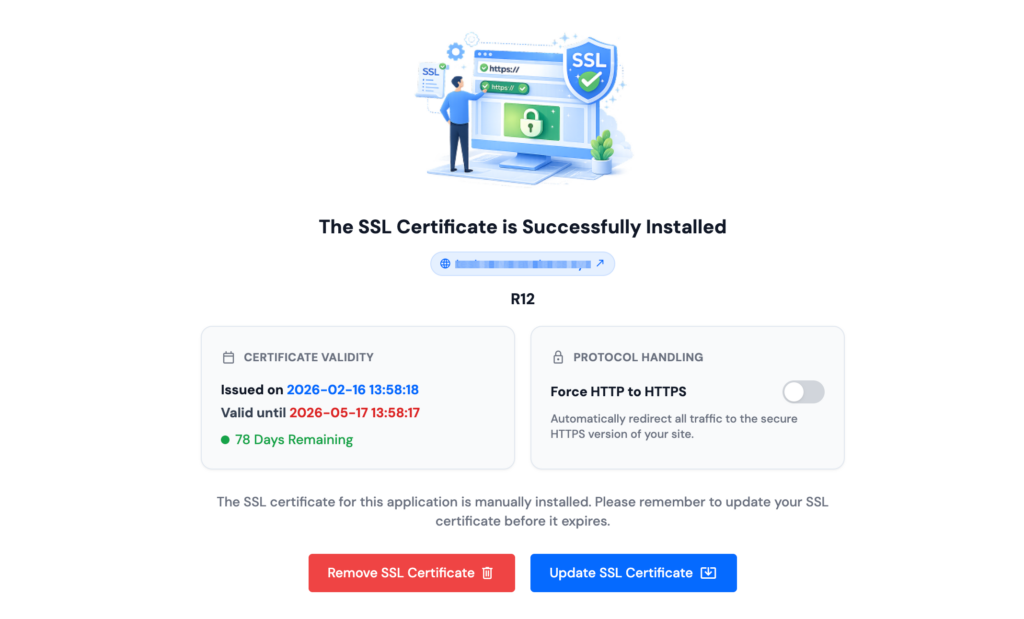
This flexibility allows users to tailor SSL implementation based on their security or compliance requirements.
Why Use ServerAvatar for SSL Certificate Management
ServerAvatar combines ease of use with advanced control, making SSL management accessible to both beginners and experienced users. By integrating SSL features directly into the platform, ServerAvatar removes the need for manual server commands while still allowing customization when required.
Key advantages include:
- Simplified SSL setup from a centralized dashboard
- Support for both automatic and custom SSL installations
- Reduced risk of misconfiguration
- Seamless HTTPS enablement for applications
By handling SSL certificates efficiently, ServerAvatar helps website owners focus on performance, growth, and reliability without compromising security.

Is SSL Mandatory for Modern Websites?
While not legally required everywhere, SSL is essential for modern websites. User expectations, browser standards, and search engines all favor secure websites.
Without SSL:
- Trust decreases: Users hesitate to interact.
- Search visibility declines: Rankings may drop.
- User engagement suffers: Visitors leave sooner.
SSL has become a standard requirement for modern websites.
Conclusion
SSL certificates have become a core requirement for maintaining website security, user trust, and search visibility. From encrypting sensitive data and protecting user interactions to improving SEO performance and browser compatibility, SSL plays a vital role in modern websites of every size. With platforms like ServerAvatar, managing SSL certificates becomes straightforward through automatic and custom installation options, reducing complexity while strengthening security. By implementing SSL correctly, website owners can ensure safer communication, better credibility, and long-term stability in an increasingly security-focused web environment.
FAQs
1. Why is an SSL certificate important for website security?
An SSL certificate encrypts data exchanged between users and a website, preventing unauthorized access and protecting sensitive information.
2. Does every website need an SSL certificate?
All websites benefit from SSL, especially those that collect user data, display forms, or aim to build trust and credibility.
3. How does SSL affect SEO rankings?
SSL is a ranking signal used by search engines, and secure websites are more likely to perform better in search results.
4. Can SSL certificates be managed easily on servers?
Yes, with ServerAvatar, simplify SSL installation and management by offering automatic and custom SSL installation directly from the dashboard.
5. Is SSL alone enough to fully secure a website?
No, SSL is a foundational security measure and should be combined with other protections such as firewalls, updates, and access controls.