
If you’ve ever tried building a website from scratch using plain PHP, you already know how quickly things can get messy. I’ve been there, writing repetitive code, struggling with structure, and wasting hours fixing avoidable bugs. That’s exactly where the best PHP frameworks come in, they bring structure, efficiency, and modern development practices to your workflow.
In 2026, PHP is far from outdated. In fact, it’s evolving with powerful frameworks that make web development more efficient than ever. Whether you’re a beginner or someone building serious applications, choosing the right framework can make all the difference. Let’s dive in.
Understanding PHP Frameworks
A PHP framework is like a ready-made structure that helps you build web applications faster and in a more organized way. Instead of writing every single line of code from scratch, you get a set of tools, libraries, and guidelines that handle common tasks for you.
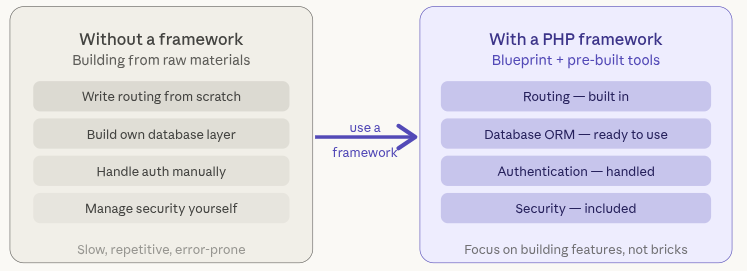
I like to think of it as building a house. You could start with raw materials and design everything yourself, but that takes time and effort. A PHP framework gives you a blueprint, pre-built walls, and tools so you can focus on designing the interior instead of laying every brick.
In practical terms, a PHP framework helps you:
- Manage code in a clean and structured way
- Avoid repetitive coding tasks
- Improve security with built-in protections
- Speed up development
Most frameworks follow patterns like MVC (Model-View-Controller), which simply means separating logic, design, and data. This makes your code easier to maintain and scale as your project grows
Why Use PHP Frameworks
Let me be honest, writing everything from scratch is not just slow, it’s unnecessary.
PHP frameworks help you:
- Save time with pre-built modules
- Improve code structure
- Enhance security
- Scale your applications easily
In 2026, speed and performance matter more than ever. Users don’t wait, and neither should your code.
What Makes a PHP Framework “Best”?
Not all frameworks are created equal. When I evaluate a PHP framework, I look at:
- Performance: Is it fast?
- Ease of use: Can beginners pick it up?
- Community support: Are there tutorials and help available?
- Scalability: Can it handle growth?
- Security features: Does it protect against common threats?
The best framework is not always the most popular, it’s the one that fits your needs.
Key Things to Look for Before Selecting a PHP Framework
Choosing a PHP framework isn’t just about picking the most popular one. I’ve made that mistake before, and trust me, it doesn’t always work out.
Here are some important things I always consider:
1. Project Requirements
Start with the basics, what are you building? A simple blog doesn’t need a heavy framework, while a large SaaS platform definitely does. Always match the tool to the job.
2. Learning Curve
Some frameworks are beginner-friendly, while others take time to understand. If you’re just starting out, go for something simple. If you’re experienced, you might prefer something more flexible and powerful.
3. Performance and Speed
Speed matters. Users expect fast-loading websites, and search engines care about it too. Look for frameworks that are optimized for performance and don’t overload your application.
4. Community and Support
This is something people often ignore. A strong community means:
- More tutorials
- Faster solutions to problems
- Regular updates
If you get stuck, you’ll want help available.
5. Security Features
Security should never be an afterthought. A good framework should protect against common threats like:
- SQL injection
- Cross-site scripting (XSS)
- Cross-site request forgery (CSRF)
6. Scalability
Think long-term. Will your application grow? If yes, choose a framework that can handle increasing traffic and complexity without breaking down.
7. Ecosystem and Tools
Some frameworks come with built-in tools for testing, authentication, APIs, and more. These extras can save you a lot of time and effort.
PHP Framework for Powerful Web Development
Building modern web applications without a structured approach can quickly become overwhelming, and that’s exactly where PHP frameworks make a difference. Below are some of the best PHP frameworks that provide the tools, structure, and efficiency needed to create fast, secure, and scalable websites with less effort and better results.
1. Laravel: The Developer Favorite
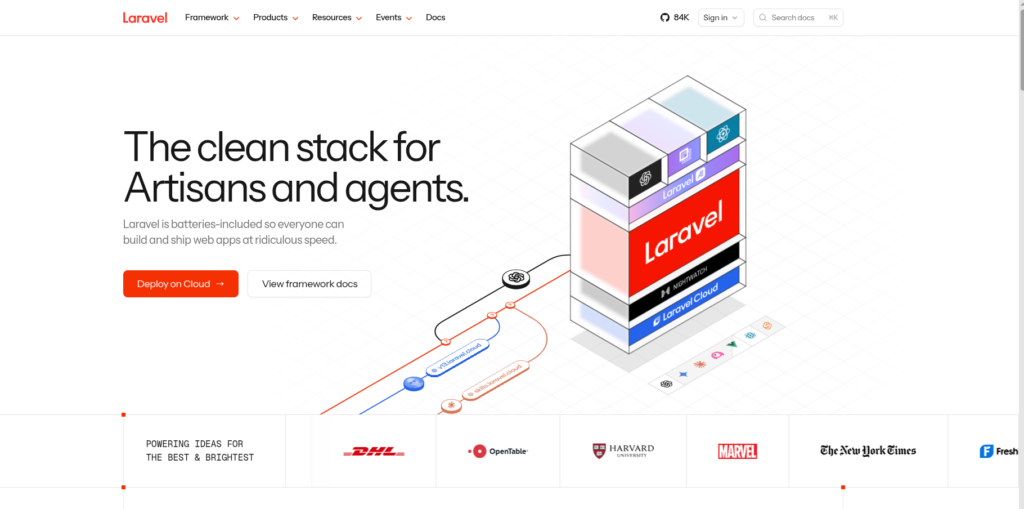
Laravel is one of the most popular PHP frameworks, known for its clean syntax and developer-friendly approach. It simplifies complex tasks like authentication, routing, and caching, making development smoother and faster.
Key Features:
- Elegant MVC architecture
- Built-in authentication system
- Blade templating engine
- Eloquent ORM
- Large ecosystem and community
Advantages:
- Easy to learn and use
- Strong community support
- Rich built-in features
- Excellent documentation
Disadvantages:
- Slightly heavier than micro frameworks
- Performance can be slower for very large apps
Best for: Rapid development of modern web applications.
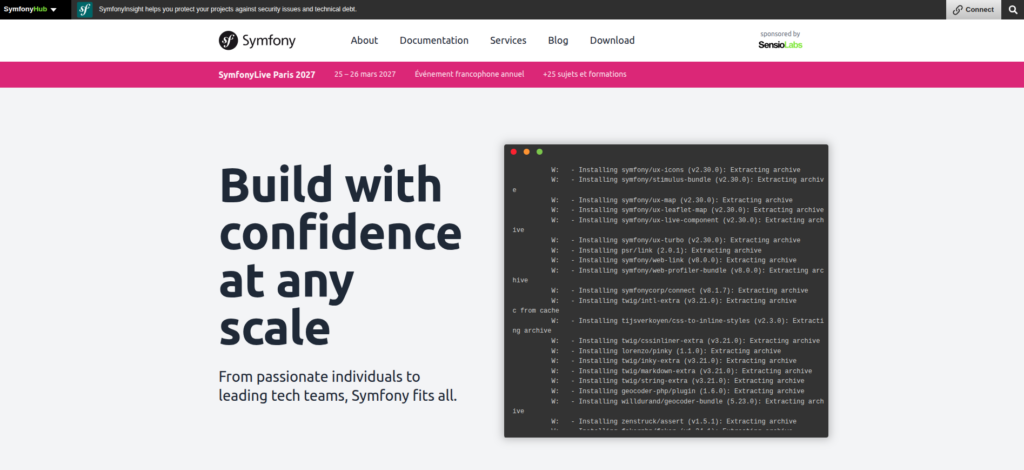
2. Symfony: Built for Large Applications
Symfony is a powerful and flexible framework designed for complex, large-scale applications. It offers reusable components and gives developers full control over configuration.
Key Features:
- Modular component-based system
- Highly customizable architecture
- Built-in debugging tools
- Strong testing support
- Long-term support versions
Advantages:
- Highly scalable
- Enterprise-ready
- Flexible configuration
- Reliable performance
Disadvantages:
- Steeper learning curve
- More setup required
Best for: Large, complex enterprise-level projects.
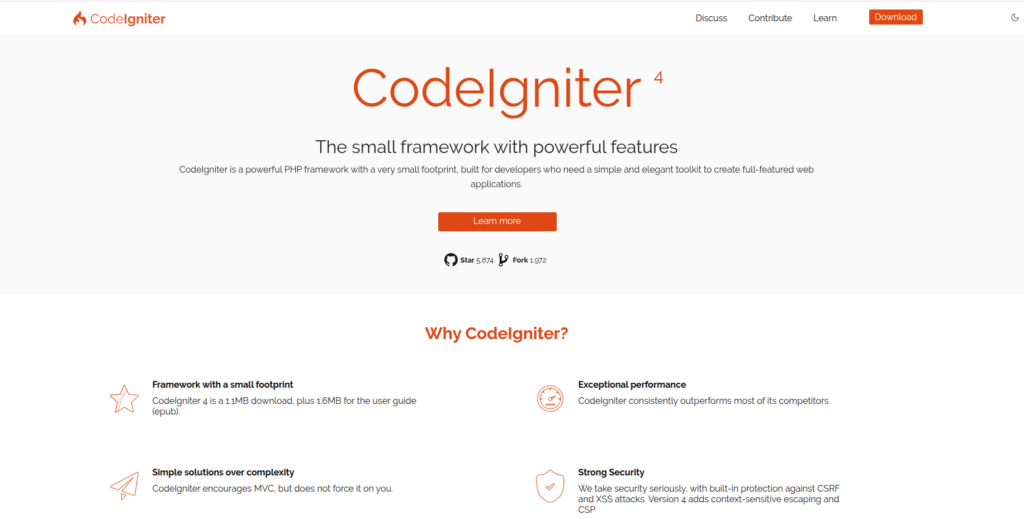
3. CodeIgniter: Lightweight and Fast
CodeIgniter is a simple and lightweight framework that focuses on speed and ease of use. It’s ideal for developers who want minimal setup and quick results.
Key Features:
- Small footprint
- Simple configuration
- Fast execution
- MVC support
- Minimal dependencies
Advantages:
- Beginner-friendly
- Very fast performance
- Easy setup
- Low resource usage
Disadvantages:
- Limited built-in features
- Smaller ecosystem
Best for: Small to medium-sized applications and beginners.
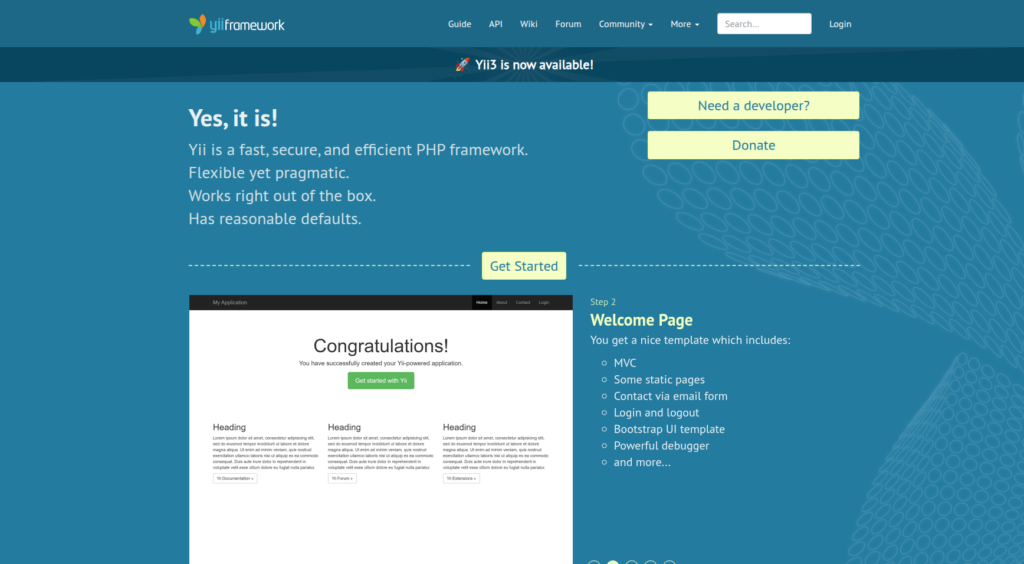
4. Yii: Performance-Oriented Framework
Yii is a high-performance PHP framework designed for speed and efficiency. It comes with powerful tools that help developers build secure and scalable applications quickly.
Key Features:
- High-speed performance
- Code generation tool (Gii)
- Built-in caching support
- Strong security features
- MVC architecture
Advantages:
- Fast and efficient
- Good security defaults
- Reduces development time
- Scalable
Disadvantages:
- Smaller community compared to Laravel
- Slight learning curve
Best for: High-performance applications with heavy traffic.
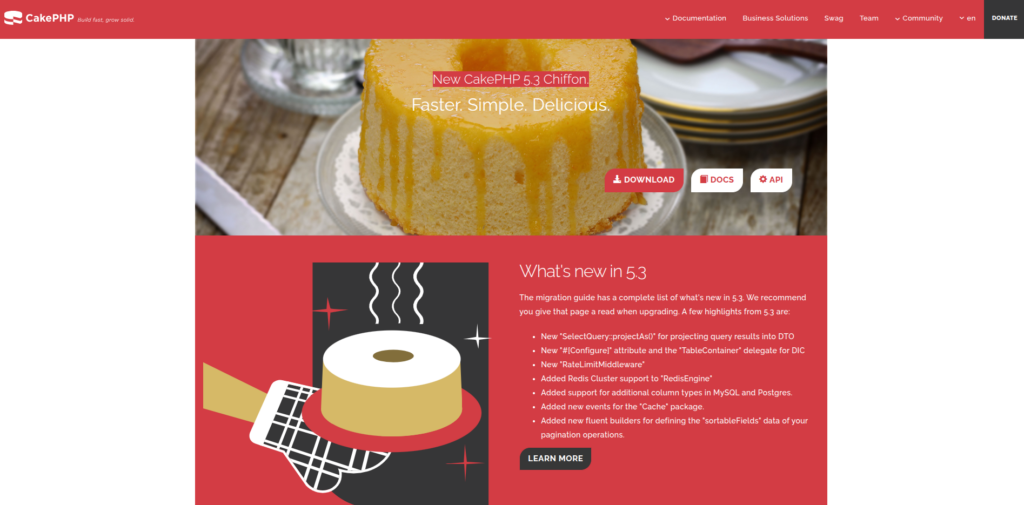
5. CakePHP: Convention Over Configuration
CakePHP follows a structured approach where predefined conventions reduce the need for manual configuration. This helps developers build applications faster with less setup.
Key Features:
- Convention-based structure
- Built-in ORM
- Validation tools
- MVC architecture
- Rapid scaffolding
Advantages:
- Faster development
- Less configuration required
- Consistent code structure
- Good security features
Disadvantages:
- Less flexibility in some cases
- Smaller community
Best for: Rapid application development with structured coding.
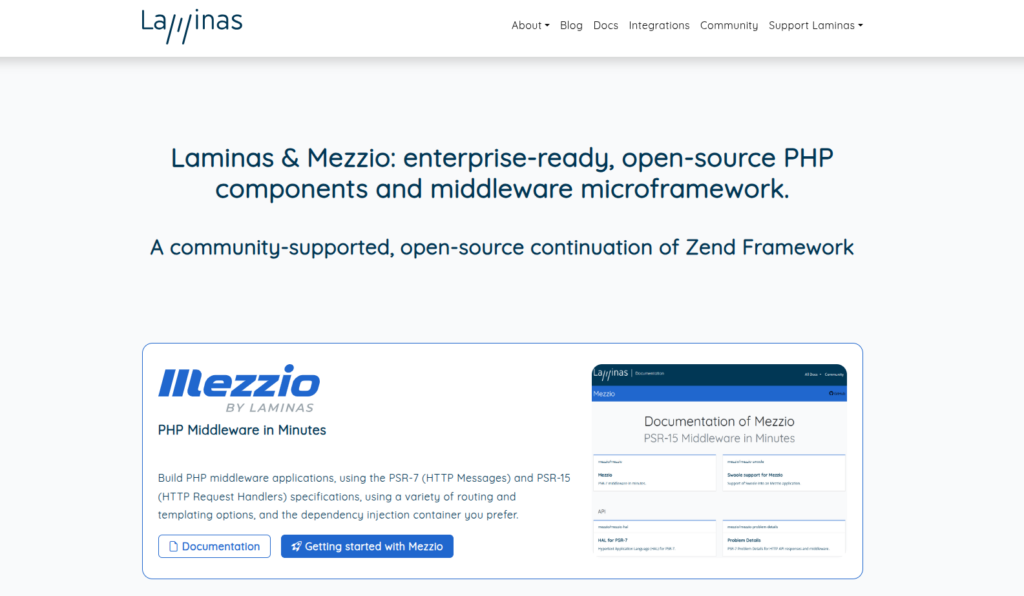
6. Laminas: Enterprise-Level Flexibility
Laminas is a flexible and modular framework suited for enterprise-grade applications. It allows developers to use only the components they need.
Key Features:
- Modular architecture
- Reusable components
- Enterprise-level support
- Flexible configuration
- API-focused tools
Advantages:
- Highly customizable
- Scalable for large systems
- Strong enterprise support
- Robust performance
Disadvantages:
- Complex for beginners
- Requires more setup time
Best for: Enterprise and large-scale custom applications.
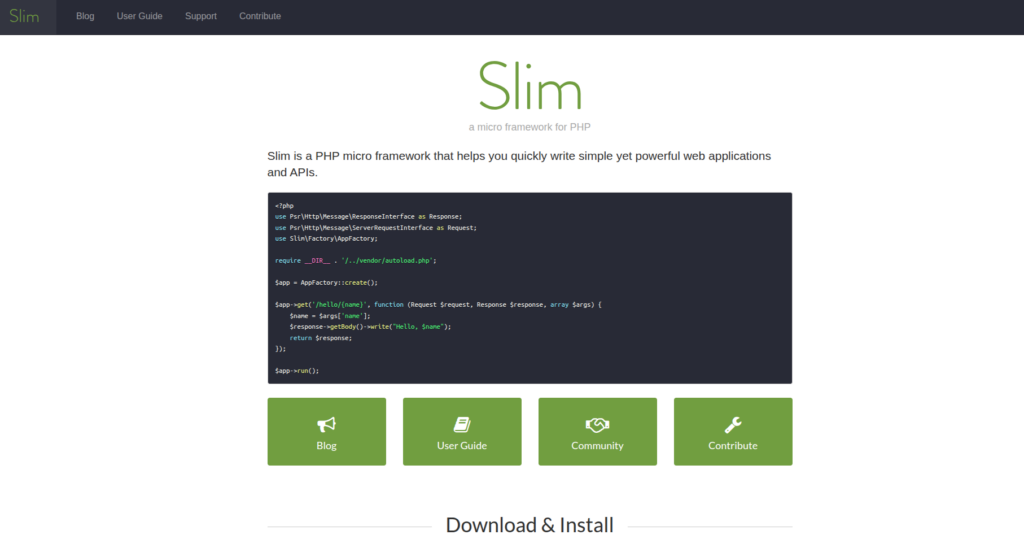
7. Slim: Minimalist Micro Framework
Slim is a lightweight micro framework designed for building simple applications and APIs. It focuses only on essential features without unnecessary complexity.
Key Features:
- Minimal core structure
- Fast routing system
- Middleware support
- PSR-7 compatibility
- Easy API development
Advantages:
- Extremely lightweight
- Fast performance
- Easy to use for APIs
- Flexible
Disadvantages:
- Limited built-in features
- Requires external tools for full functionality
Best for: APIs and microservices.
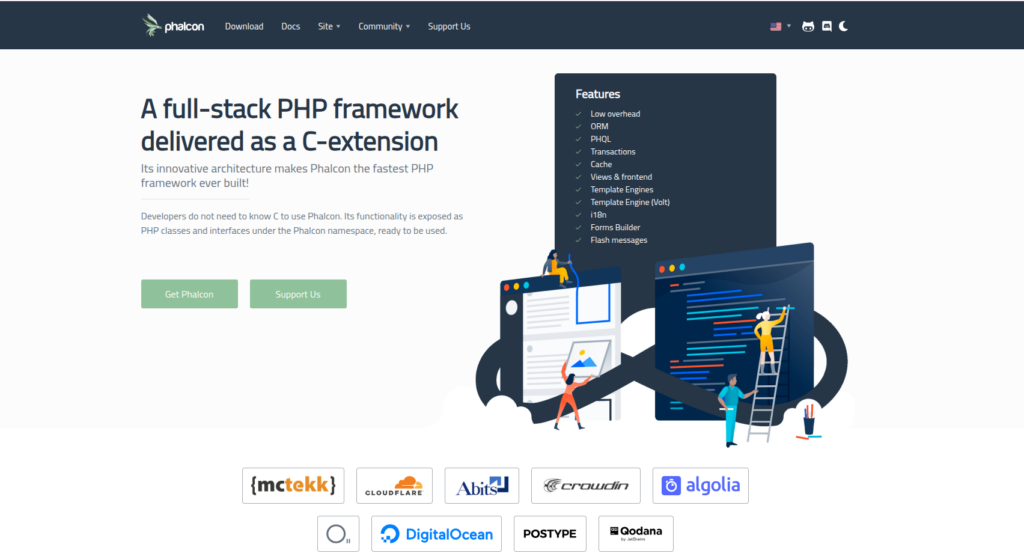
8. Phalcon: High-Speed Framework
Phalcon is a unique PHP framework written in C, which makes it exceptionally fast. It runs as a PHP extension, reducing overhead and boosting performance.
Key Features:
- C-based architecture
- High execution speed
- Low memory usage
- Full-stack framework
- MVC support
Advantages:
- Extremely fast
- Efficient resource usage
- Strong performance
- Stable
Disadvantages:
- Harder to install
- Smaller community
Best for: Performance-critical applications.
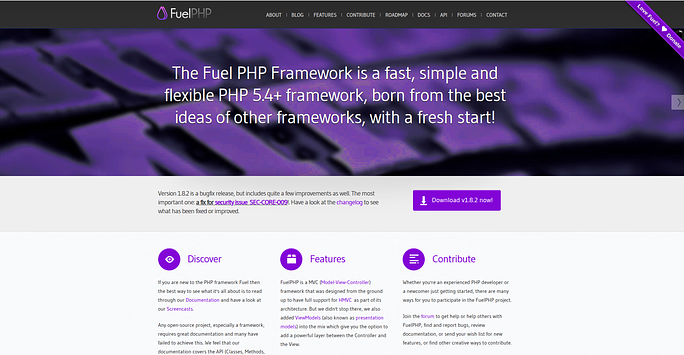
9. FuelPHP: Secure and Flexible
FuelPHP is a flexible framework that focuses heavily on security and modular design. It supports both MVC and HMVC patterns for better organization.
Key Features:
- HMVC architecture
- Built-in security features
- Flexible structure
- RESTful support
- Modular design
Advantages:
- Strong security focus
- Flexible architecture
- Good for complex apps
- Clean code structure
Disadvantages:
- Smaller community
- Less frequent updates
Best for: Secure and modular web applications.
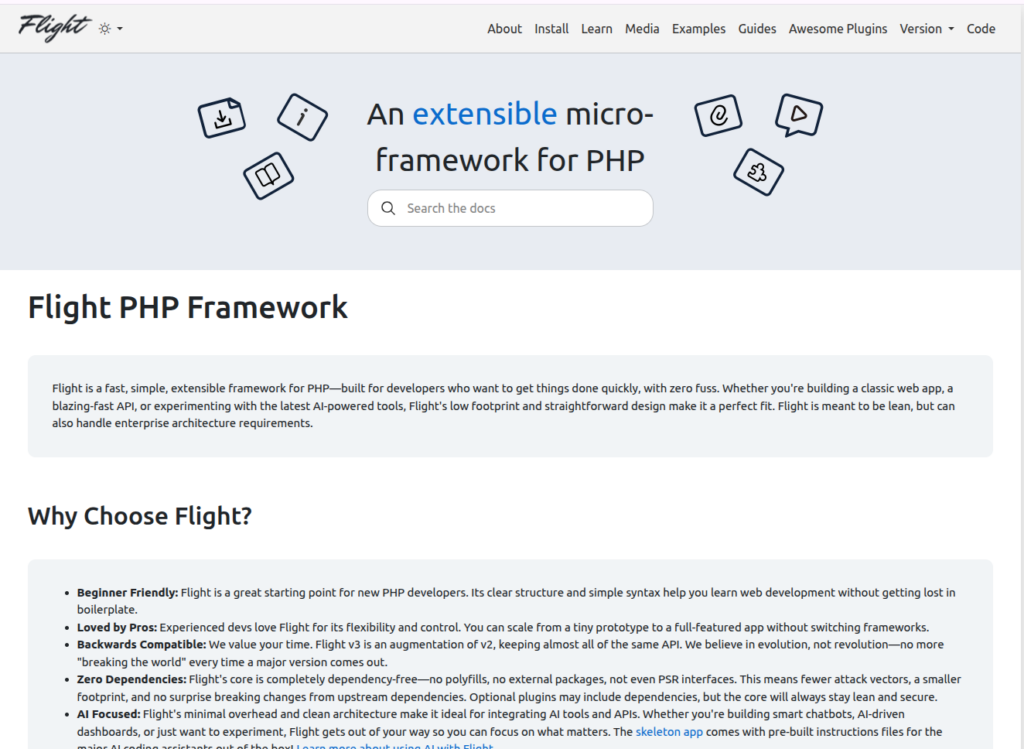
10. FlightPHP: Simple and Minimalist
FlightPHP is a simple and lightweight micro framework designed for developers who want minimalism and speed. It provides just the essentials to get applications up and running quickly.
Key Features:
- Minimalistic design
- Fast routing
- RESTful request handling
- Easy setup
- Lightweight core
Advantages:
- Very easy to learn
- Fast and efficient
- Minimal overhead
- Flexible usage
Disadvantages:
- Very limited features
- Not suitable for large applications
Best for: Small projects and simple web apps.
Quick Comparison of Top PHP Frameworks
Choosing the right PHP framework can feel confusing when you have so many good options. To make things easier, here’s a side-by-side comparison that highlights the key differences so you can quickly find what fits your needs.
| Framework | Best For | Difficulty Level | Performance | Key Strength |
| Laravel | Modern web apps | Easy | Medium | Developer-friendly & rich features |
| Symfony | Enterprise applications | Hard | High | Flexibility & scalability |
| CodeIgniter | Small projects | Easy | High | Lightweight & fast |
| Yii | High-performance apps | Medium | Very High | Speed & efficiency |
| CakePHP | Rapid development | Medium | Medium | Convention-based structure |
| Laminas | Enterprise systems | Hard | High | Modular & customizable |
| Slim | APIs & microservices | Easy | Very High | Minimal & fast |
| Phalcon | Performance-critical apps | Medium | Extremely High | C-based speed |
| FuelPHP | Secure applications | Medium | High | Security-focused |
| FlightPHP | Small apps & APIs | Easy | High | Simple & lightweight |
How to Choose the Right PHP Framework
Choosing a framework can feel overwhelming. I usually ask myself a few simple questions:
- What type of project am I building?
- How much time do I have?
- Do I need scalability?
- Am I working solo or in a team?
Quick tip:
- Beginners >> Laravel or CodeIgniter
- Large apps >> Symfony or Laminas
- APIs >> Slim
Pick what aligns with your goals, not just trends.
Powering Your PHP Applications with ServerAvatar
Building a powerful PHP application using the right framework is only part of the journey. To truly get the best performance, security, and scalability, you also need a reliable hosting environment. That’s where ServerAvatar comes in.
ServerAvatar is a modern server management platform designed to simplify PHP application hosting. Whether you’re a developer, agency, or business owner, it allows you to deploy and manage PHP applications without dealing with complex server configurations.
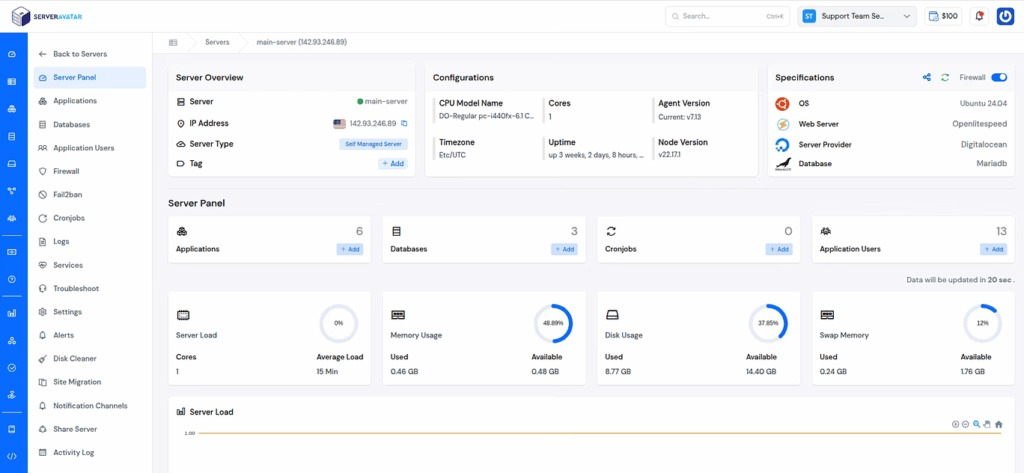
Instead of spending hours setting up servers manually, you can focus on what really matters, building and improving your application.
Key Features of ServerAvatar for PHP Hosting
ServerAvatar provides everything you need to run PHP applications smoothly:
- One-click application installer for WordPress, Mautic, Joomla, and many more popular applications to quickly launch
- Easily install a Custom PHP Application without the commandline hassles
- Centralized dashboard to manage servers and applications with ease
- Built-in performance optimization for better speed and stability
- Redis caching support to improve loading times and user experience
- Strong security features such as free SSL with auto-renewal, firewall protection, fail2ban, AI bot blocker, 8G firewall, and many more
- Scalable infrastructure that grows with your application traffic
- Real-time monitoring to track server health, logs, and performance
- Multi-server management from a single dashboard
Why Use ServerAvatar for PHP Projects?
When you combine a powerful PHP framework with a reliable hosting platform like ServerAvatar, you get:
- Better performance
- Stronger security
- Easier scalability
- Faster deployment
In simple terms, frameworks help you build efficient applications, while ServerAvatar ensures they run smoothly and reliably in production.
Future of PHP Frameworks
PHP is not going anywhere. In fact, it’s becoming more modern with each update. What I see happening:
- Better performance optimization
- More integration with cloud tools
- Increased focus on security
- Simpler developer experience
Frameworks will continue evolving to meet modern development needs.
Best Practices for Better Results
No matter which PHP framework you choose, how you use it matters just as much. Over time, I’ve learned that following a few simple practices can make a huge difference.
1. Keep Your Code Clean and Organized
Messy code might work at first, but it becomes a nightmare later. Stick to a consistent structure and naming convention. Future you will thank you.
2. Follow the Framework Guidelines
Every framework has its own way of doing things. Instead of fighting it, follow its conventions. That’s how you get the best performance and maintainability.
3. Use Built-in Features Instead of Reinventing the Wheel
Frameworks already provide solutions for common tasks. Avoid writing custom code for things that are already handled efficiently.
4. Prioritize Security from Day One
Don’t wait until something breaks. Use built-in security tools and always validate user input. Prevention is always better than fixing issues later.
5. Optimize for Performance
Simple steps can make a big difference:
- Use caching
- Minimize database queries
- Optimize assets
A faster app means a better user experience.
6. Write Reusable Code
Try to write code that you can reuse in multiple places. It saves time and keeps your project consistent.
7. Test Your Application Regularly
Testing is not optional. Even basic testing helps you catch bugs early and ensures your application runs smoothly.
8. Keep Everything Updated
Frameworks release updates for a reason, performance improvements and security fixes.Make it a habit to stay up to date.

Common Mistakes to Avoid
I’ve made these mistakes myself, so learn from them:
- Choosing a framework just because it’s popular
- Ignoring documentation
- Overcomplicating simple projects
- Not considering scalability
Keep things simple and practical.
Conclusion
At the end of the day, PHP frameworks are what make modern web development faster, cleaner, and far more manageable. From my experience, the real difference isn’t just in picking a popular framework, but choosing one that actually fits your project’s needs. Whether you go with something beginner-friendly or performance-focused, the goal is to build applications that are secure, scalable, and easy to maintain. And once you pair the right framework with a reliable hosting platform like ServerAvatar, everything just works better, from development to deployment and beyond.
FAQs
1. Which PHP framework is best for beginners?
Laravel and CodeIgniter are great starting points because they are easy to learn, well-documented, and widely supported by the developer community.
2. Is PHP still a good choice for web development in 2026?
PHP remains highly relevant, especially with modern frameworks that improve performance, security, and developer experience.
3. Which PHP framework offers the best performance?
Phalcon and Yii are known for their high performance, especially for applications that require speed and efficient resource usage.
4. Can PHP frameworks be used to build APIs?
Frameworks like Slim, Laravel, and FlightPHP are commonly used to build fast and scalable APIs.
5. Do I need a hosting platform for PHP frameworks?
Once your application is ready, you need a reliable hosting platform. ServerAvatar helps simplify deployment, improve performance, and manage servers efficiently.