
If you’re planning to build a website or web application using PHP, you’ve probably come across two popular names: Laravel and CodeIgniter. When it comes to Laravel vs CodeIgniter, many developers find it confusing to decide which one is the better choice. And let’s be honest, it can feel overwhelming trying to pick between them, right? Think of it like choosing between two technologies, one is packed with advanced features, smooth design, and automation (Laravel), while the other is lightweight, fast, and easy to use (CodeIgniter). Both will get you to your destination, but the journey will feel very different. So, which one should you choose?
In this guide, we will break down Laravel vs CodeIgniter in a simple, practical way so you can make the right decision, even if you’re not a tech expert.
What is a PHP Framework?
A PHP framework is a pre-built collection of tools, libraries, and guidelines that helps developers build web applications more efficiently. Instead of writing every piece of code from scratch, a framework provides a structured foundation with ready-to-use components for common tasks like routing, database interaction, authentication, and security.
Think of it as a shortcut that simplifies development while keeping your code organized and maintainable. PHP frameworks follow standard coding practices and design patterns (like MVC), making it easier to manage, scale, and collaborate on projects.
By using a PHP framework, developers can save time, reduce errors, and focus more on building features rather than handling repetitive tasks. Popular frameworks like Laravel and CodeIgniter are widely used because they make the development process faster, cleaner, and more reliable.
What is Laravel?
Laravel is a modern PHP framework designed to make web development faster, cleaner, and more efficient. It provides developers with a well-structured environment where common tasks, like routing, authentication, and database management, are already handled with built-in tools. Instead of writing everything from scratch, you can focus more on building features that actually matter for your application.
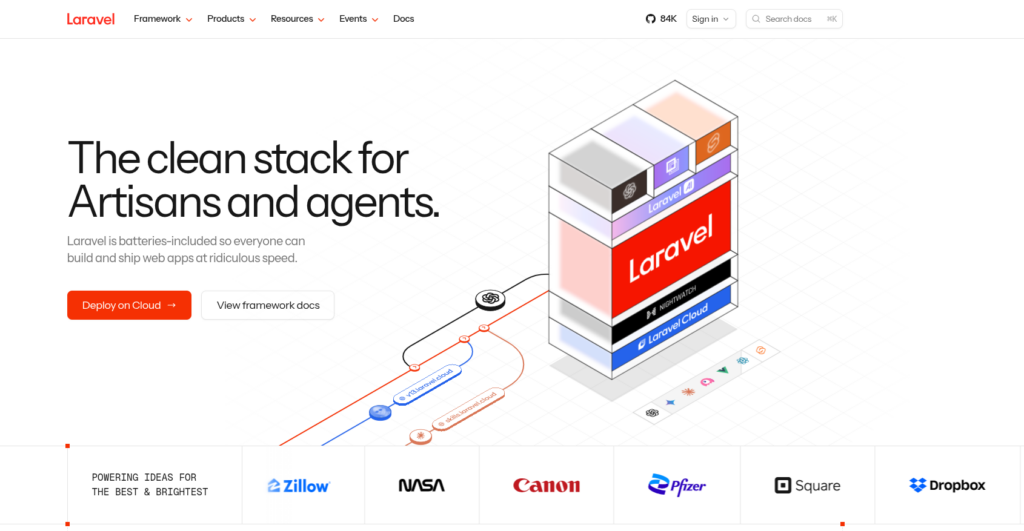
What makes Laravel stand out is its elegant syntax and developer-friendly approach. Even though it comes with advanced capabilities, it still manages to keep things organized and readable. Whether you’re building a small web app or a large-scale platform, Laravel gives you the flexibility and power to scale your project smoothly.
Key Features
- MVC (Model-View-Controller) architecture
- Built-in authentication and authorization
- Eloquent ORM for database management
- Blade templating engine
- RESTful routing system
- Task scheduling and queue management
- Strong security features (CSRF protection, hashing)
- Artisan command-line tool
Advantages
- Clean and organized code structure
- Rich set of built-in tools and features
- Strong community support and documentation
- Highly scalable for large applications
- Enhanced security by default
Disadvantages
- Slightly slower due to heavy features
- Steeper learning curve for beginners
- Requires more server resources
Best For: Laravel is best for building modern, scalable, and feature-rich web applications.
Why You Need Laravel
- Saves development time with built-in tools
- Reduces repetitive coding tasks
- Helps maintain clean and structured code
- Supports large and complex projects
- Improves application security
What is CodeIgniter?
CodeIgniter is a lightweight and straightforward PHP framework that focuses on simplicity and speed. It’s designed for developers who want to build web applications quickly without dealing with complex configurations. With minimal setup required, you can start coding almost immediately, making it a great choice for beginners or small projects.
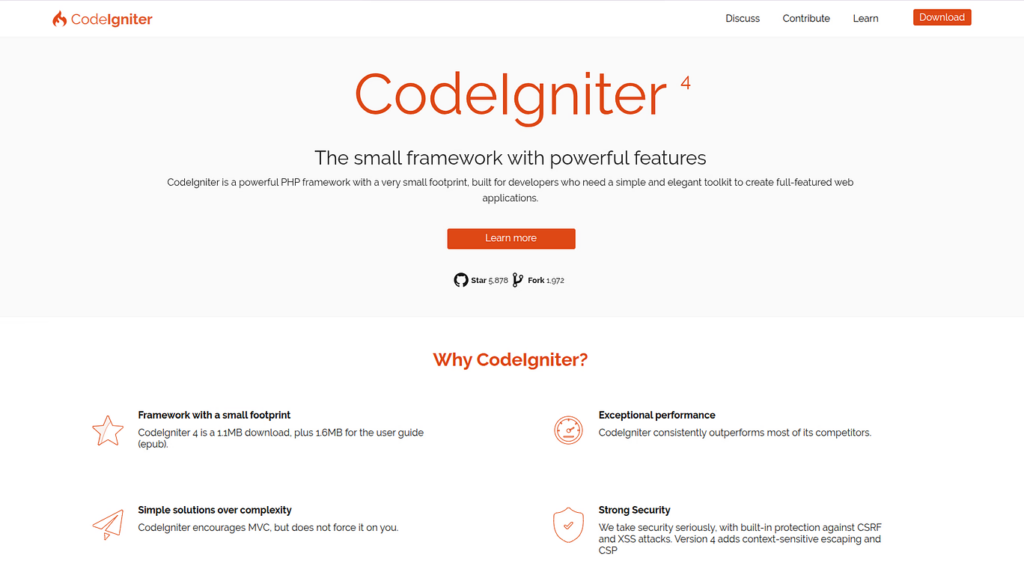
Unlike more feature-heavy frameworks, CodeIgniter keeps things minimal. It gives you the essential tools needed to build applications while allowing you to stay in control of how things work. If you prefer a fast, no-frills approach to development, CodeIgniter can be a practical and efficient option.
Key Features
- Lightweight and fast performance
- Simple and easy installation
- Minimal configuration required
- Flexible MVC framework
- Built-in libraries for common tasks
- Good error handling and debugging
- Compatible with most hosting environments
Advantages
- Easy to learn and use
- Faster execution due to lightweight structure
- Low server requirements
- Quick setup and deployment
- Ideal for small projects
Disadvantages
- Limited built-in features
- Less suitable for large-scale applications
- Smaller community compared to modern frameworks
- Requires more manual coding for advanced features
Best For: CodeIgniter is best for building lightweight, fast, and simple web applications.
Why You Need CodeIgniter
- Helps you start projects quickly
- Reduces complexity in development
- Works well on low-resource servers
- Gives more control over coding structure
- Ideal for beginners learning PHP frameworks
Comparison Table of Laravel and CodeIgniter
Below is the comparison table that highlights the key differences between Laravel and CodeIgniter in a clear and easy-to-understand format.
| Feature | Laravel | CodeIgniter |
| Type | Modern PHP framework | Lightweight PHP framework |
| Architecture | Strict MVC pattern | Flexible MVC (not strictly enforced) |
| Learning Curve | Moderate to steep | Easy and beginner-friendly |
| Performance | Slightly slower due to built-in features | Faster due to lightweight nature |
| Built-in Features | Rich (authentication, routing, ORM, etc.) | Limited (basic tools only) |
| Database Handling | Eloquent ORM (advanced and user-friendly) | Simple database functions (no full ORM) |
| Security | Strong built-in security features | Basic security, requires manual handling |
| Scalability | Highly scalable for large applications | Better suited for small to medium projects |
| Template Engine | Blade templating engine | No built-in templating engine |
| Community Support | Large and active community | Smaller but stable community |
| Development Speed | Faster for complex apps (due to tools) | Faster for simple apps |
| Code Structure | Clean, modern, and organized | Simple but less structured |
| Customization | High flexibility with built-in tools | Flexible but requires manual effort |
| Modules & Libraries | Extensive ecosystem and packages | Limited libraries |
| Best Use Case | Complex, enterprise-level applications | Small, lightweight applications |
Key Differences Between Laravel and CodeIgniter
Laravel and CodeIgniter differ mainly in terms of features, complexity, and scalability, Laravel offers a modern, feature-rich environment, while CodeIgniter focuses on simplicity and speed. Your choice depends on whether you need advanced functionality or a lightweight framework for quick development.
- Laravel: Feature-rich, modern, slightly complex
- CodeIgniter: Lightweight, fast, beginner-friendly
Ease of Learning and Use
The ease of learning depends on how simple or structured you prefer your development process to be. Some developers prefer flexibility and quick setup, while others value a more organized and feature-rich approach.
Laravel: Laravel has a steeper learning curve because of its advanced features and structure. Beginners may take some time to get comfortable.
CodeIgniter: CodeIgniter is much easier to learn. You can start building applications quickly without deep knowledge.
Verdict
- Beginners: CodeIgniter
- Experienced developers: Laravel
Performance Comparison
Performance varies based on how lightweight or feature-heavy the framework is. Simpler setups tend to run faster, while feature-rich environments may require optimization for better speed.
Laravel: Laravel is slightly slower due to its heavy features, but performance can be optimized.
CodeIgniter: CodeIgniter is faster because it’s lightweight and has fewer built-in features.
Verdict
If speed is your top priority, CodeIgniter wins.
Features and Functionality
The level of built-in features can greatly impact development speed and convenience. More features reduce manual work, while fewer features offer greater control and simplicity.
Laravel: It is known for offering a wide range of built-in tools that streamline development.
- Built-in authentication
- Routing system
- Blade templating engine
- Task scheduling
- RESTful API support
CodeIgniter: It keeps things minimal by providing only the essential tools needed for development.
- Basic routing
- Lightweight libraries
- Minimal built-in tools
Verdict
Laravel offers far more features out of the box.
Templates
Templating plays an important role in separating design from logic in web development. A good template system helps improve code readability, reusability, and overall development efficiency.
Laravel
- Uses a powerful and modern templating engine
- Supports reusable layouts and components
- Offers clean syntax for embedding logic in views
- Helps maintain separation between design and backend code
CodeIgniter
- Does not include a built-in templating engine
- Relies on basic PHP for designing views
- Gives developers full control over HTML structure
- Requires manual effort for reusable layouts
Verdict
- Laravel is better for structured and reusable templating
- CodeIgniter is better for simple and direct view handling
Overview of API Handling in Both Frameworks
API handling determines how easily applications can communicate with external services or frontend systems. A structured approach can simplify building and managing APIs, while a minimal approach offers more control.
Laravel
- Provides built-in tools for creating RESTful APIs
- Supports API authentication and middleware
- Simplifies request and response handling
- Ideal for modern API-driven applications
CodeIgniter
- Requires additional setup for API development
- Offers basic tools for handling requests and responses
- Gives flexibility but needs manual configuration
- Suitable for simple API implementations
Verdict
- Laravel is better for advanced and scalable APIs
- CodeIgniter is better for lightweight and basic APIs
Authentication & Authorization
Authentication and authorization define how users access and interact with an application. Built-in systems can speed up development, while manual setups allow for more customization.
Laravel
- Comes with built-in authentication system
- Supports role-based access control
- Includes ready-to-use login and registration features
- Enhances security with minimal setup
CodeIgniter
- No default authentication system included
- Requires manual implementation for user access control
- Offers flexibility for custom authentication logic
- Needs extra effort for secure setup
Verdict
- Laravel is better for ready-to-use and secure authentication systems
- CodeIgniter is better for custom-built and flexible authentication setups
HTTP Route Setup in Both Frameworks
Routing controls how incoming requests are handled and directed within an application. A well-defined routing system improves organization, while a simpler setup allows quicker implementation.
Laravel
- Offers a clean and expressive routing system
- Supports route grouping and middleware
- Makes it easy to manage complex routes
- Improves code organization
CodeIgniter
- Uses a simple and straightforward routing approach
- Easy to configure for basic applications
- Less structured compared to advanced systems
- Suitable for smaller projects
Verdict
- Laravel is better for organized and complex routing
- CodeIgniter is better for simple and quick routing
Learning Curve
The learning curve depends on how complex or feature-rich the framework is. Simpler systems are easier to pick up quickly, while advanced frameworks may require more time but offer greater capabilities.
Laravel
- Requires time to understand advanced features
- Involves learning modern development concepts
- Better suited for developers with some experience
- Offers long-term benefits once mastered
CodeIgniter
- Easy to learn and beginner-friendly
- Minimal configuration and setup required
- Ideal for quick learning and rapid development
- Suitable for developers new to PHP frameworks
Verdict
- Laravel is better for long-term growth and advanced skills
- CodeIgniter is better for quick learning and simplicity
Security Capabilities
Security depends on the availability of built-in protections and how much needs to be handled manually. Strong default security can save time, while manual control allows customization.
Laravel: Laravel includes strong security features, such as:
- CSRF protection
- Encryption
- Password hashing
CodeIgniter: CodeIgniter provides basic security features, but requires manual handling for advanced protection.
Verdict
Laravel is more secure by default.
Database Handling
Database interaction can range from simple query handling to advanced abstraction layers. The approach you choose affects both ease of use and development flexibility.
Laravel: Uses Eloquent ORM, which makes database interaction simple and intuitive.
CodeIgniter: Uses a simpler database system without full ORM capabilities.
Verdict
Laravel makes database management easier and more powerful.
Community and Support
Community size and activity influence how easily you can find help, tutorials, and updates. A larger community often means better long-term support and learning resources.
Laravel Community
- Huge global community
- Extensive documentation
- Regular updates
CodeIgniter Community
- Smaller but still active
- Limited modern resources
Verdict
Laravel has better support and resources.

Scalability and Flexibility
Scalability depends on how well a framework can handle growth and increasing complexity. Flexibility determines how easily you can customize the application as your needs evolve.
Laravel: Perfect for large-scale applications due to its structured architecture.
CodeIgniter: Better suited for smaller projects.
Verdict
For scaling your app in the future, Laravel is the better choice.
Use Cases: When to Choose Laravel
This option is suitable when your project requires advanced features, structured development, and long-term scalability. It works best for applications that are expected to grow over time.
Choose Laravel if you want to:
- Build complex web applications
- Create APIs
- Develop enterprise-level projects
- Use modern tools and architecture
Use Cases: When to Choose CodeIgniter
This option is ideal when you need a simple, fast, and lightweight solution. It fits well for smaller projects or situations where quick development is the priority.
Choose CodeIgniter if you want to:
- Build small projects quickly
- Learn PHP frameworks
- Develop lightweight applications
- Work with limited server resources
So, which one is better, Laravel or CodeIgniter?
The better choice depends entirely on your project requirements and development goals. Each framework has its strengths, making it important to choose based on your specific needs rather than a one-size-fits-all answer.
- If you want speed, simplicity, and quick setup, go with CodeIgniter.
- If you want power, scalability, and modern features, choose Laravel.
For most modern applications today and beyond, Laravel is often the preferred choice. But CodeIgniter still shines for lightweight and fast projects.
Managing Laravel and CodeIgniter Projects Made Easy with ServerAvatar
Choosing the right framework is only one part of the process. Once your application is ready, you also need a reliable way to deploy, manage, and maintain your server environment. This is where ServerAvatar can make a significant difference.
ServerAvatar is a platform to simplify the hosting and management of servers and applications. It simplifies the process of deploying and managing PHP and Node.js based web applications on servers.
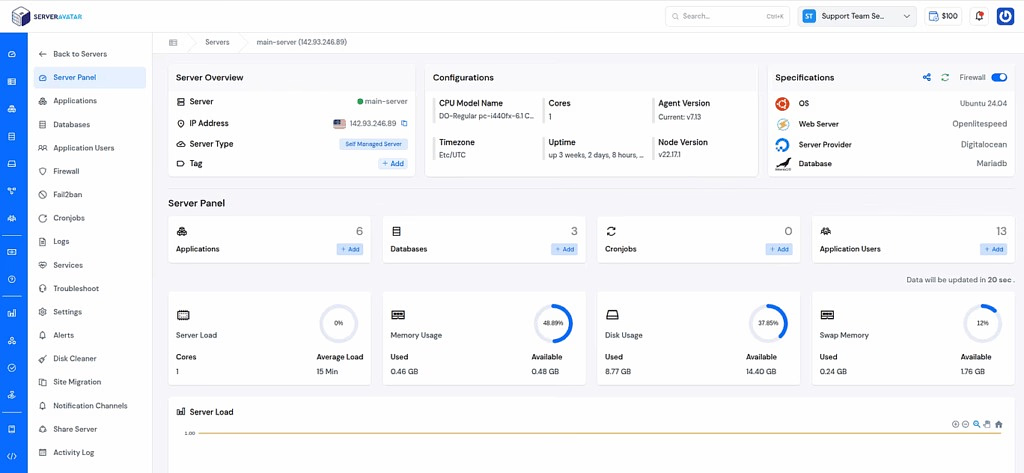
Instead of dealing with complex server setups, manual configuration, and command-line operations, ServerAvatar provides a simplified dashboard to help you manage your PHP applications with ease.
Whether you’re working with Laravel or CodeIgniter, you can deploy and manage your projects without worrying about the underlying infrastructure.
Key Features
- Easy Application Deployment: Deploy PHP applications quickly without going through complicated command-line configuration processes.
- Support for Multiple PHP Versions: Easily switch between PHP versions based on your project requirements, whether it’s Laravel or CodeIgniter.
- Built-in Web Server Stack: Optimized configuration ensures better performance and compatibility with modern, lightweight frameworks.
- Database Management Simplified: Create and manage databases effortlessly without needing external tools or manual commands.
- SSL Certificate & Security Features: Secure applications with free automatic SSL certificates with auto-renewal and built-in security features such as firewall, fail2ban, AI bot blocker, 8G firewall, and many more.
- File Manager & Access Control: Manage files, update configurations, and control access directly from the dashboard.
- Ideal for Both Beginners and Developers: Whether you’re just starting out or managing multiple servers, ServerAvatar removes the complexity of server management.
Why Use ServerAvatar?
Managing servers manually can slow down your development workflow and increase the chances of errors. ServerAvatar helps you focus on what really matters, building your application, while it takes care of the server-side complexity.
No matter which framework you choose, having the right server management tool ensures your project runs smoothly, securely, and efficiently.
Conclusion
In the end, choosing between Laravel and CodeIgniter depends on what you want to achieve with your project. Laravel is a powerful, feature-rich framework that works best for building scalable and modern applications, while CodeIgniter is a lightweight and simple option ideal for quick development and smaller projects. Both have their strengths, so the right choice comes down to your experience level and project requirements. Along with selecting the right framework, using a platform like ServerAvatar can make deployment and server management much easier, helping you focus more on development and less on technical setup.
FAQs
1. Is Laravel harder to learn than CodeIgniter?
Laravel has a steeper learning curve due to its advanced features and structured approach. CodeIgniter is easier to learn and more beginner-friendly.
2. Which framework is faster, Laravel or CodeIgniter?
CodeIgniter is generally faster because it is lightweight and has fewer built-in features. Laravel may be slightly slower, but it offers better functionality and scalability.
3. Is Laravel suitable for large-scale applications?
Laravel is highly suitable for large-scale and enterprise-level applications due to its robust architecture, built-in tools, and scalability.
4. Can beginners use CodeIgniter?
CodeIgniter is one of the best frameworks for beginners because of its simplicity, minimal configuration, and ease of use.
5. Does Laravel provide better security than CodeIgniter?
Laravel offers stronger built-in security features like CSRF protection, encryption, and authentication, while CodeIgniter requires more manual setup for advanced security.
6. Do I need a server management tool for Laravel or CodeIgniter?
While not mandatory, using ServerAvatar can make deployment, configuration, and maintenance much easier, especially if you want to avoid manual server setup.