

Imagine leaving your house door slightly open. You might think it’s harmless, until someone walks in uninvited and starts controlling everything inside. That’s exactly what Remote Code Execution (RCE) does to systems and applications.
In simple terms, RCE is one of the most dangerous cybersecurity threats today. It allows attackers to run their own code on your server, website, or application, from anywhere in the world. Scary, right?
But don’t worry. In this guide, we’ll break everything down in plain English, what RCE is, how it works, why it’s risky, and most importantly, how you can prevent it.
What Is Remote Code Execution (RCE)?
RCE (Remote Code Execution ) is critical vulnerability of cybersecurity in which attacker executes scripts on any target server or system directly from remote location.
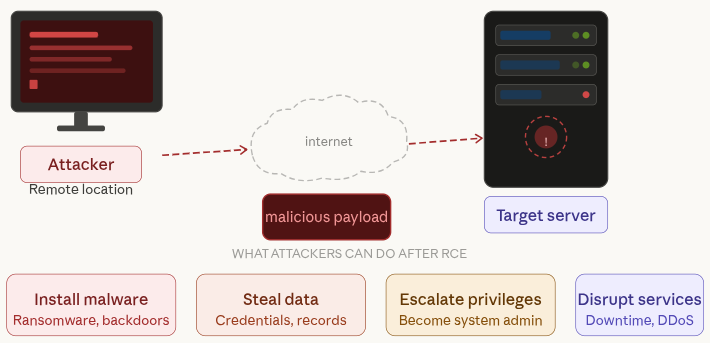
Think of it as someone secretly taking control of your computer over the internet, without your permission. Unlike local attacks, RCE does not require physical access to the system, making it especially dangerous.
Key Point:
- RCE allows attackers to fully control a system remotely, including installing malware, stealing data, or disrupting services.
- It can exploit vulnerabilities in software, plugins, web applications, or misconfigured servers.
- RCE attacks can affect individual devices, enterprise systems, or even entire networks.
- Attackers often use RCE to gain persistent access, escalating privileges to become system administrators.
- RCE is a high-severity threat in cybersecurity, often ranked as one of the most critical vulnerabilities in CVE databases.
- Preventing RCE requires timely software updates, proper input validation, and strong access control measures.
- Common targets include web servers, CMS platforms (like WordPress), and network-connected devices (IoT).
- RCE attacks can lead to ransomware infections, data breaches, and complete system compromise.
Why RCE Is Considered Dangerous
Remote Code Execution is one of the most critical security threats because it allows attackers to directly interact with your system. Once they gain access, they don’t just observe, they can control and manipulate everything. This level of access makes RCE far more dangerous than most other vulnerabilities.
- Steal sensitive data: Attackers can access and extract confidential information like passwords or customer data.
- Install malware: Malicious software can be silently added to damage or spy on your system.
- Modify or delete files: Important files can be changed or completely removed without your permission.
- Take full control of your system: Hackers can operate your system as if they own it.
In short: It’s a complete system takeover.
How Remote Code Execution Works
RCE usually happens when a system fails to properly handle user input or has an unpatched flaw. Attackers take advantage of this weakness to send harmful code that the system mistakenly runs. It’s like giving instructions to a machine without realizing they’re dangerous.

- A system has a vulnerability: There is a hidden flaw or weakness in the software.
- The attacker finds it: Hackers scan systems to discover these weak points.
- They send malicious input (code): Harmful code is delivered through inputs like forms or requests.
- The system unknowingly executes it: The system runs the code, thinking it’s safe.
It’s like tricking a machine into following harmful instructions.
Common Types of RCE Attacks
1. Command Injection
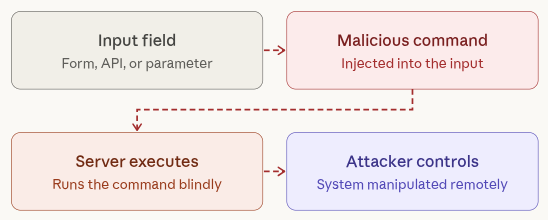
Attackers exploit input fields or forms to insert malicious system commands. These commands are executed by the server, allowing the attacker to manipulate or control the system remotely.
2. Deserialization Attacks
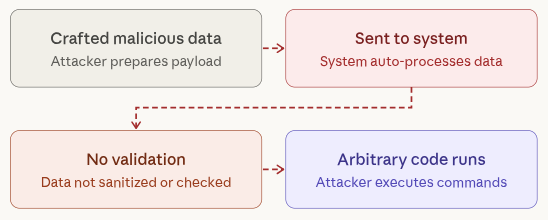
Malicious data is crafted and sent to a system that automatically processes it as code. If the system fails to properly validate or sanitize this data, the attacker can execute arbitrary commands.
3. File Upload Exploits
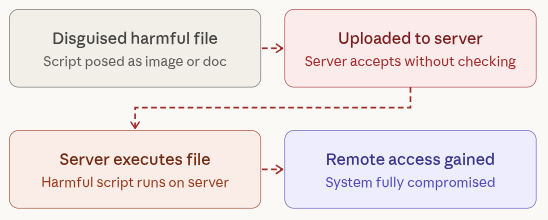
Attackers upload harmful scripts disguised as legitimate files, such as images or documents. When executed by the server, these files can compromise the system and provide remote access.
4. Software Vulnerability Exploits
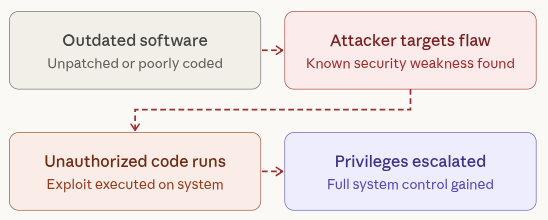
Outdated or poorly coded software often contains security flaws. Attackers target these vulnerabilities to run unauthorized code, gain system control, or escalate privileges.
Real-World Examples of RCE Attacks
RCE attacks are not just theoretical, they’ve caused serious damage in real life. Many well-known companies have faced security incidents due to such vulnerabilities. These examples highlight how widespread and impactful RCE can be.
- Log4Shell (2021): A widely used logging tool vulnerability exposed millions of systems.
- Microsoft Exchange Hack: Attackers gained unauthorized access to email servers.
- Apache Struts Vulnerability: A major flaw led to large-scale data breaches.
Lesson: No system is too big or too secure to be targeted.
Key Vulnerabilities That Lead to RCE
RCE attacks usually happen because of preventable issues in software or system configuration. These weaknesses make it easier for attackers to exploit systems. Most of the time, the problem is not fixing known issues on time.
- Outdated software: Older versions often contain known security flaws.
- Unpatched vulnerabilities: Missing updates leave systems exposed to attacks.
- Poor input validation: Systems fail to properly check user-provided data.
- Weak security configurations: Misconfigured settings create easy entry points.
Important: Many RCE attacks succeed because basic security steps are ignored.
Signs Your System May Be Compromised
Detecting an RCE attack early can save you from serious damage. While some attacks are silent, there are still warning signs you can look for. Paying attention to unusual behavior is key.
- Unexpected system behavior: Programs may act strangely or crash unexpectedly.
- Slow performance: Your system may become unusually slow without reason.
- Unknown files or processes: Suspicious files or background activities may appear.
- Unauthorized access logs: Login attempts from unknown sources may be recorded.
Risks and Impact of RCE Attacks
The consequences of an RCE attack can be severe and long-lasting. From financial damage to loss of trust, the impact can affect both individuals and businesses. It’s not just a technical issue, it’s a business risk too.
- Data Theft: Sensitive or personal data can be stolen and misused.
- Financial Loss: Attacks can lead to direct or indirect monetary damage.
- Reputation Damage: Customers may lose trust in your services.
- System Downtime: Your website or application may stop working entirely
Who Can be at Risk?
RCE attacks don’t target just one group, they can affect anyone using internet-connected systems. Whether you’re running a business or a personal website, the risk is real.
- Website owners: Sites can be hijacked or defaced.
- Businesses: Critical systems and data can be compromised.
- Developers: Applications with weak code can be exploited.
- Individual users: Personal devices and data can also be targeted.
How to Prevent Remote Code Execution
The good news is that RCE attacks are largely preventable with the right approach. By following basic security practices, you can significantly reduce the chances of being targeted. Prevention is always easier than recovery.
1. Software Development Best Practices
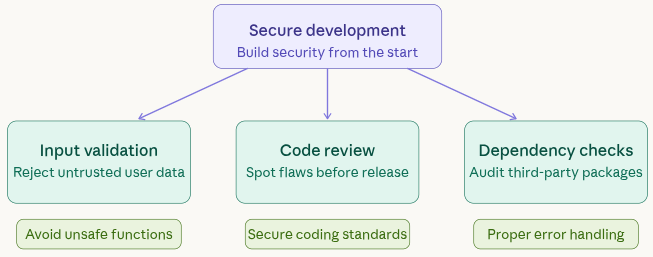
Building secure applications from the start is one of the most effective ways to prevent RCE vulnerabilities. Developers should follow secure coding standards, avoid using unsafe functions, and regularly review code for potential flaws. Practices like input validation, proper error handling, and dependency checks help reduce the chances of introducing exploitable weaknesses.
2. System Hardening
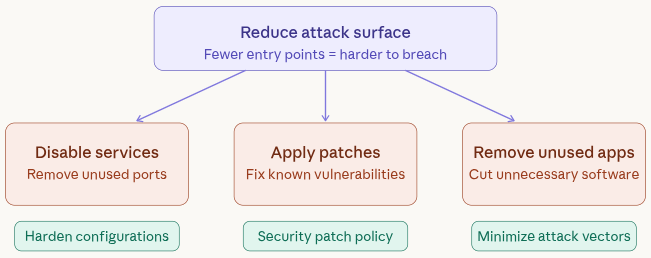
System hardening involves reducing the attack surface by disabling unnecessary services, ports, and features. The fewer entry points your system has, the harder it becomes for attackers to find a way in. Strengthening configurations, applying security patches, and removing unused applications are key steps in making your system more resilient against RCE attacks.
3. Network Security Measures
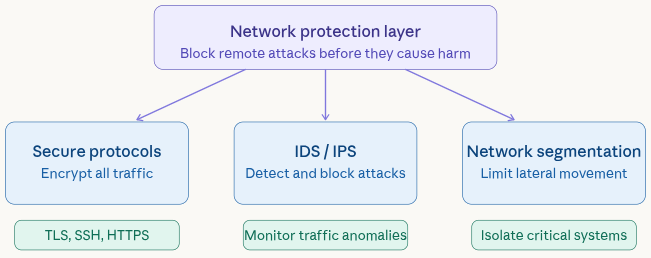
A strong network setup adds another layer of protection against remote attacks. This includes using secure protocols, segmenting networks, and monitoring traffic for unusual activity. Implementing tools like intrusion detection systems (IDS) and intrusion prevention systems (IPS) can help identify and block potential RCE attempts before they cause harm.
4. Validate User Input
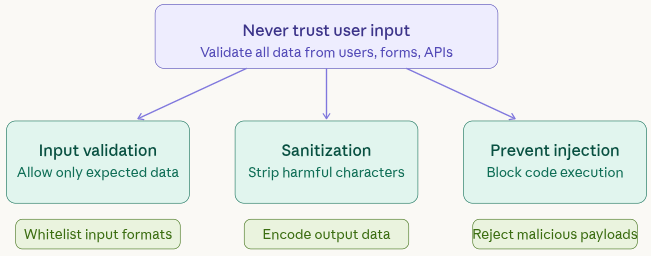
One of the most common causes of RCE is improper handling of user input. Systems should never blindly trust data coming from users, forms, or APIs. By validating and sanitizing all inputs, you prevent malicious code from being injected and executed within your application.
5. Limit Permissions
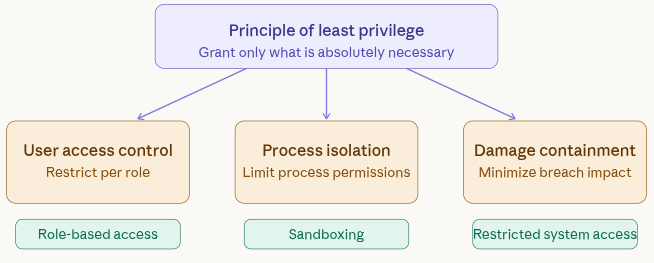
Not every user or process needs full access to your system. By following the principle of least privilege, granting only the permissions that are absolutely necessary, you minimize the potential damage if an attacker gains access. Restricted access ensures better control and containment.
Best Security Practices to Follow
Beyond basic prevention, adopting strong security habits can provide an extra layer of protection. These practices help you stay prepared against evolving threats. Security should always be treated as an ongoing process.
- Use strong authentication: Secure login methods reduce unauthorized access.
- Regularly scan for vulnerabilities: Frequent checks help detect issues early.
- Backup your data: Backups ensure recovery in case of an attack.
- Monitor system activity: Continuous monitoring helps spot suspicious behavior.
Security isn’t a one-time task, it’s ongoing.
Tools That Help Detect RCE
Managing security manually can be difficult, especially as systems grow. That’s where security tools come in, they help automate detection and monitoring. Think of them as your system’s early warning system.
- Vulnerability scanners: Identify weaknesses in your system.
- Intrusion detection system: It detects activities that are suspicious in real time.
- Security monitoring tools: Track and analyze system behavior continuously.
RCE vs Other Cyber Attacks
RCE stands out from other attacks because it allows direct system control. While other attacks may target specific areas, RCE gives attackers full access. This makes it one of the most powerful and dangerous attack types.
| Attack Type | Description |
| RCE | Full system control remotely |
| SQL Injection | Targets databases |
| XSS | Affects users via browsers |
| Phishing | Tricks users into sharing data |
RCE is more dangerous because it provides complete control over the system.
Why Regular Updates Matter
Ignoring updates might seem harmless, but it can leave your system vulnerable. Updates are often released to fix security flaws and improve stability. Skipping them is like leaving your system exposed to known threats.
- Security patches: Fix known vulnerabilities that attackers may exploit.
- Bug fixes: Resolve errors that could lead to security issues.
- Performance improvements: Enhance system efficiency and stability.
Skipping updates is like leaving your door unlocked.
Key Takeaways on Staying Safe
Remote Code Execution is a serious threat, but it can be managed with the right precautions. Staying proactive and aware is the best defense against such attacks. Small, consistent actions can make a big difference.
Think of cybersecurity like protecting your home, the better your defenses, the safer you are. Stay updated, stay cautious, and always take security seriously.
RCE Exploits: Guidelines for Responsible Disclosure
Understanding Responsible Disclosure in Remote Code Execution
When it comes to Remote Code Execution (RCE), discovering vulnerabilities is only half the job, the real responsibility lies in how you handle them.
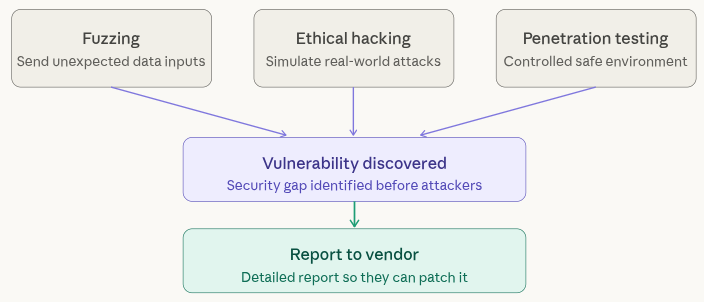
Security professionals often use techniques like fuzzing, where random or unexpected data is sent into a program to uncover hidden weaknesses. Similarly, ethical hacking and penetration testing are used to simulate real-world attacks in a controlled and safe environment. These methods help identify security gaps before malicious attackers do.
But here’s the key question: What should you do after finding a vulnerability?
The correct and ethical approach is to report it directly to the software or server vendor. Providing a clear and detailed report allows them to fix the issue before it becomes a real threat.
Why Responsible Disclosure Matters
In cybersecurity, how you act matters just as much as what you find.
Responsible disclosure means privately informing the affected company or developer about a vulnerability instead of exposing it publicly right away. This gives them time to investigate and release a fix.
On the other hand, publicly sharing exploit details too early can be dangerous. It may unintentionally act as a guide for attackers, increasing the risk of widespread damage before a patch is available.
In simple terms, Responsible disclosure protects users, businesses, and the internet as a whole.

How Vulnerabilities Are Found and Reported
Finding vulnerabilities requires a proactive and structured approach. Some commonly used methods include:
- Fuzzing: Sending unexpected inputs to test how a system behaves
- Penetration Testing: Simulating attacks to identify weak points
- Code Reviews: Analyzing code for security flaws
- Ethical Hacking: Testing systems with permission to improve security
Once a vulnerability is discovered, it should be documented properly. A good report usually includes:
- A clear explanation of the issue
- Steps to reproduce it
- Potential impact
- Suggested fixes (if possible)
This helps developers quickly understand and resolve the problem before it can be exploited.
Legal Considerations in Vulnerability Disclosure
Handling vulnerabilities isn’t just a technical matter, it can also involve legal considerations.
In some regions, laws like the Digital Millennium Copyright Act (DMCA) may apply, especially when dealing with software systems. While responsible disclosure is widely encouraged, it’s important to stay within legal boundaries.
If you’re unsure about the legal implications, it’s always a good idea to consult with a legal expert. This ensures that your actions remain ethical, lawful, and beneficial to the broader security community.
Conclusion
Remote Code Execution (RCE) is not just another technical vulnerability, it’s a serious threat that can give attackers complete control over your systems if left unaddressed. As we’ve seen, it often starts with small oversights like unpatched software or poor input validation, but the impact can be massive. The good news is that with the right security practices, such as regular updates, strong configurations, and proactive monitoring, you can significantly reduce your risk. Staying informed and taking consistent action is the key to keeping your systems safe in an increasingly connected world.
FAQs
1. What is Remote Code Execution (RCE) in simple terms?
Remote Code Execution (RCE) is a security vulnerability that allows attackers to run their own code on your system from a remote location without your permission.
2. Why is RCE considered a high-risk vulnerability?
RCE is highly dangerous because it can give attackers full control over a system, allowing them to steal data, install malware, or disrupt services.
3. What are the common causes of RCE vulnerabilities?
RCE vulnerabilities are usually caused by outdated software, unpatched security flaws, poor input validation, and weak system configurations.
4. How can I protect my system from RCE attacks?
You can prevent RCE by keeping software updated, validating user inputs, limiting access permissions, and using proper security tools like firewalls and monitoring systems.
5. Who is most vulnerable to RCE attacks?
Anyone using internet-connected systems, including businesses, developers, website owners, and individual users, can be at risk if proper security measures are not in place.
Stop Wasting Time on Servers. Start Building Instead.
You didn’t start your project to babysit servers. Let ServerAvatar handle deployment, monitoring, and backups — so you can focus on growth.
Deploy WordPress, Laravel, N8N, and more in minutes. No DevOps required. No command line. No stress.
Trusted by 10,000+ developers and growing.