

As websites grow, their hosting needs change. Shared hosting often feels restrictive, while dedicated servers can be complex and costly. This is where VPS hosting becomes a practical option. It offers better performance, more control, and improved stability without the high cost of a dedicated server.
This article explains what VPS hosting is, how it works, its features, advantages, and limitations in clear and simple language. The goal is to help you understand whether VPS hosting is the right choice for your website.
What Is VPS Hosting?
VPS hosting, or Virtual Private Server hosting, is a web hosting solution where a physical server is divided into multiple independent virtual servers. Each VPS operates with its own allocated resources, operating system, and configurations.
Unlike shared hosting, where multiple websites rely on the same pool of resources, VPS hosting provides dedicated resources to each user. This ensures more consistent performance and greater control.
How VPS Hosting Works
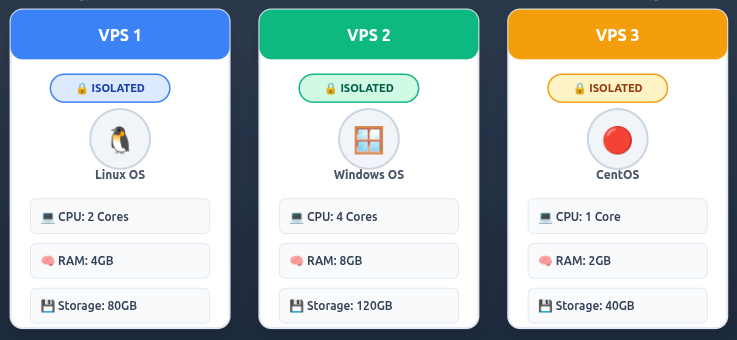
VPS hosting uses virtualization technology to create isolated environments within a single physical server. Each virtual server functions independently, meaning activities on one VPS do not affect others.
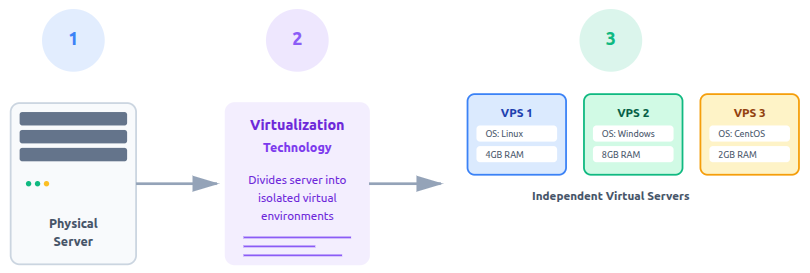
Every VPS includes:
A VPS comes with its own dedicated environment inside a physical server. This setup ensures better performance, control, and stability compared to shared hosting, making it suitable for growing websites and applications.
- A dedicated portion of CPU, RAM, and storage: Ensures consistent performance without being affected by other users.
- Its own operating system: Allows independent system-level control and customization.
- Administrative access for configuration: Enables users to manage server settings and install required software.
This structure ensures better reliability and flexibility.
Core Components of VPS Hosting
VPS hosting is built using multiple technical components that work together to provide isolation, flexibility, and reliability. These components ensure that each VPS functions like a standalone server.
- Virtualized hardware resources: Allocate fixed server resources to each VPS for stable performance.Is VPS hosting secure?
- Independent operating system: Allows each VPS to run and operate separately.
- Private file system: Keeps data isolated and secure from other users.
- Dedicated IP address (in most cases): Provides better control, security, and compatibility.
These components work together to provide stability and customization options.
What is Shared Hosting?
Shared hosting places multiple websites on a single server where all users share the same system resources. It is usually the most affordable hosting option but comes with performance and control limitations.
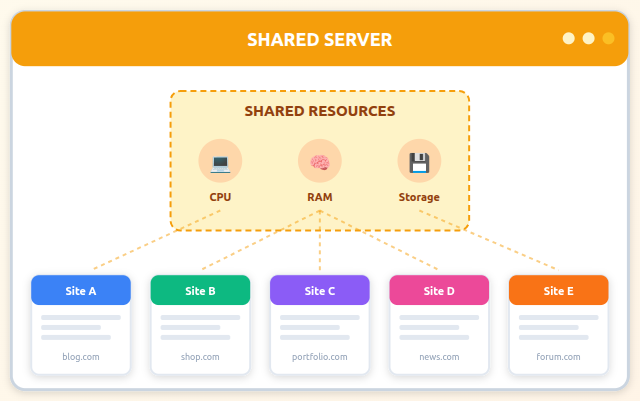
Key characteristics of shared hosting include:
- Shared server resources: CPU, RAM, and storage are used by multiple websites on the same server.
- Lower performance during traffic spikes: High traffic on one site can affect others.
- Limited server control: Advanced configurations and custom settings are restricted.
- Basic security setup: Security is shared across all hosted websites.
- Cost-effective hosting option: Suitable for small or low-traffic websites.
- Easy to use for beginners: Requires minimal technical knowledge to manage.
For simple websites with low traffic and basic requirements, shared hosting can be a practical starting point.
What is Dedicated Hosting?
Dedicated hosting provides a single user with exclusive access to an entire physical server. All server resources are reserved for one website or application, offering maximum performance, control, and security.
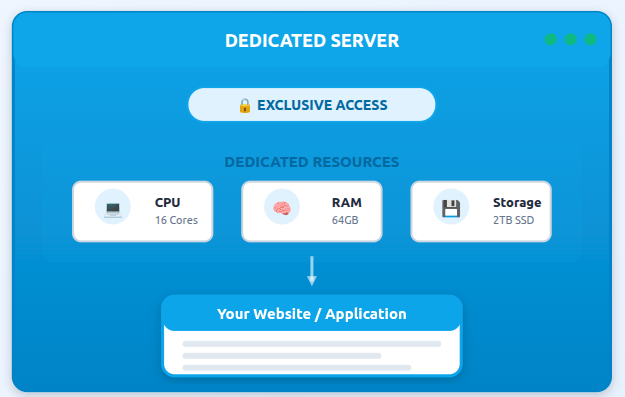
Key characteristics of dedicated hosting include:
- Exclusive server resources: CPU, RAM, and storage are not shared with other users.
- High performance and reliability: Suitable for resource-intensive websites and applications.
- Full administrative control: Complete access to server configurations and software.
- Advanced security capabilities: Allows custom security setups and strict access control.
- Higher cost compared to other hosting types: Requires a larger budget.
- Greater technical complexity: Needs advanced server management knowledge.
Dedicated hosting is best suited for large-scale websites and applications that require maximum performance and complete server control.
VPS Hosting vs Shared Hosting vs Dedicated Hosting
| Feature | Shared Hosting | VPS Hosting | Dedicated Hosting |
| Resource Allocation | Shared among users | Dedicated virtual resources | Fully dedicated server |
| Performance | Low to moderate | High and consistent | Very high |
| Server Control | Very limited | Full administrative access | Complete control |
| Scalability | Limited | Easy to scale | Hardware-based scaling |
| Security | Basic | Strong due to isolation | Very strong |
| Cost | Low | Medium | High |
| Suitable For | Small or new websites | Growing websites and apps | High-traffic enterprise sites |
Key Features of VPS Hosting
VPS hosting includes features that support performance, customization, and reliability. These features make it suitable for websites with growing needs.
- Dedicated CPU, RAM, and storage: Ensures predictable and stable performance.
- Root or administrative access: Allows full control over server configurations.
- Custom software installation: Supports specific application and framework needs.
- Scalable resources: Makes it easy to adjust server capacity.
- Improved uptime and stability: Reduces downtime compared to shared hosting.
These features make VPS hosting suitable for growing websites.
Advantages of VPS Hosting
VPS hosting provides a strong balance between required performance and as per the affordability. It is designed for users who need more control and reliability.
- Better performance compared to shared hosting: Delivers faster and more consistent speeds.
- Greater control over server settings: Enables advanced configurations and tuning.
- Increased reliability and uptime: Reduces performance issues caused by others.
- Enhanced security through isolation: Keeps each VPS environment separate.
- Flexible resource upgrades: Supports future growth easily.
These advantages support long-term website growth.
Disadvantages of VPS Hosting
While VPS hosting is powerful, it does come with certain challenges that users should consider before choosing it.
- Higher cost than shared hosting: Requires a larger budget.
- Requires technical knowledge for management: Needs basic server administration skills.
- Misconfiguration can affect performance: Incorrect settings may cause issues.
Choosing managed VPS hosting can reduce these challenges.
Types of VPS Hosting
VPS hosting is available in different forms to suit various experience levels and requirements.
- Managed VPS hosting: The provider handles maintenance, updates, and security.
- Unmanaged VPS hosting: Users manage everything on their own.
- Cloud-based VPS hosting: Uses cloud infrastructure for better scalability and reliability.
Each type suits different experience levels and use cases.
Who Should Use VPS Hosting?
VPS hosting is best suited for users who need more performance and flexibility than shared hosting can offer.
- Medium to high-traffic websites: Handles increased visitor loads efficiently.
- Online businesses and stores: Supports stable and secure operations.
- Developers needing custom environments: Allows advanced server configurations.
- Websites that have outgrown shared hosting: Provides a natural upgrade path.
It is a practical solution for scaling websites.
Common Uses of VPS Hosting
VPS hosting supports a wide range of applications and website types due to its flexibility.
- Hosting content management systems: Supports platforms like WordPress efficiently.
- Running web applications: Handles backend and frontend applications smoothly.
- Hosting multiple websites: Allows multiple projects on a single VPS.
- Development and testing environments: Provides isolated spaces for testing.
Its flexibility supports diverse requirements.
VPS Hosting for Website Performance
VPS hosting improves website performance by ensuring resources are not shared with other users.
- Dedicated system resources: Prevents slowdowns caused by external activity.
- Faster response times: Improves user experience and page loading speed.
- Better handling of traffic spikes: Maintains stability during high traffic.
This results in a smoother experience for visitors.
VPS Hosting Security
Security is one of the strongest advantages of VPS hosting due to its isolated setup.
- Isolated environments: Keeps each VPS separate and protected.
- Custom firewall configurations: Allows tailored security rules.
- Better control over access permissions: Improves user and system security.
- Reduced risk from neighboring websites: Prevents cross-site issues.
Proper configuration further strengthens security.
Managed vs Unmanaged VPS Hosting
- Managed VPS hosting means the service provider takes care of server maintenance, system updates, and security management.
- Unmanaged VPS hosting gives full control but requires technical expertise.
| Aspect | Managed VPS Hosting | Unmanaged VPS Hosting |
| Server Setup | Handled by provider | User-managed |
| Maintenance & Updates | Included | User responsibility |
| Security Management | Provider-managed | User-managed |
| Technical Skills Required | Minimal | Advanced |
| Control Level | Limited but sufficient | Full control |
| Best For | Beginners & businesses | Developers & sysadmins |
The right option depends on your experience and resources.
How to Choose the Right VPS Hosting Plan
Selecting the right VPS plan ensures long-term performance and stability for your website.
- Resource requirements: Match CPU, RAM, and storage to your needs.
- Operating system support: Choose compatibility with your applications.
- Scalability options: Ensure easy upgrades in the future.
- Support availability: Reliable support helps resolve issues quickly.
- Pricing structure: Balance cost with features and performance.
Choosing wisely ensures long-term stability.
How ServerAvatar Simplifies VPS Hosting
VPS hosting gives users more control and performance than shared hosting, but managing a VPS can feel complex, especially for beginners and non-technical users. This is where a VPS management platform becomes useful.
What is ServerAvatar?
ServerAvatar is a platform to simplify the hosting and management of servers and applications. It simplifies the process of deploying and managing PHP and Node.js based web applications on servers.
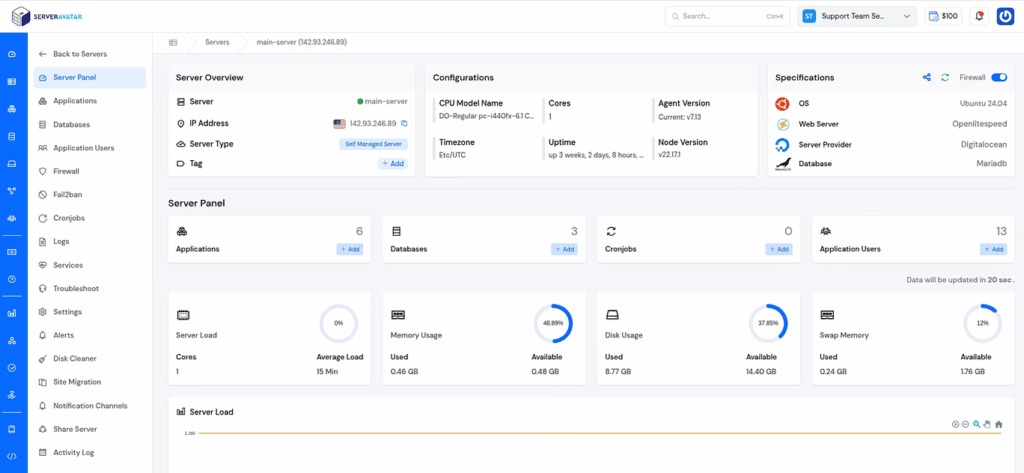
ServerAvatar works as both a VPS hosting provider and a VPS management control panel, helping users to manage servers and websites through a simple, web-based dashboard. It bridges the gap between VPS infrastructure and easy server management, making VPS hosting more accessible to a wider audience.
ServerAvatar as a VPS Hosting Provider
For users who want to avoid the complexity of setting up a VPS from scratch, ServerAvatar offers managed servers. With managed servers, users do not need to connect to their own cloud provider or handle low-level server configuration.
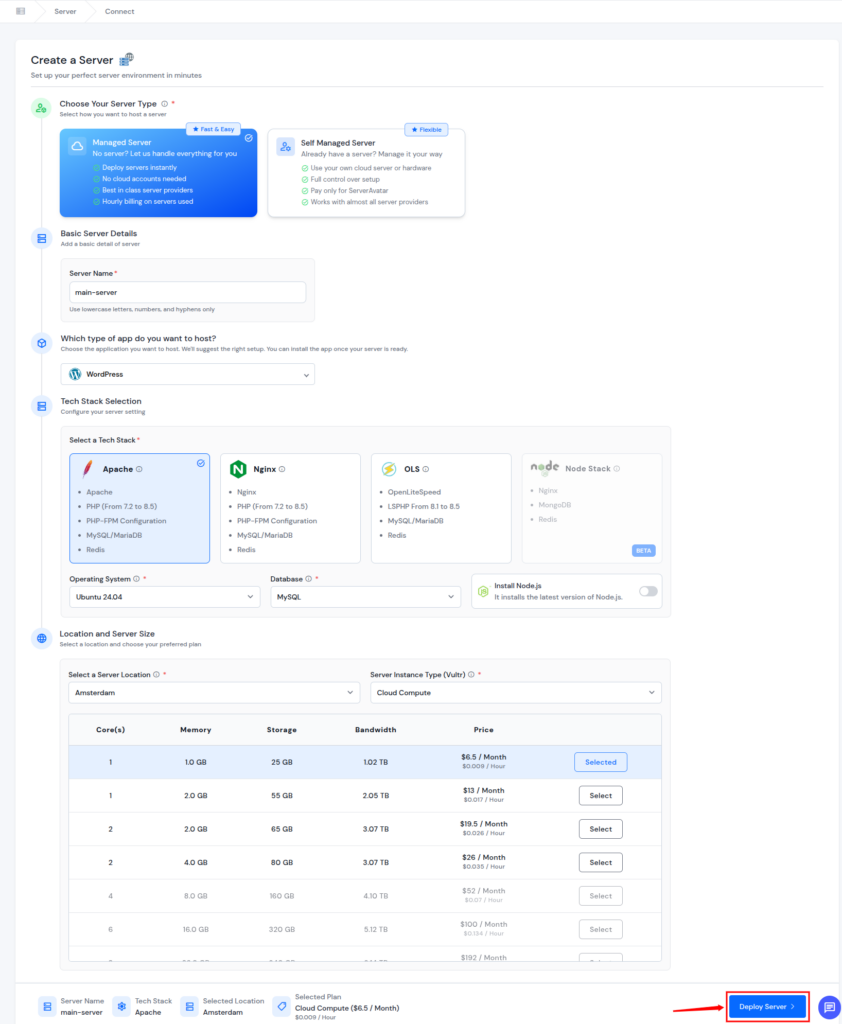
ServerAvatar provisions, manages, and maintains the server infrastructure, allowing users to focus on hosting websites and applications rather than managing system-level tasks. This option is especially helpful for beginners and business owners who want VPS benefits without technical overhead.
ServerAvatar as a VPS Management Control Panel
In addition to managed servers, ServerAvatar also supports self-managed servers. This option is suitable for developers and advanced users who already have VPS servers from cloud providers.
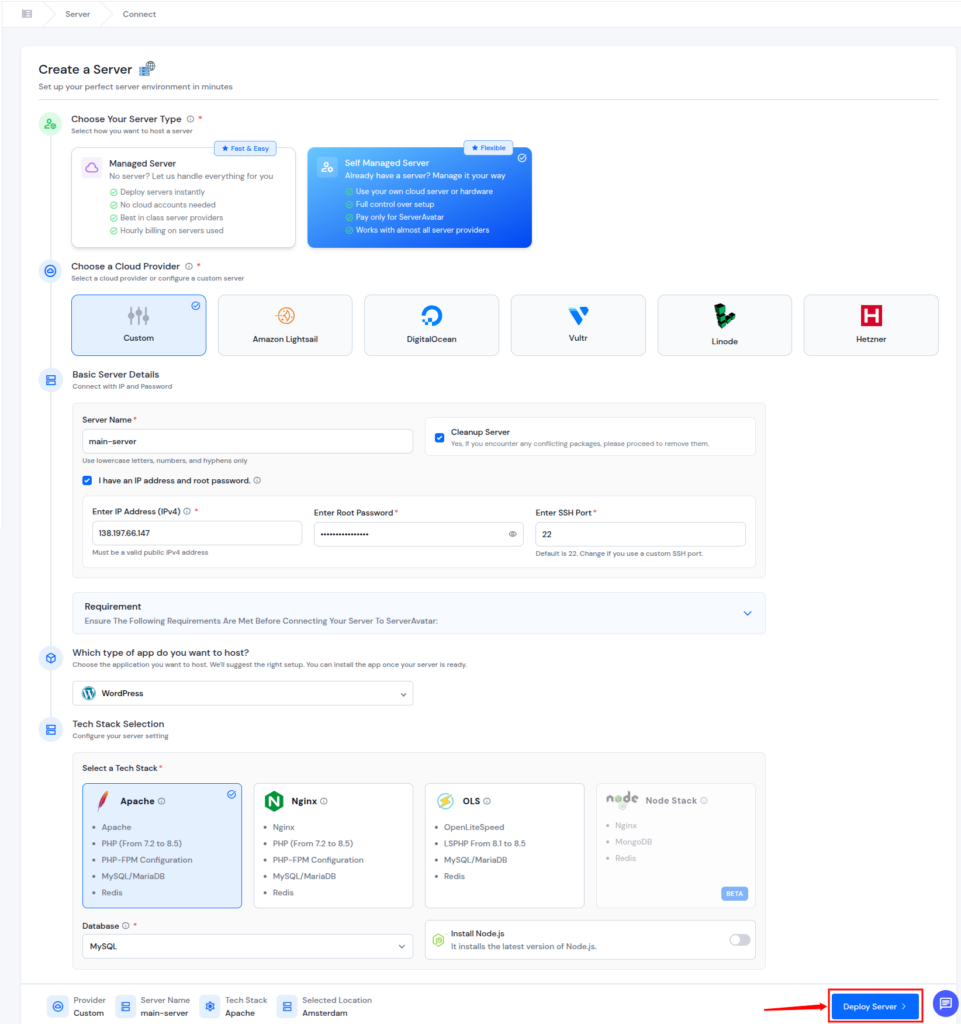
With self-managed servers, users can connect their existing VPS to ServerAvatar and manage it using an intuitive control panel. This approach combines full server control with simplified management, offering flexibility without sacrificing usability.
Managed vs Self-Managed Servers in ServerAvatar
ServerAvatar supports both managed and self-managed VPS setups, allowing users to choose based on their experience and requirements.
- Managed servers are fully handled by ServerAvatar, including server provisioning and maintenance. No need of cloud provider account.
- Self-managed servers allow users to connect their own custom VPS from any cloud provider while using ServerAvatar for centralized management.
This flexibility makes ServerAvatar suitable for beginners, growing businesses, and developers alike.
Why ServerAvatar Is Useful for VPS Users
Managing a VPS often involves command-line operations, manual configurations, and ongoing maintenance. ServerAvatar simplifies these tasks by providing a unified interface for common VPS management needs.
Key benefits include:
- Simplified server and application management
- Reduced need for deep server administration knowledge
- Centralized control for websites and services
- A smoother VPS experience for different skill levels
Rather than replacing VPS hosting, ServerAvatar enhances how users interact with and manage VPS servers.

Who Can Benefit from Using ServerAvatar with VPS Hosting
ServerAvatar is designed to support a wide range of users:
- Beginners who want VPS performance without technical complexity
- Developers who need flexibility and efficient server control
- Business owners looking for reliable and scalable hosting
- General users who want a clean interface instead of manual server management
By supporting both managed and self-managed VPS setups, ServerAvatar adapts to different hosting needs.
Using ServerAvatar Alongside VPS Hosting
VPS hosting provides the infrastructure, while ServerAvatar focuses on usability and management. Together, they help users get the advantages of VPS hosting, such as performance, control, and scalability, without unnecessary difficulty.
This approach allows users to grow their websites and applications while keeping server management simple and organized.
Conclusion
VPS hosting is a reliable and flexible solution for websites that have outgrown shared hosting but do not require the complexity or cost of dedicated servers. It offers dedicated resources, better performance, stronger security, and greater control, making it suitable for beginners, developers, business owners, and general users alike. When combined with a VPS management platform like ServerAvatar, whether through managed servers or self-managed setups, users can simplify server operations while still enjoying the full benefits of VPS hosting. Choosing the right VPS setup ultimately depends on your technical experience, performance needs, and long-term growth plans.
FAQs
1. How is VPS hosting different from shared hosting?
VPS hosting provides dedicated resources and better control, while shared hosting relies on shared resources, which can affect performance as traffic grows.
2. Is VPS hosting suitable for beginners?
VPS hosting can be suitable for beginners, especially when using managed VPS solutions or platforms like ServerAvatar that simplify server management.
3. Can ServerAvatar be used with an existing VPS?
ServerAvatar supports self-managed servers, allowing users to connect their existing VPS from any cloud provider and manage it through a centralized dashboard.
4. Does VPS hosting improve website performance?
VPS hosting improves performance by providing dedicated CPU, RAM, and storage, resulting in faster load times and better stability.
5. Is VPS hosting secure?
VPS hosting is more secure than shared hosting due to isolated environments, custom firewall options, and better access control.