

Starting or improving a WordPress blog can feel like standing at the edge of a blank canvas. You know the possibilities are endless, but where do you begin? The truth is, inspiration often comes from seeing what works. Exploring WordPress blog examples helps you understand effective layouts, content styles, and design choices, not by copying or cloning, but by learning. A good WordPress blog is like a well-organized thing: welcoming, easy to navigate, and full of personality.
In this guide, we’ll walk through 20 inspiring WordPress blog examples, all based on design styles, content approaches, and layout ideas, not real-world brands, to spark ideas you can confidently use for your own site.
What Is WordPress?
WordPress is the world’s most popular open-source content management system (CMS), used to build websites, blogs, and e-commerce stores. It offers flexibility through themes and plugins, making it suitable for beginners, developers, and businesses of all sizes.
How ServerAvatar Simplifies WordPress Deployment & Management
What is ServerAvatar?
ServerAvatar is a platform to simplify the hosting and management of servers and applications. It simplifies the process of deploying and managing PHP and Node.js based web applications on servers.
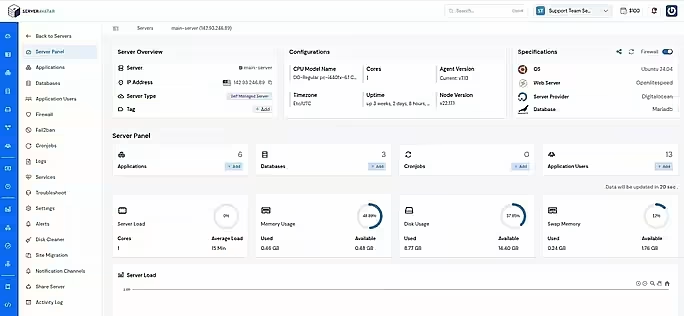
ServerAvatar makes WordPress and other popular applications, such as Mautic, N8N, UptimeKuma, etc, deployment effortless with its one-click WordPress application installer, allowing you to launch a fully configured WordPress site in minutes. It removes the complexity of server setup by providing an intuitive dashboard to manage servers, applications, databases, PHP versions, SSL, and performance settings from one place.
ServerAvatar supports multiple cloud providers and gives users full control over their infrastructure while eliminating the need for deep server administration knowledge. You can refer to the ServerAvatar documentation and the detailed blog to install WordPress effortlessly.
ServerAvatar does not directly provide WordPress Multisite, but our technical experts can help you set up a WordPress Multisite environment.
The ServerAvatar support team is available 24/7 to assist you with any issues or questions you may have.
Key Benefits of Using ServerAvatar for WordPress
- One-click WordPress installer: Deploy WordPress instantly without manual configuration.
- Unified management panel: Manage servers and WordPress applications from a single dashboard.
- Performance optimization: Easily configure services, PHP, and server resources.
- Redis caching support: ServerAvatar comes with built-in Redis integration that helps speed up WordPress by storing frequently accessed data in memory.
- Enhanced security: Includes firewall, SSL management, and secure access controls.
- Easy scalability: Upgrade server resources as your WordPress site grows.
ServerAvatar is an ideal solution for users who want the power of cloud servers without the operational complexity. It simplifies WordPress hosting by automating server setup, streamlining application management, and providing performance and security optimizations out of the box.
Whether you’re a developer, agency, or business owner, ServerAvatar allows you to deploy, manage, and scale WordPress websites confidently while focusing on growth instead of infrastructure management.
Why Looking at WordPress Blog Examples Matters
No one builds a great blog in isolation. Seeing different WordPress blog examples helps you understand what layouts feel comfortable, what content formats keep readers scrolling, and what design choices make a site memorable. Think of it like learning to cook, you don’t invent recipes on day one; you taste, observe, and adapt. Blog examples shorten your learning curve and help you avoid common mistakes.
Why WordPress Is Ideal for Bloggers
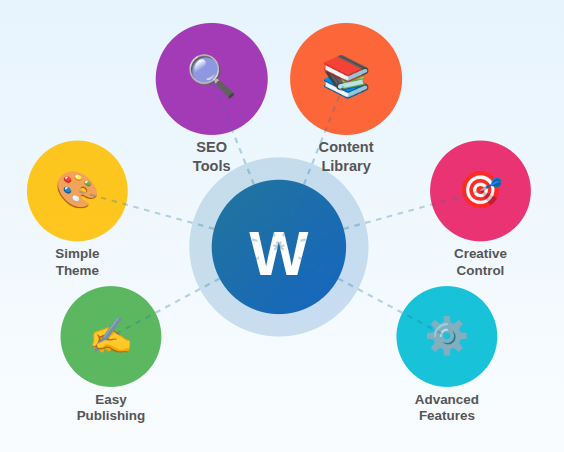
WordPress remains a favorite for bloggers because it grows with you. You can start small with a simple theme and expand into advanced features later. It is beginner-friendly, flexible, and enough powerful for large content libraries. Whether you want full creative control, SEO advantages, or easy publishing, WordPress gives you the tools without locking you into complexity.
What Makes a WordPress Blog Truly Inspiring?
An inspiring blog isn’t about flashy design alone. It’s about clarity, consistency, and connection. Great WordPress blogs guide readers naturally, from headline to content to action. They load fast, read easily, and feel human. Most importantly, they respect the reader’s time.
Various Types
The Clean Minimal Blog
This type of blog uses white space, simple fonts, and distraction-free layouts. The focus stays on the writing. Navigation is limited, colors are neutral, and every element has a purpose. This style works well if your strength is storytelling or opinion-based content.
The Story-Driven Personal
Here, the homepage highlights recent posts with strong headlines and emotional hooks. The tone feels conversational, almost like a letter to a friend. Images support the story instead of overpowering it. Readers come back because they feel connected to the writer.
The Magazine-Style Blog
This example uses grid layouts, featured sections, and categories to organize lots of content. It’s ideal for blogs that publish frequently. The design helps readers discover more posts without feeling overwhelmed.
The Creative Portfolio Blog
Perfect for designers, writers, or creators, this blog blends portfolio and blog content. Posts are visually rich, and the layout feels modern. The blog supports the creator’s work instead of competing with it.
The Lifestyle Blog
Lifestyle blogs mix personal stories with practical content. Categories might include daily routines, thoughts, or experiences. The design feels warm and inviting, encouraging readers to stay longer and explore.
The Travel Journal Blog
This blog example relies heavily on visual storytelling. Large images, simple captions, and chronological posts create a sense of journey. The design stays lightweight so photos load quickly and look sharp.
The Food-Focused Blog
Clarity is everything here. Recipes or food stories are broken into easy sections. Fonts are readable, images are clean, and navigation helps users find content fast. The best food blogs feel organized, not cluttered.
The Educational How-To Blog
This style focuses on step-by-step content. Headings, bullet points, and short paragraphs improve readability. It’s built for users who want answers, not fluff.
The Tech Explainer Blog
Tech blogs often deal with complex ideas, so simplicity matters. This example uses clear formatting, diagrams, and structured posts to make information easy to understand, even for beginners.
The Business Authority Blog
Designed to build trust, this blog uses clean layouts, professional fonts, and consistent branding. Content is educational and solution-focused, positioning the blog as a reliable resource.
The Community-Driven Blog
This blog encourages comments, discussions, and sharing. Posts may highlight user stories or opinions. The design supports interaction, making readers feel like participants, not spectators.
The Visual-First Blog
In this example, images lead the experience. Text supports visuals rather than dominating the page. It works well for inspiration-based or creative niches.
The SEO-Focused Content Blog
Here, structure is key. Clear headings, internal links, and optimized content help posts rank well. The design supports fast loading and easy crawling without sacrificing user experience.
The Long-Form Writing Blog
Long-form blogs focus on depth. Typography is carefully chosen for comfort, and layouts reduce eye strain. Readers stay because the content feels thoughtful and well-paced.
The Beginner-Friendly Blog
This blog is built with first-time readers in mind. Navigation is simple, explanations are clear, and content avoids jargon. It’s welcoming and unintimidating.
The Niche Passion Blog
Niche blogs focus deeply on one topic. Design and content reflect that passion clearly. Readers feel like they’ve found a home tailored just for them.
The Monetization-Ready Blog
This example balances content and conversions. Calls-to-action are subtle, ads don’t overwhelm, and trust comes first. Monetization feels natural, not forced.
20 Amazing WordPress Blog Examples to Inspire You
1. NASA News: Turning Complex Science into Clear Stories
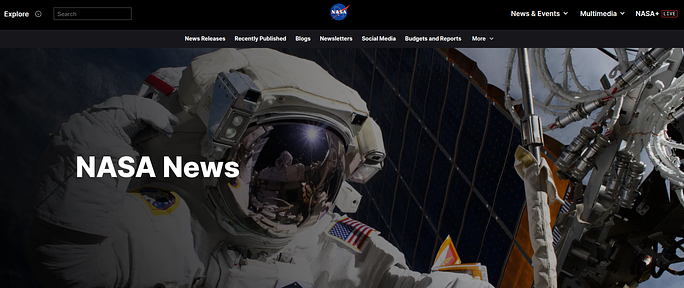
NASA News is a powerful example of how complex information can be made accessible to the general public. The blog focuses on breaking down advanced scientific discoveries into simple, engaging stories. It uses clear headlines, strong visuals, and well-structured content to guide readers through space missions, research updates, and discoveries without overwhelming them.
Why it works
It respects the reader’s curiosity while removing technical barriers. Each post educates without sounding academic.
Content & design approach
- Clear headlines and short paragraphs
- Strong use of images and visual explanations
- Well-structured articles with logical flow
Key takeaway
If your topic is complex, clarity and storytelling matter more than technical depth.
2. TED Blog: Ideas That Look as Powerful as They Sound
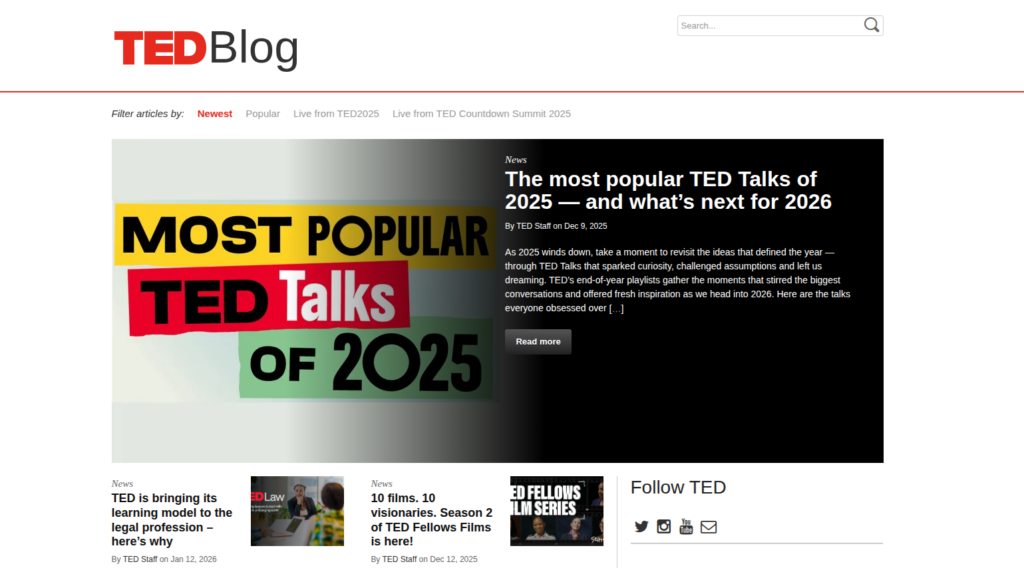
TED Blog focuses on sharing ideas through storytelling, interviews, and thought-provoking articles. Its clean layout ensures that ideas remain the hero of the page, supported by visuals rather than distracted by them.
Why it works
The design and content feel intentional. Every article encourages reflection and discussion.
Content & design approach
- Clean layouts with generous white space
- Thought-provoking headlines
- Balanced use of visuals and text
Key takeaway
Great ideas deserve clean presentation and emotional resonance.
3. Rolling Stone: A Magazine-Style WordPress Blog Done Right
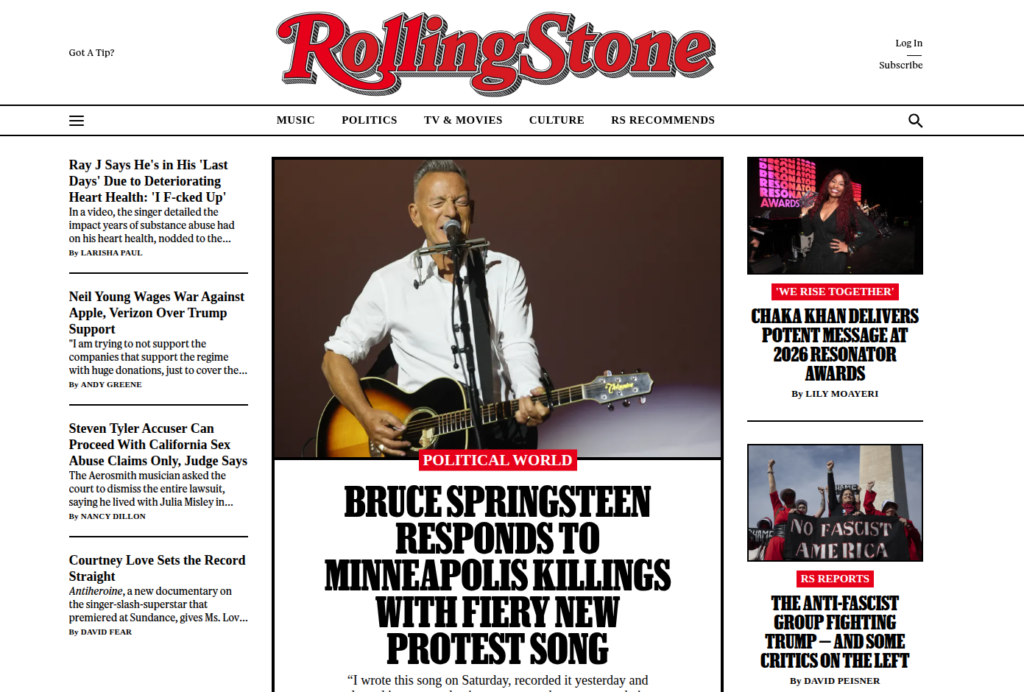
Rolling Stone’s blog showcases how WordPress can handle high-volume publishing with a magazine-style layout. Articles are organized into sections like music, culture, and opinion, making discovery effortless.
Why it works
The grid-based layout balances text and visuals while maintaining strong branding.
Content & design approach
- Grid-based layouts
- Clear content categorization
- Strong brand consistency across sections
Key takeaway
If you publish frequently, structure and categorization are essential.
4. The New Yorker: Long-Form Storytelling on WordPress
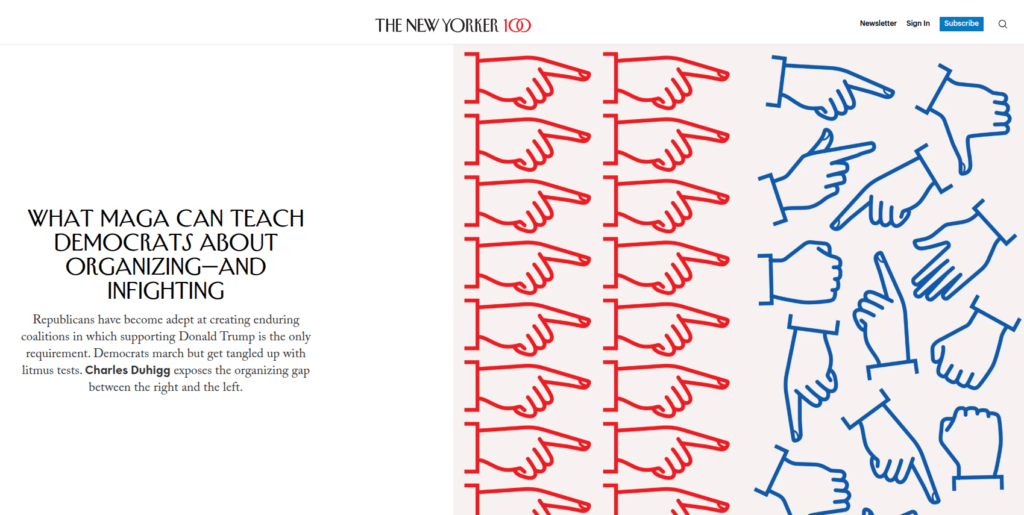
The New Yorker demonstrates the power of long-form content. Articles are deep, narrative-driven, and supported by elegant typography that makes long reads comfortable.
Why it works
The blog prioritizes reading experience over flashy design.
Content & design approach
- Elegant typography
- Distraction-free reading layouts
- Strong narrative flow
Key takeaway
Long content succeeds when readability is treated as a feature, not an afterthought.
5. BBC America Blog: Clean Design with Strong Branding
BBC America Blog uses a clean, modern layout combined with consistent branding. Content is easy to scan, and visuals reinforce brand identity without overpowering the text.
Why it works
Consistency builds trust and recognition.
Content & design approach
- Consistent branding elements
- Simple navigation
- Visually supportive media
Key takeaway
Strong branding and simplicity can coexist beautifully.
6. TechCrunch: Fast-Paced Tech Blogging at Scale
TechCrunch is built for speed. Headlines are sharp, content is timely, and the layout supports rapid consumption of news.

Why it works
Readers know exactly what to expect, fast, relevant updates.
Content & design approach
- Bold headlines
- Scan-friendly layouts
- Timely, high-frequency publishing
Key takeaway
Match your blog structure to your publishing speed and audience expectations.
7. PlayStation Blog: Community-Driven Content That Engages
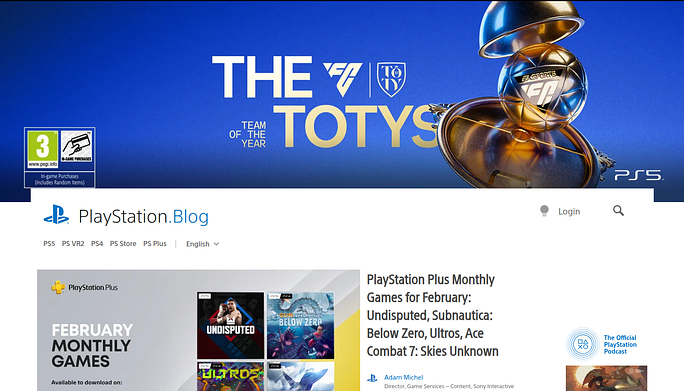
PlayStation Blog thrives on audience engagement. Posts feel like conversations with a community rather than announcements from a company.
Why it works
The content is centered around the audience.
Content & design approach
- Conversational tone
- Reader-focused announcements
- Community-centric storytelling
Key takeaway
Community-focused content builds loyalty faster than promotional posts.
8. Spotify Newsroom: Minimal Design with Maximum Impact
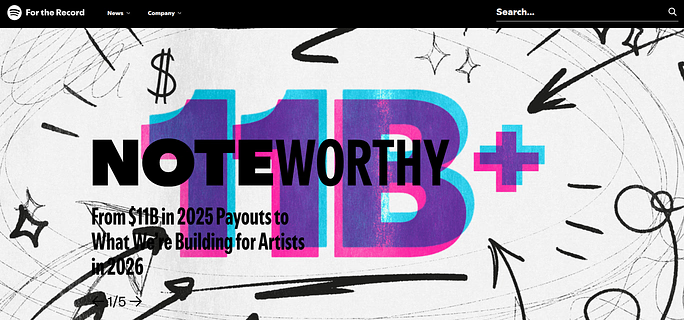
Spotify Newsroom blog uses minimal design to highlight announcements and stories. The layout is clean, modern, and focused.
Why it works
There’s nothing unnecessary on the page, every element has a purpose.
Content & design approach
- Minimalist layouts
- Clear hierarchy of information
- Strong visual balance
Key takeaway
Minimalism helps important messages stand out.
9. Microsoft Stories: Corporate Blogging That Feels Human
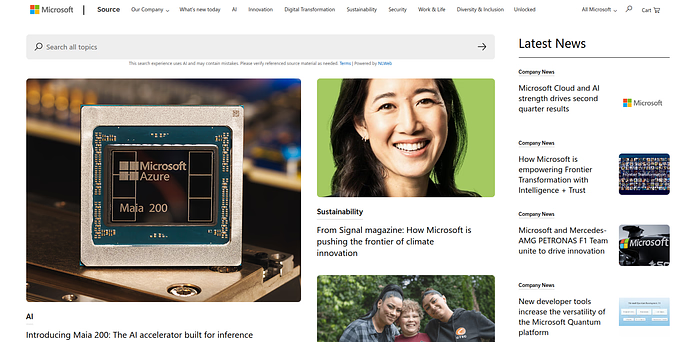
Microsoft Stories shows how corporate content doesn’t have to feel cold. Stories focus on people, innovation, and real-world impact.
Why it works
It humanizes a large organization through storytelling.
Content & design approach
- Story-driven articles
- People-focused narratives
- Clean, professional layouts
Key takeaway
People connect with stories, not corporate language.
10. Sony Music Blog: Visual-First Storytelling
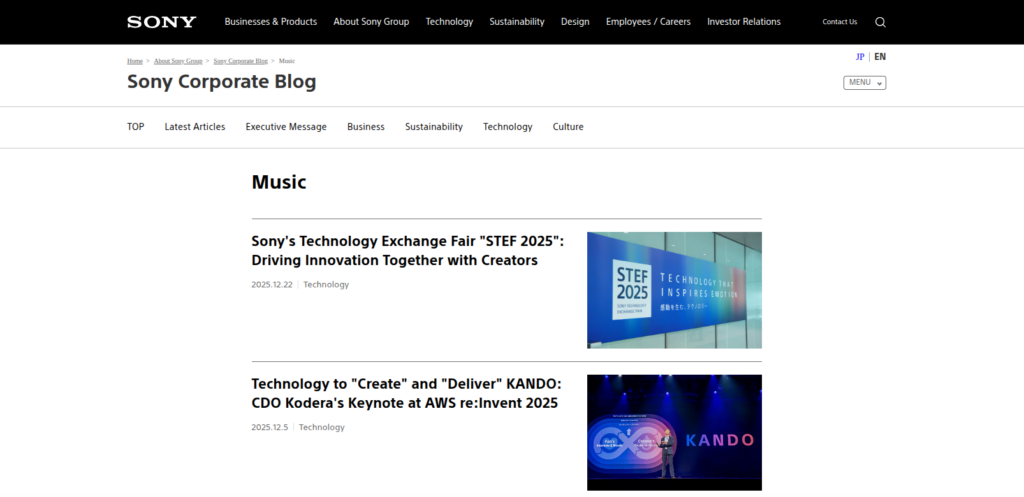
Sony Music blog places visuals at the forefront. Images, videos, and layout work together to create an immersive experience.
Why it works
Visual storytelling enhances emotional connection.
Content & design approach
- Image-led layouts
- Multimedia integration
- Minimal text clutter
Key takeaway
If visuals matter in your niche, design around them.
11. The Walt Disney Company Blog: Brand Storytelling at Its Best
Walt Disney Company Blog focuses on narratives that reinforce brand values. Every post feels intentional and aligned with a broader story.
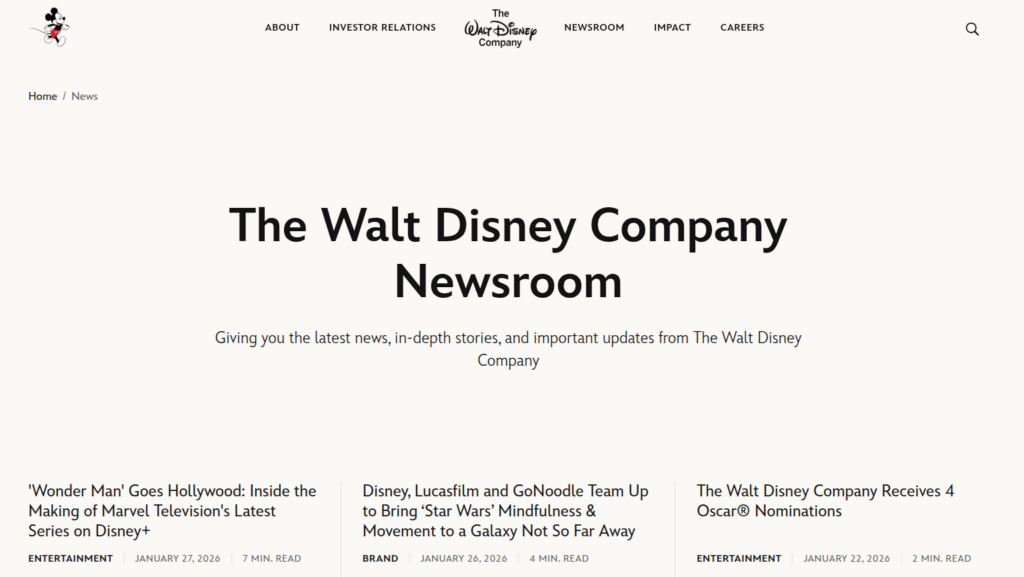
Why it works
Storytelling strengthens brand identity.
Content & design approach
- Narrative-driven posts
- Consistent visual identity
- Purpose-led storytelling
Key takeaway
A blog should reflect what your brand stands for, not just what it sells.
12. Smashing Magazine: Educational Content That Builds Trust
Smashing Magazine is known for in-depth, educational content. Articles are detailed, actionable, and written by experts.
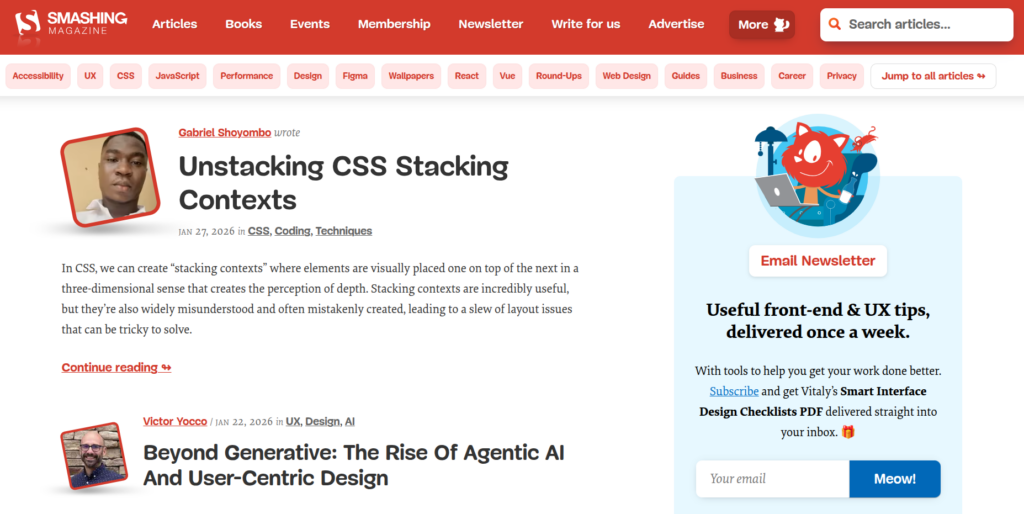
Why it works
High-value content builds long-term credibility.
Content & design approach
- Detailed tutorials
- Clear explanations
- Educational formatting
Key takeaway
Teaching generously earns trust and authority.
13. WPBeginner: A Perfect Example of an SEO-Focused Blog
WPBeginner focuses on solving beginner problems with clear, optimized content. Posts are structured for both readers and search engines.
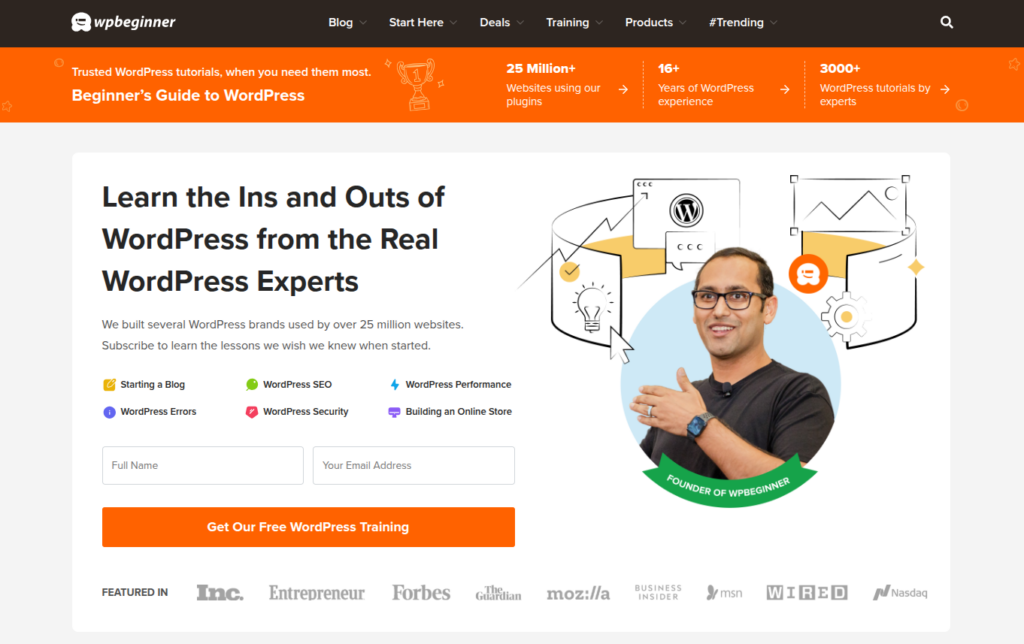
Why it works
It balances SEO with user experience.
Content & design approach
- Structured headings
- Clear step-by-step guides
- SEO-friendly formatting
Key takeaway
SEO works best when it serves the reader first.
14. Nomadic Matt: Travel Blogging That Feels Personal
Nomadic Matt combines practical travel advice with personal stories. The tone is friendly and relatable.
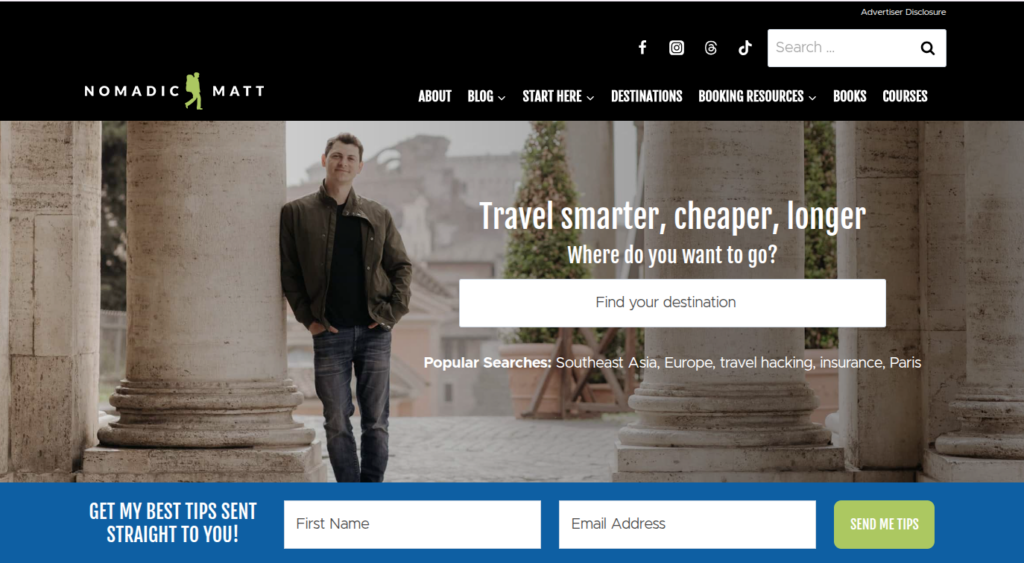
Why it works
Readers feel like they’re learning from a friend.
Content & design approach
- First-person writing
- Practical tips blended with stories
- Clean, readable layouts
Key takeaway
Authenticity beats perfection.
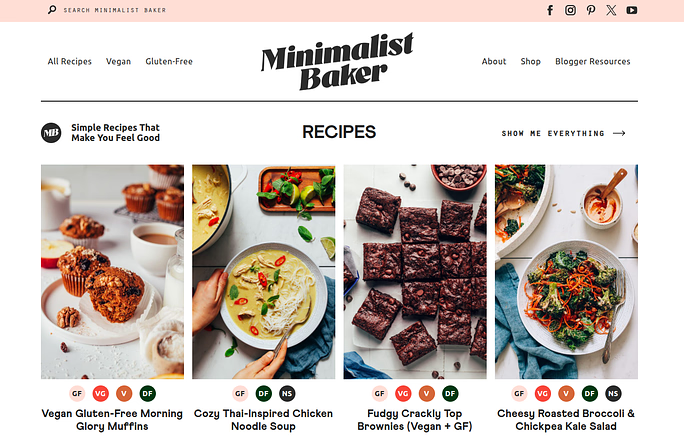
15. Minimalist Baker: Food Blogging with Clarity and Focus
Minimalist Baker is structured around simplicity. Recipes are easy to follow, and content stays focused on the promise of the blog.
Why it works
Clear positioning reduces confusion.
Content & design approach
- Simple recipes
- Consistent formatting
- Clean visual presentation
Key takeaway
Do one thing well, and say no to clutter.
16. Humans of New York: Emotional Storytelling on WordPress
Humans of New York focuses on short, powerful stories paired with images. Emotion drives engagement.

Why it works
Stories feel raw, real, and human.
Content & design approach
- Short, impactful stories
- Strong portrait photography
- Minimal distractions
Key takeaway
Emotion is a powerful content strategy.
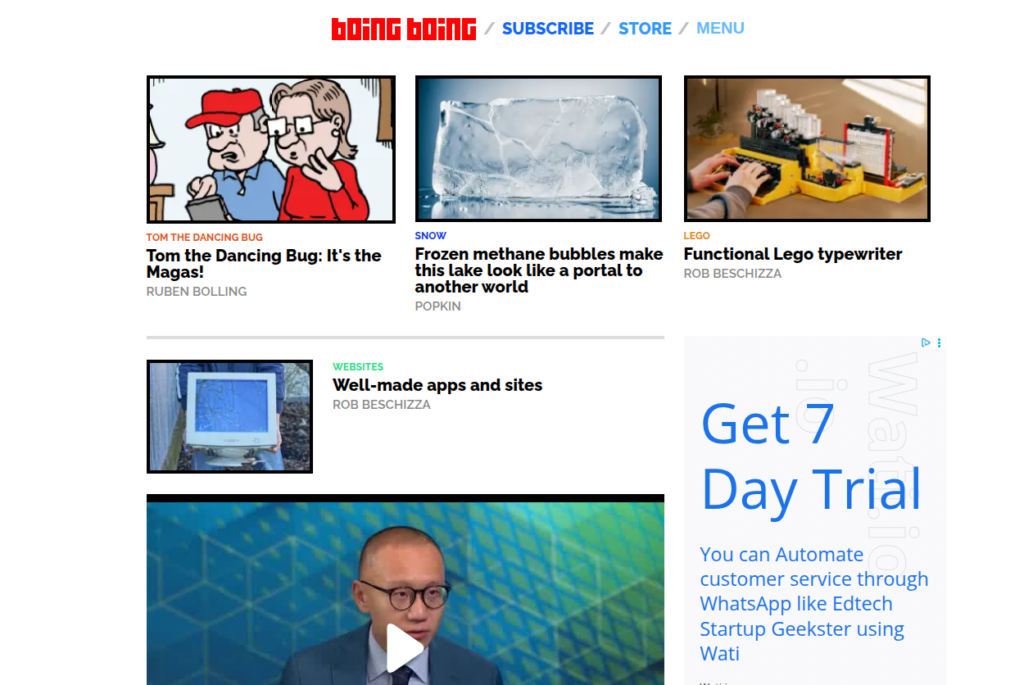
17. Boing Boing: A Creative, Community-Led WordPress Blog
Boing Boing Shares methods, routines, and frameworks. Content is structured with lists and actionable steps.
Why it works
The blog embraces curiosity and creative freedom.
Content & design approach
- Diverse content topics
- Informal tone
- Community-friendly layout
Key takeaway
Creativity thrives when content feels unrestricted.
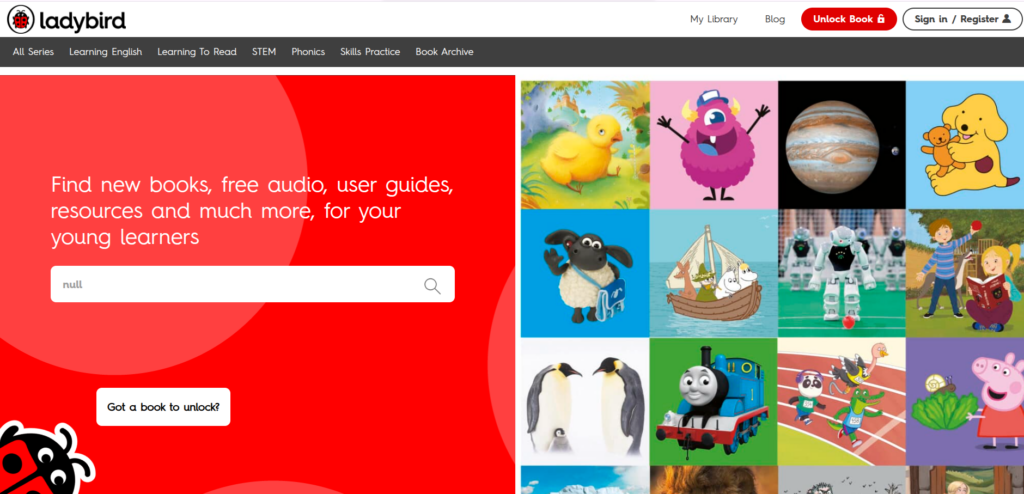
18. Ladybird Education: Simplifying Learning Through Clear Content
Ladybird Education is a great example of how WordPress can be used to deliver educational content in a simple, approachable way. The blog focuses on helping parents, teachers, and learners understand educational topics without overwhelming them.
Why it works
The blog emphasizes clarity and trust. Short paragraphs, simple language, and supportive visuals make learning feel less intimidating and more enjoyable.
Content & design approach
- Clean layouts with clear headings
- Educational articles broken into digestible sections
- A friendly tone that supports learning rather than lecturing
Key takeaway
Learning improves when content removes complexity.
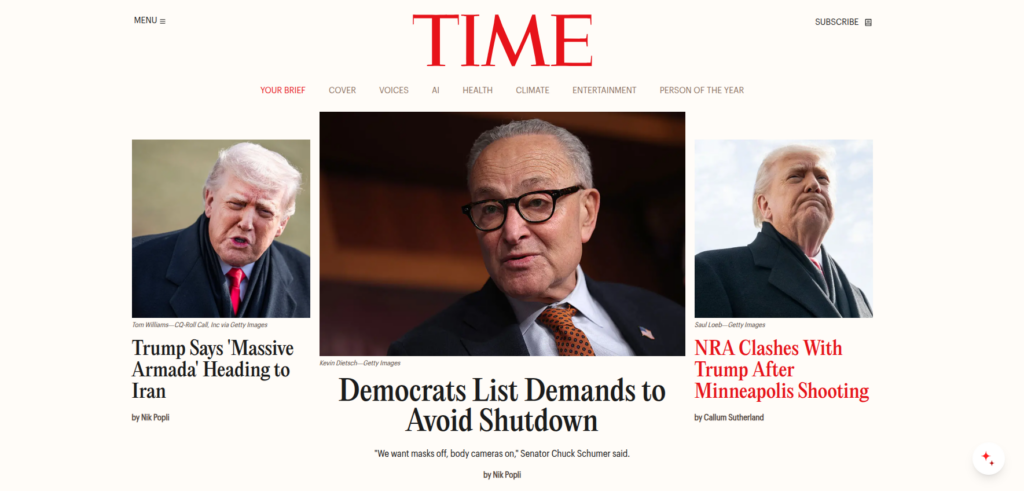
19. TIME: High-Authority Editorial Storytelling at Scale
TIME is a powerful example of how WordPress can support large-scale editorial publishing while maintaining authority and credibility. The blog presents news, opinions, and long-form stories in a way that feels structured, professional, and reader-focused.
Why it works
TIME balances depth with accessibility. Even complex global topics are presented with strong headlines, clear sections, and visual hierarchy that guide readers naturally through the story.
Content & design approach
- Magazine-style layouts with featured stories
- Strong typography for long-form reading
- Consistent branding across all content
Key takeaway
WordPress is capable of handling high-traffic, content-heavy blogs without sacrificing quality or performance.
20. Blog Tyrant: Actionable Blogging Advice That Drives Results
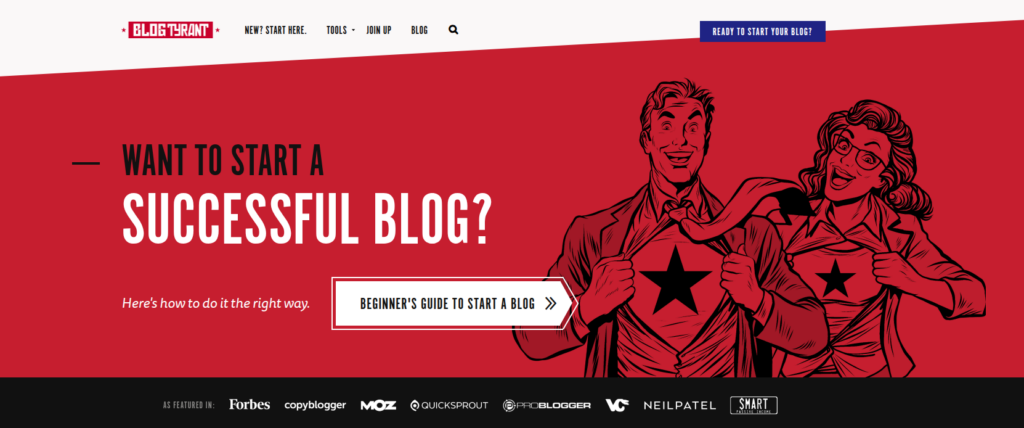
Blog Tyrant is a strong example of a WordPress blog built specifically to help bloggers grow, monetize, and scale their blogs. The content focuses on practical strategies rather than theory, making it especially useful for beginners and intermediate bloggers who want clear direction.
Why it works
The blog delivers straightforward, no-fluff advice. Articles are structured to guide readers step by step, helping them apply what they learn immediately.
Content & design approach
- Clear, benefit-driven headlines
- Long-form, structured guides with subheadings
- Simple layouts that prioritize readability and conversions
Key takeaway
A successful educational blog doesn’t need to be complicated, it needs to be useful, clear, and actionable.
Key Lessons You Can Learn from These WordPress Blog Examples
Across all examples, one lesson stands out: clarity beats complexity. Great blogs respect the reader’s time, load quickly, and communicate clearly. Design supports content, not the other way around.

What’s Next for You?
Now comes the fun part. Take these ideas and adapt them to your own goals. Start small. Improve one section at a time. Your blog doesn’t need to be perfect, it just needs to be authentic, useful, and consistent. Inspiration is only the first step; action is where real growth begins.
If you’re ready to turn inspiration into a live WordPress site, choosing the right hosting and server management platform makes a huge difference. This is where ServerAvatar fits naturally into the journey. With ServerAvatar, you can create a WordPress website using a one-click app installer, without dealing with complex server configurations or technical headaches.
Instead of spending hours setting up servers, configuring PHP, or managing security manually, ServerAvatar lets you focus on what actually matters, writing, designing, and growing your blog. From server setup and performance optimization to SSL, backups, and monitoring, everything is managed from a single, easy-to-use dashboard.
Think of it like setting up a workspace before you start creating. When your foundation is solid, your blog can grow faster, perform better, and scale smoothly as your audience expands. So take that next step, launch your WordPress blog, publish your first post, and let consistency do the rest.
Conclusion
Building a great WordPress blog isn’t about copying designs or chasing perfection, it’s about understanding what works and adapting those ideas to your own voice and goals. The examples in this guide show that clarity, consistency, and reader-focused content matter more than flashy layouts or complex features. With the flexibility of WordPress and a solid foundation provided by platforms like ServerAvatar, you can turn inspiration into action without getting stuck in technical details. Start simple, keep improving, and focus on delivering value, because a blog that is useful, authentic, and easy to manage is the one that truly grows over time.
FAQs
1. Why should I look at WordPress blog examples before creating my own?
WordPress blog examples help you understand what works in terms of layout, content structure, and user experience. They shorten the learning curve by showing proven approaches you can adapt rather than starting from scratch.
2. Do I need to copy these examples to succeed?
No, Just take inspiration from design patterns, content formats, and navigation styles, then adapt them to your unique voice, audience, and purpose.
3. Is WordPress suitable for beginners with no technical background?
Yes, WordPress is beginner-friendly and offers thousands of themes and plugins. With tools like one-click installers and managed server platforms, even non-technical users can launch and manage a blog confidently.
4. Can ServerAvatar handle high-traffic WordPress blogs?
Yes, ServerAvatar supports performance optimization features like Redis caching, flexible PHP configuration, and easy server scaling, making it suitable for both small blogs and high-traffic websites.
5. What matters more: design or content?
Content always comes first, but design supports how that content is consumed. The best blogs use clean, readable designs that enhance content rather than distract from it.