
The AI agent tooling space exploded in early 2026. If you’re comparing OpenClaw vs Paperclip vs Hermes, you’re likely trying to figure out which AI agent platform is actually worth your time. These three open-source projects launched within weeks of each other, but each takes a very different approach to building and running AI agents.
This guide cuts through that noise. We’re going hands-on with all three platforms, looking at their actual architectures, where they excel, where they trip up, and which one fits different use cases. Whether you’re running a lean startup’s infrastructure or managing a growing engineering team, by the end, you’ll know exactly which tool deserves your time.
Let’s be honest: the AI agent framework landscape circa early 2026 is a bit of a mess. Projects are shipping fast, features are changing weekly, and every benchmark sheet you find is either outdated or promotional. We wanted to cut through that. We put these three platforms through their paces in contexts that actually matter: self-hosted deployments, API integrations, memory management, and long-term maintainability.
This isn’t a “which one is best” post with a winner crowned in the final paragraph. It’s a “here’s what each platform actually does well, and here’s how to think about choosing between them.”
What Is OpenClaw?
OpenClaw is an open-source AI agent framework built around the concept of modular, composable tool systems. It emerged from the desktop-agent space but has grown significantly into server and infrastructure automation use cases.
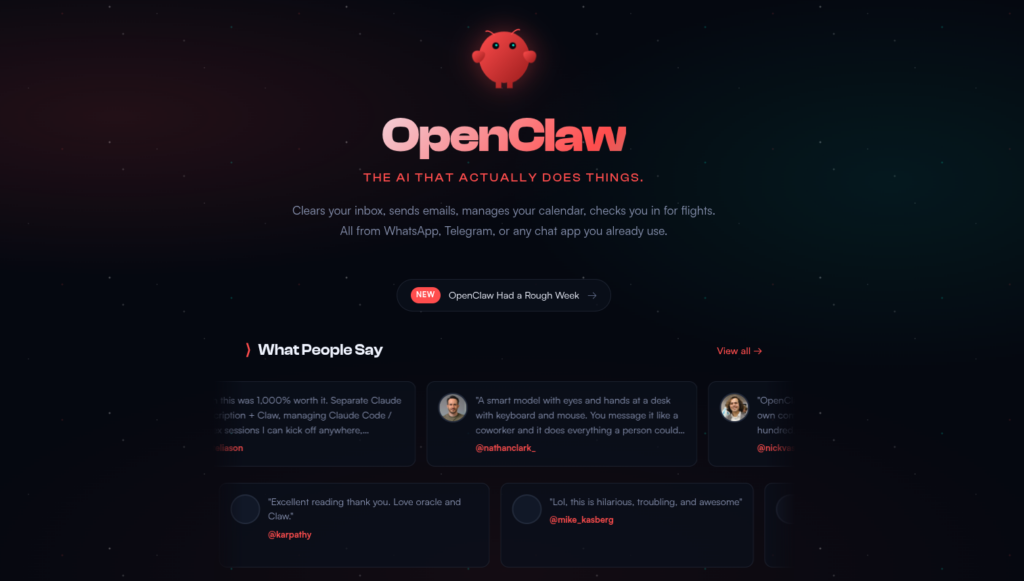
The key distinction with OpenClaw: it’s built around a skill-based plugin architecture. You compose agents from discrete, reusable skills, things like file management, shell execution, web browsing, messaging, and more specialized tools. Each skill is a self-contained unit with its own tooling, prompts, and capabilities.
Key Features
- ClawHub marketplace enables one-command installation of community-built skills
- Multi-session memory stores context across logs, long-term memory, and transcripts
- Channel abstraction allows deployment across Discord, Slack, Telegram, and terminal
- Subagent spawning enables parallel task execution with consolidated outputs
- Built-in browser and TUI automation supports real server and web interactions
Pros
- Strong plugin ecosystem
- Extensive community support
- Well-designed CLI tools
- Suitable for self-hosted environments
- Pre-configured option:
- ClawVPS comes with OpenClaw pre-installed
- No manual setup required
Cons
- Overkill for simple tasks
- Skill system adds some learning curve
- Fast updates can introduce breaking changes
Best Use Cases
- Server monitoring and automation
- Cross-channel bot implementations
- Complex multi-step workflows requiring modular tools
- Teams wanting community-supported plugin ecosystems
What Is Paperclip?
Paperclip launched in March 2026 and hit 38,000 GitHub stars in under four weeks, an unusually fast adoption curve for developer tooling. Its pitch is straightforward: AI agents made simple.
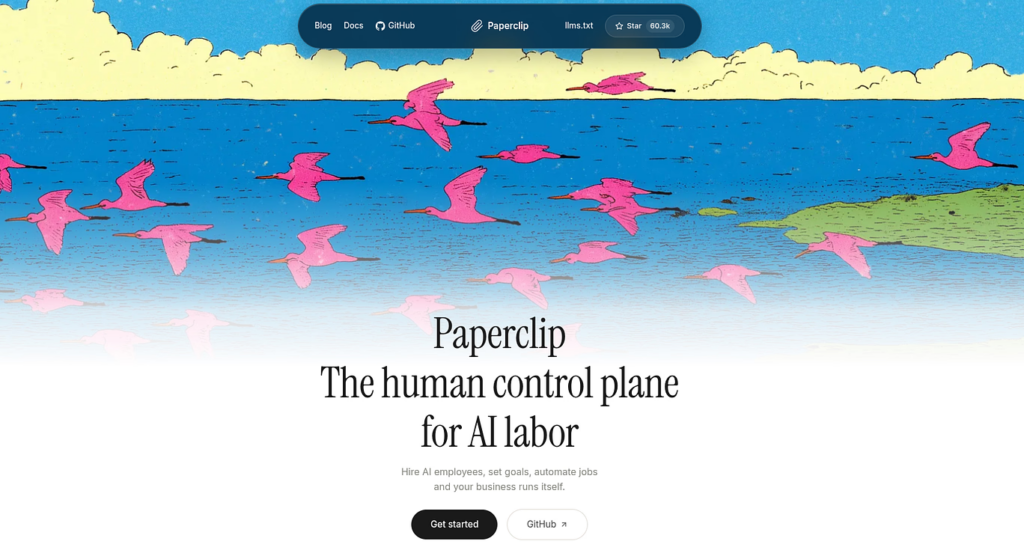
Where OpenClaw is modular and Hermes is architectural, Paperclip is opinionated. It makes decisions for you about how an agent should be structured, what tools it has access to, and how it handles context. The result is something that’s much faster to get running, but less flexible when your needs diverge from the default assumptions.
Key Features
- Single-file deployment allows agents to run from one configuration file
- Minimal dependencies enable execution without Docker using Python or Node
- Quick-start templates provide ready setups for common agent use cases
- Opinionated defaults simplify development by predefining agent structure
- Rapid community growth is expanding templates, plugins, and integrations
Pros
- Fastest setup time
- Ideal for prototypes and demos
- Easy version control (single file)
- Minimal infrastructure needs
Cons
- Limited flexibility
- Extensibility is not core
- Smaller ecosystem
- Documentation gaps for advanced use
Best Use Cases
- Rapid prototyping and demos
- Simple automation tasks (one agent, one job)
- Lean teams without dedicated infrastructure expertise
- Jumpstarting agent development before committing to a more complex framework
What Is Hermes Agent?
Hermes Agent came from Nous Research and made a distinctive entrance in February 2026. Its defining characteristic is a persistent learning architecture, Hermes agents don’t just execute tasks; they remember interactions, refine their approaches, and build on prior experience across sessions.
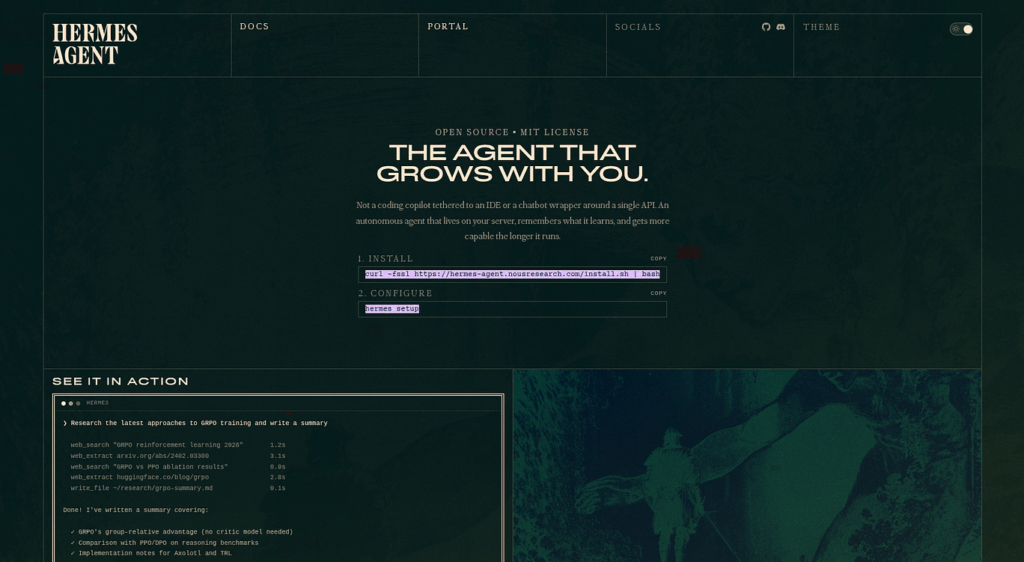
Where OpenClaw composes from discrete skills, Hermes is built around a memory-augmented reasoning loop. The agent maintains a persistent context that evolves over time, which sounds like a small thing but fundamentally changes how you interact with it for long-running projects.
Key Features
- Persistent memory graph stores and retrieves structured context across sessions
- Learning-based execution enables agents to improve using past interactions
- Tool-use reasoning selects and sequences tools before execution intelligently
- Nous ecosystem integration provides access to ongoing research improvements
- Open-source foundation supports active development and community contributions
Pros
- Ideal for long-term workflows
- Strong contextual understanding
- Predictable behavior in complex tasks
Cons
- Higher resource requirements
- More complex setup
- Harder to “reset” learned behavior
- Requires ongoing maintenance
Best Use Cases
- Long-running research and analysis workflows
- Complex codebases requiring persistent project context
- Agents that need to learn and adapt over time
- Tasks where reasoning quality matters more than speed
Quick Comparison
| Feature | OpenClaw | Paperclip | Hermes Agent |
| Primary Focus | Desktop & server-native agents | Lightweight deployment | Learning-based autonomous agents |
| Architecture Style | Modular tool system | Single-file deployable | Persistent memory + learning loop |
| Self-hosting | Full control | Minimal dependencies | Full control, heavier footprint |
| Learning Curve | Moderate | Gentle | Steeper |
| Best For | Automation, power users, server mgmt | Prototyping, lean teams | Complex multi-step reasoning, long-term learning |
| Ease of Use | Medium | Easy | Hard |
| Flexibility | High | Low | Medium |
| Memory | Layered | Minimal | Persistent |
| Deployment | VPS-friendly | Lightweight | Heavy |
| Maintenance Overhead | Low–moderate | Very low | Moderate–high |
Feature Breakdown: Where Each Platform Excels
Tool Ecosystem
OpenClaw wins here by a significant margin. ClawHub gives you access to hundreds of community skills, and the skill authoring experience is well-documented. If you need to connect to something, any external service, API, or tool, OpenClaw’s ecosystem has the highest chance of an existing solution.
Paperclip is early-stage here. Templates exist for common patterns, but the tool library is thin compared to OpenClaw
Hermes has a growing tool set but the emphasis is on depth over breadth. Its tools are well-integrated with its memory architecture, but you’re more likely to need custom implementation for niche connectors.
Memory and Context
OpenClaw offers a capable multi-layer memory system (daily logs, curated long-term memory, session context) but requires you to actively manage what gets saved and how it’s organized. It’s powerful in the hands of someone who understands it, but it doesn’t self-organize.
Paperclip keeps context lightweight. Simple sessions work well; complex, evolving contexts require more manual management.
Hermes dominates. Its persistent memory graph means the agent genuinely learns and adapts. For long-running projects, this is a fundamental difference in capability.
Self-Hosting and Deployment
OpenClaw is the most deployment-friendly for server management use cases. well-documented, works cleanly on VPS and dedicated server setups. If you’re running infrastructure and want an agent that lives on your own servers, OpenClaw is purpose-built for that.
Paperclip is the lightest. Single-file deployment means you can run it on minimal infrastructure, even devices with constrained resources. Great for edge deployment or lightweight automation without a full server.
Hermes is self-hostable but heavier. You’ll want reasonable compute resources and a clear plan for managing the memory graph over time. Not a good fit for a $5/month VPS.
Developer Experience
OpenClaw has the best CLI tooling and the clearest documentation for complex use cases. The skill system is intuitive for anyone who’s worked with plugin architectures before.
Paperclip wins for beginners. Get an agent running in 10 minutes, no training required. But as complexity grows, the developer experience degrades faster than the other two.
Hermes has a steeper learning curve, especially around its memory architecture. But for developers willing to invest the time, it’s well worth it for the capability unlocked.
Cost Analysis
All three platforms are open-source and free to self-host. But “free” is only part of the cost story, here’s what you’re actually spending:
OpenClaw
- Software cost: $0 (open-source)
- Infrastructure: typically 1–2GB RAM minimum. Runs well on a $10–20/month VPS for personal use; production workloads may need more.
- Skill marketplace: Free for community skills; some premium skills exist in ClawHub.
- Maintenance: Moderate, regular updates, skill management, occasional breaking changes between versions.
- Managed option: Claw VPS handles the server-side setup with OpenClaw pre-installed, no manual configuration, no command-line setup. Worth considering if you want to focus on your agent, not your infrastructure. Price starts from $18/month
Paperclip
- Software cost: $0 (open-source)
- Infrastructure: Very light. Can run on a $5/month VPS or even a Raspberry Pi for basic tasks.
- Templates: Mix of free community templates and paid/premium templates.
- Maintenance: Very low. Simple architecture means minimal ongoing upkeep.
Hermes Agent
- Software cost: $0 (open-source)
- Infrastructure: Heavier footprint, recommend 4GB+ RAM minimum for comfortable operation. Memory graph management may require periodic cleanup jobs.
- Ecosystem: Growing but still maturing; some tools require custom integration.
- Maintenance: Moderate to high, the learning architecture requires ongoing attention, especially for agents with months of accumulated memory.
For teams that don’t want to manage infrastructure at all, managed VPS options like ServerAvatar’s Claw VPS remove the server setup entirely, OpenClaw comes pre-installed, SSL and backups are handled, and you can deploy your first working agent in minutes rather than hours.
Common Mistakes When Choosing an AI Agent Platform
After working with all three platforms, here’s what we see go wrong:
Mistake 1: Picking Based on Reviews
It’s tempting to measure quality by popularity. A platform with a smaller community that’s architecturally right for your use case will outperform a more popular option that’s a poor match.
Evaluate based on: your specific use case, your team’s technical background, your deployment constraints, and the actual feature fit.
Mistake 2: Underestimating Maintenance Overhead
Hermes’s learning architecture is genuinely powerful, but it requires maintenance. Teams that adopt it expecting a “set it and forget it” experience get burned. If you don’t have time to monitor and manage the memory graph, Hermes will accumulate cruft and eventually underperform.
OpenClaw and Paperclip have lower maintenance floors, but they still require attention. Budget time for upkeep, not just initial setup.
Mistake 3: Building on an Agent Framework Before Understanding What You Actually Need
We’ve seen teams spend weeks building a sophisticated OpenClaw setup for a task that could have been a simple Paperclip script. Before committing to a platform’s architecture, map out your actual requirements. Simple, recurring automations with clear inputs and outputs don’t need a modular skill system.
Prototyping with Paperclip first isn’t a bad strategy, you can always migrate to OpenClaw if your requirements grow.
Mistake 4: Ignoring Self-Hosting Constraints
If you’re planning to run your agent on infrastructure you control, which matters for data privacy, latency, and cost control, make sure the platform fits your server setup. OpenClaw works on any VPS. Hermes wants more resources. Paperclip is the most flexible, but has less infrastructure tooling built in.
Mistake 5: Not Planning for Skill/Tool Ecosystem Growth
Your first use case might be simple. Your tenth might be complex. Choose a platform that grows with you. OpenClaw’s skill ecosystem means you’re not starting from scratch when you need new capabilities. Hermes’s memory architecture means an agent that’s useful today becomes more useful over time. Paperclip’s simplicity might mean rebuilding if your requirements expand significantly.

Which One Should You Choose?
If you want a quick answer before diving into the full comparison, here’s how these three AI agent platforms stack up based on real-world use cases:
- Choose OpenClaw if you need flexibility, a strong plugin ecosystem, and full control over self-hosted infrastructure. It’s best suited for complex automation, server management, and multi-step workflows.
- Choose Paperclip if your priority is speed and simplicity. It’s ideal for rapid prototyping, lightweight automation, and teams that want to launch an AI agent in minutes without dealing with complex setup.
- Choose Hermes Agent if your use case involves long-running tasks where memory, learning, and reasoning improve results over time. It’s best for research workflows, evolving systems, and context-heavy projects.
Conclusion
There’s no universal winner, each platform solves a different problem. OpenClaw gives you the most flexibility and the strongest tool ecosystem, making it the best fit for server management automation and teams that want community-supported extensibility. Paperclip gets you from zero to a working agent fastest, but trades flexibility for simplicity as your needs grow. Hermes Agent is built for long-running projects where an agent that learns and remembers over time actually adds value. For those who want OpenClaw without the server setup overhead, ClawVPS by ServerAvatar has it pre-installed and managed, focus on your agent, not your infrastructure. Match the tool to the job, not the hype to the trend.
Continue Reading
Looking to simplify your server setup or explore more comparison guides? Here are some related articles from ServerAvatar’s blog:
- Launch Your OpenClaw AI Assistant in Minutes with ClawVPS by ServerAvatar: Step-by-step guide to deploying OpenClaw on ClawVPS with no manual configuration required.
- Core PHP vs Laravel: Which One Is Best for Your Project?: If you’re evaluating frameworks for your next project, this comparison breaks down fit, performance, and long-term maintainability.
- Adminer vs phpMyAdmin: Security, Speed & Usability Compared: A similar comparison format for database management tools, useful if you’re working with data-heavy AI workflows.
Explore more guides in ServerAvatar’s Blog and App Deployment sections.
Disclosure: ServerAvatar is a platform to simplify the hosting and management of servers and applications. It simplifies the process of deploying and managing PHP and Node.js based web applications. For more guides on server management, automation, and infrastructure best practices, explore our blog.
About the Author
Meghna Meghwani is part of the ServerAvatar team. This comparison was put together after hands-on testing with all three platforms in real self-hosted and managed deployment scenarios, not from press releases or marketing pages.
FAQ
1. Which platform is easiest to get started with?
Paperclip. The single-file model and quick-start templates get you from zero to a working agent in under 15 minutes. OpenClaw requires more setup but offers more depth. Hermes requires the most investment upfront.
2. Which platform is best for server management automation?
OpenClaw’s deployment, skill ecosystem, and channel abstraction make it purpose-built for server and infrastructure tasks. You can deploy it on any VPS, connect it to your server management workflows, and maintain full control over your data.
3. Can I self-host all three platforms?
Yes, all three are fully open-source and self-hostable. OpenClaw and Paperclip are the most flexible for self-hosted deployment. Hermes has higher infrastructure requirements, but it is manageable with adequate resources.
4. How do these platforms handle privacy and data control?
All three can be run entirely on your own infrastructure, meaning no data leaves your environment. This makes them suitable for workflows where data privacy is a concern. The key variable is how you configure them, default settings vary, so review your agent’s configuration to ensure it matches your privacy requirements.
5. Do these platforms work with existing server management tools?
OpenClaw has the strongest ecosystem for tool integrations, including shell execution, file management, and API integrations that map well to server management workflows. Hermes and Paperclip can integrate with external tools but typically require more custom configuration.